Google Reviews
Expert Lower Back Pain Treatment in Bee Cave, TX
Addressing the source of your pain, not just the symptoms.
Get personalized corrective care designed to improve spinal function, restore movement, and help you achieve lasting relief from back pain.
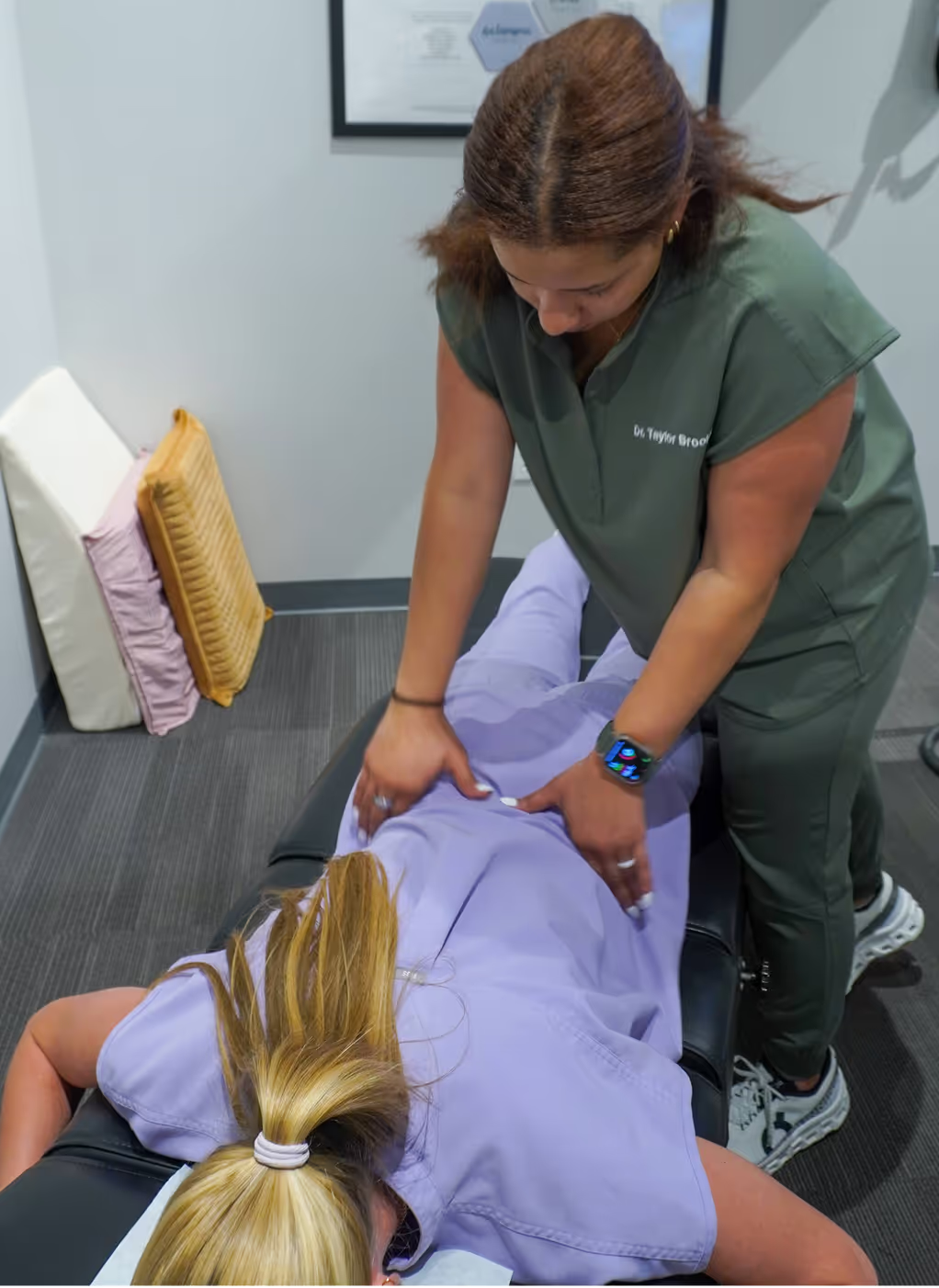
Key Takeaways: What You Need To Know About Lower Back Pain Treatment
- Chiropractic care can help: Research found that about 50% of acute patients improved within 2 weeks, with one meta-analysis reporting an average pain reduction of 9.95 points on a 100-point scale.
- Lower back pain can have several contributing factors: Facet joint irritation, disc changes, and muscle dysfunction can all play a role.
- Know when to seek care: If your pain lasts longer than 6 weeks, keeps coming back, affects your daily activities, or extends below the knee, a chiropractic evaluation may be appropriate.
- Treatment takes time: For subacute back pain, research supports 8-12 treatments over about 6 weeks, with progress reassessed along the way.
- Serious complications are rare: Serious adverse events from spinal manipulation have been reported at about 1 in 1-2 million treatments.
- Some symptoms need immediate attention: Bowel or bladder changes, saddle numbness, or progressive weakness in both legs require emergency medical care.
Signs, Symptoms & When to Pay Attention to Your Lower Back Pain
Lower back pain can come from more than a simple muscle strain. Your joints, discs, muscles, and nervous system can all play a role, which is why the reason your back hurts isn’t always obvious.
Your Joints and Discs Can Contribute to Back Pain
The small joints in your spine, called facet joints, can become irritated when they’re exposed to repeated stress. This can lead to inflammation and pain in the area. Changes in the discs between your vertebrae can also affect how your spine moves and functions (Adams & Roughley, 2006).
Your Muscles Can Play a Role, Too
Your muscles help support and stabilize your spine as you move. Research by Hodges & Richardson (1996) found that people with lower back pain can develop changes in how some of these stabilizing muscles work. When those muscles aren’t activating as they should, it can affect how well your back is supported.
Why Pain Can Sometimes Stick Around
When lower back pain continues for more than 12 weeks, the nervous system can become more sensitive to normal sensations. This is known as central sensitization. In simple terms, the nervous system can start turning up the volume on pain signals, making sensations feel more painful than they otherwise might (Woolf, 2011).
Signs, Symptoms & When to Pay Attention to Your Lower Back Pain
Back pain can look and feel different depending on what’s causing it. Some symptoms are uncomfortable but common. Others should never be ignored.
Mechanical Pain
- Dull, aching sensation across the lower back
- Stiffness after inactivity
- Worsens with forward bending
- Improves with position changes
- Localized muscle spasms
Radicular Pain
- Sharp, shooting pain into leg
- Numbness/tingling along nerves
- Pain follows coughing/sneezing
- Weakness in specific muscle groups (foot drop)
Radicular Pain
Inflammatory Pattern
- Morning stiffness > 30 mins
- Improves with movement
- Worsens with rest
- Night pain disrupting sleep
Seek Immediate Emergency Care If
- Bowel or bladder dysfunction
- Saddle numbness (loss of sensation between legs)
- Progressive weakness in both legs
- Severe pain following significant trauma
- Fever accompanying back pain
Consider Chiropractic Evaluation If:
- Pain persisting beyond 6 weeks without improvement
- Recurring episodes becoming more frequent or severe
- Pain interfering with sleep or daily activities
- Numbness or tingling extending below the knee
- Difficulty with prolonged standing or walking
EVIDENCE-BASED OUTCOMES
What the Research Says About Chiropractic Care
of patients improve within 2 weeks
(Pengel et al., 2003)
mean pain reduction (100-pt scale)
(Paige et al., 2017)
treatments causes serious events
(Haldeman et al., 1999)

Landmark Clinical Trials
The UK BEAM trial, published in the BMJ in 2004, found better outcomes with manipulation than usual care. The difference was still seen at the 12-month follow-up.
Comparative Effectiveness
Cherkin et al. (1998), published in the New England Journal of Medicine, compared chiropractic care, McKenzie physical therapy, and education alone. At four weeks, chiropractic care and McKenzie therapy produced similar outcomes, and both performed better than education alone.
Treatment Timeline Evidence
A 2009 study by Hondras et al. found that 8-12 treatments over six weeks produced better outcomes than shorter treatment courses for people with subacute and chronic low back pain.
Expert Back Pain Chiropractor: Our Approach at Elite Wellness
Back pain treatment at Elite Wellness starts with finding out what may be contributing to your pain. Your evaluation, treatment, exercises, and progress checks are all part of the same plan, with adjustments made when you’re not improving as expected.

Comprehensive Assessment
Your first visit includes a review of your health history, orthopedic testing, and movement analysis. Digital X-rays are available on-site when clinically indicated and are used according to ACP guidelines.
Evidence-Based Treatment
Treatment may include manual chiropractic adjustments directed at specific areas of the spine. A low-force Activator Method is also available. Treatment protocols follow the clinical prediction rule developed by Flynn et al. (2002).
Exercise That Supports Your Treatment
Exercise is part of the treatment plan, not an afterthought. Motor control exercises focus on the deep muscles that help stabilize your spine, including the multifidus and transverse abdominis. Rehabilitation begins during the first week of treatment.
Regular Progress Checks
Progress is checked every two weeks using validated outcome measures. If improvement is less than 20%, the treatment plan is modified or a referral is considered.
Your Clear Path to Relief:
Our 3-Step Process
STEP 01
The Discovery
A comprehensive biomechanical exam and digital X-rays, if needed. Dr. Hiben uses these findings to identify the structural factors that may be contributing to your pain.
STEP 02
The Correction
Evidence-based spinal adjustments, manual therapy, and corrective protocols are tailored to your specific dysfunction patterns.
STEP 03
The Optimization
Motor control retraining, corrective exercises, and regular reassessments help you build on your progress. You leave with practical tools to help maintain the improvements you’ve made.
What to Expect During Treatment at Our Bee Cave Clinic
Initial Visit (60-90 mins)
- Comprehensive health history and pain pattern assessment
- Postural analysis, orthopedic testing, and neurological testing
- Range-of-motion measurement with inclinometry
- Digital X-rays if clinically indicated
- Your first treatment typically begins the same day
Follow-up Visits (30-45 mins)
- Brief symptom tracking using the Numeric Rating Scale
- Focused examination of areas that were previously restricted
- Treatment progresses through the different phases of healing
- Home care recommendations and corrective exercises
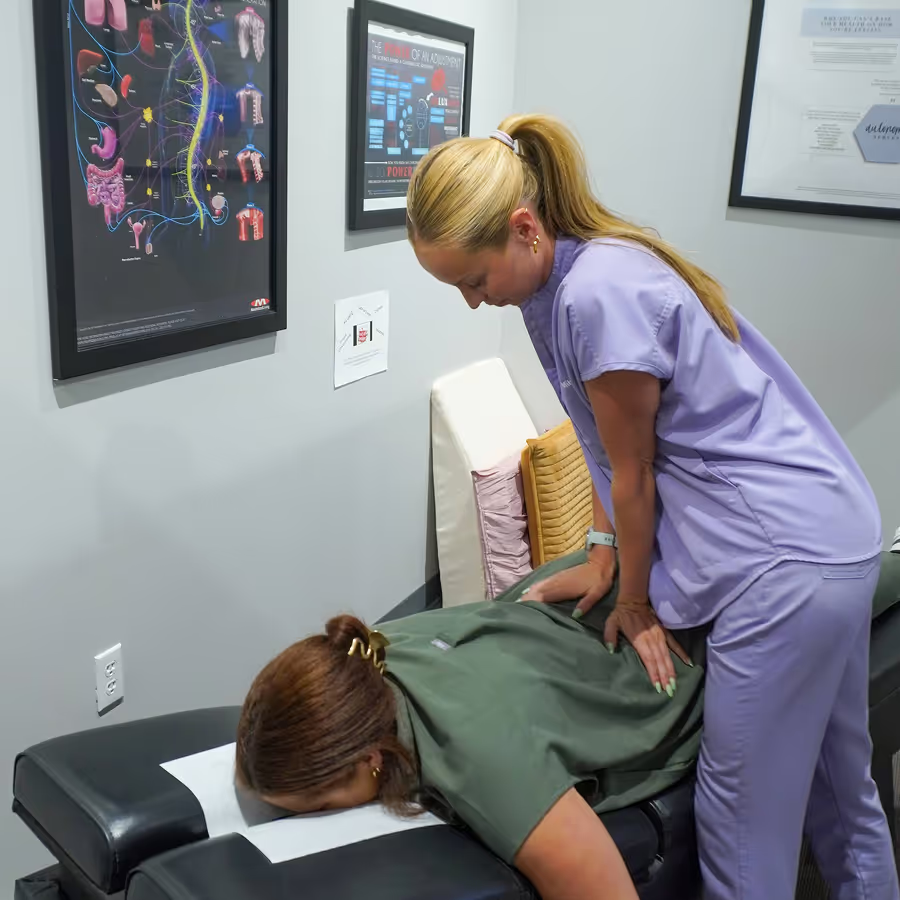
Common Questions About Back Pain & Chiropractic Care
Chiropractic treatment is generally considered safe when it is appropriate for the patient and preceded by proper screening. Serious adverse events are rare, with Haldeman et al. (1999) reporting about 1 in 1–2 million spinal manipulations. Some people may experience mild soreness afterward, which typically resolves within 24–48 hours. Dr. Hiben screens patients before treatment to make sure chiropractic care is appropriate.
There isn't one timeline that applies to everyone. Research by Pengel et al. (2003) found that about 50% of acute patients improved within two weeks, while Paige et al. (2017) reported an average pain reduction of 9.95 points on a 100-point scale within six weeks. Dr. Hiben reassesses progress every two weeks so treatment can be adjusted based on how you're responding.
Both can help with lower back pain, but they approach treatment differently. Chiropractic care often uses manual therapy to address joint mobility, while physical therapy places more emphasis on exercise and movement retraining. Cherkin et al. (1998) found similar results between chiropractic care and McKenzie physical therapy at four weeks. In some cases, the two approaches can complement each other.
The number of visits depends on how long you've been dealing with the problem and how you're progressing.
- Acute (under 6 weeks): 6–8 sessions over 3–4 weeks
- Subacute (6–12 weeks): 8–12 sessions over 6 weeks
- Chronic: 12–16 sessions over 8–12 weeks
Progress is reassessed every six treatments.
It can, depending on the type and severity of the herniation. Bronfort et al. (2008) found manual therapy effective in cases involving stable or improving disc herniations. If a large herniation is causing progressive neurological problems, medical management may be needed first. Dr. Hiben performs neurological screening and refers patients when additional medical care is needed.
Not always. X-rays aren't routinely needed for most lower back pain, but they're recommended when certain "red flags" are present — such as a history of trauma, unexplained weight loss, suspected fracture, infection, or progressive neurological symptoms. This approach follows guidelines like the American College of Radiology's Appropriateness Criteria. Dr. Hiben orders imaging only when it's clinically indicated based on your exam and history.
You don't need to stop moving completely while your back recovers. But make sure you avoid prolonged sitting, heavy lifting over 10–15 pounds initially, and activities that clearly reproduce your pain. Research supports staying active within your tolerance, while prolonged bed rest can delay recovery.
Still have questions?
What Our Patients Say About Back Pain Relief
Sarah M.
Bee Cave, TX
"After 3 years of lower back pain, Dr. Booher found the problem in my first visit. Six weeks later I'm back to running and playing with my kids without pain."
James T.
Lakeway, TX
"I was skeptical of chiropractic care until I saw my X-rays. Now I understand WHY I was hurting. Finally getting real answers instead of just masking symptoms."
Michael R.
Westlake, TX
"Most chiropractors just adjusted me and sent me home. Dr. Booher gave me a whole corrective plan with exercises. Night and day difference in my recovery."
Related Conditions We Also Treat
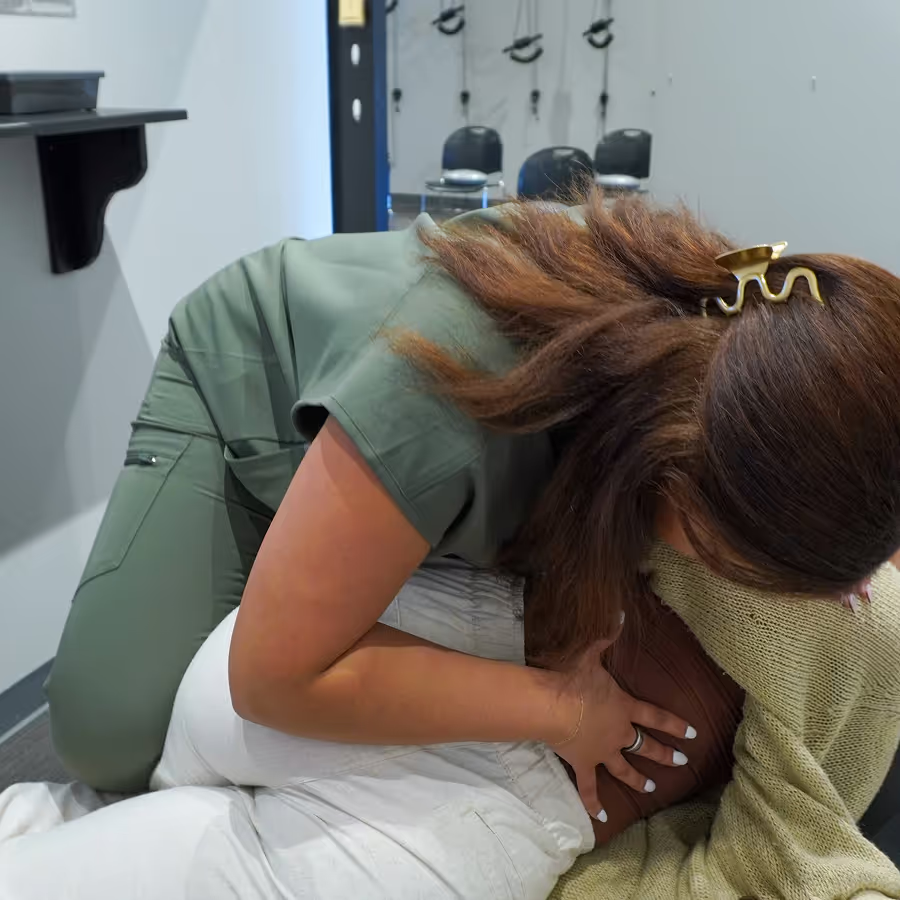
Ready to Get Help With Your Lower Back Pain?
Lower back pain can make everyday activities harder. At Elite Wellness, care starts with an evaluation to understand what may be contributing to your pain and determine what treatment makes sense for you.
Dr. Mikala Hiben, DC serves Bee Cave, Lakeway, West Lake Hills, Dripping Springs, and Southwest Austin.
Adams, M. A., & Roughley, P. J. (2006). What is intervertebral disc degeneration, and what causes it? Spine, 31(18), 2151-2161.
Assendelft, W. J., Morton, S. C., Yu, E. I., Suttorp, M. J., & Shekelle, P. G. (2003). Spinal manipulative therapy for low back pain. Cochrane Database of Systematic Reviews, (1), CD000447.
Bogduk, N. (2005). Clinical anatomy of the lumbar spine and sacrum (4th ed.). Churchill Livingstone.
Bronfort, G., Haas, M., Evans, R. L., & Bouter, L. M. (2008). Efficacy of spinal manipulation and mobilization for low back pain and neck pain: a systematic review and best evidence synthesis. The Spine Journal, 8(3), 213-225.
Bronfort, G., Maiers, M. J., Evans, R. L., et al. (2011). Supervised exercise, spinal manipulation, and home exercise for chronic low back pain: a randomized clinical trial. Spine, 36(21), 1813-1824.
Bronfort, G., Maiers, M. J., Evans, R. L., et al. (2012). Supervised exercise, spinal manipulation, and home exercise for chronic low back pain: a randomized clinical trial. Annals of Internal Medicine, 156(2), 132-140.
Carey, T. S., Garrett, J., Jackman, A., et al. (1995). The outcomes and costs of care for acute low back pain among patients seen by primary care practitioners, chiropractors, and orthopedic surgeons. New England Journal of Medicine, 333(14), 913-917.
Cassidy, J. D., Boyle, E., Côté, P., et al. (2008). Risk of vertebrobasilar stroke and chiropractic care: results of a population-based case-control and case-crossover study. Spine, 33(4S), S176-S183.
Cherkin, D. C., Deyo, R. A., Battié, M., Street, J., & Barlow, W. (1998). A comparison of physical therapy, chiropractic manipulation, and provision of an educational booklet for the treatment of patients with low back pain. New England Journal of Medicine, 339(15), 1021-1029.
Childs, J. D., Fritz, J. M., Flynn, T. W., et al. (2004). A clinical prediction rule to identify patients with low back pain most likely to benefit from spinal manipulation: a validation study. Annals of Internal Medicine, 141(12), 920-928.
Chou, R., Qaseem, A., Snow, V., et al. (2007). Diagnosis and treatment of low back pain: a joint clinical practice guideline from the American College of Physicians and the American Pain Society. Annals of Internal Medicine, 147(7), 478-491.
Coulter, I. D., Crawford, C., Hurwitz, E. L., et al. (2018). Manipulation and mobilization for treating chronic low back pain: a systematic review and meta-analysis. The Spine Journal, 18(6), 866-879.
Cramer, G. D., Tuck Jr, N. R., Knudsen, J. T., et al. (2000). Effects of side-posture positioning and side-posture adjusting on the lumbar zygapophysial joints as evaluated by magnetic resonance imaging: a before and after study with randomization. Journal of Manipulative and Physiological Therapeutics, 23(6), 380-394.
Deyo, R. A., & Diehl, A. K. (1988). Cancer as a cause of back pain: frequency, clinical presentation, and diagnostic strategies. Journal of General Internal Medicine, 3(3), 230-238.
Flynn, T., Fritz, J., Whitman, J., et al. (2002). A clinical prediction rule for classifying patients with low back pain who demonstrate short-term improvement with spinal manipulation. Spine, 27(24), 2835-2843.
Fritz, J. M., Childs, J. D., & Flynn, T. W. (2005). Pragmatic application of a clinical prediction rule in primary care to identify patients with low back pain with a good prognosis following a brief spinal manipulation intervention. BMC Family Practice, 6(1), 29.
Haas, M., Sharma, R., & Stano, M. (2005). Cost-effectiveness of medical and chiropractic care for acute and chronic low back pain. Journal of Manipulative and Physiological Therapeutics, 28(8), 555-563.
Haldeman, S., Kohlbeck, F. J., & McGregor, M. (1999). Risk factors and precipitating neck pain causing vertebrobasilar artery dissection after cervical trauma and spinal manipulation. Spine, 24(8), 785-794.
Hartvigsen, J., Hancock, M. J., Kongsted, A., et al. (2018). What low back pain is and why we need to pay attention. The Lancet, 391(10137), 2356-2367.
Hodges, P. W., & Richardson, C. A. (1996). Inefficient muscular stabilization of the lumbar spine associated with low back pain: a motor control evaluation of transversus abdominis. Spine, 21(22), 2640-2650.
Hondras, M. A., Long, C. R., Cao, Y., Rowell, R. M., & Meeker, W. C. (2009). A randomized controlled trial comparing 2 types of spinal manipulation and minimal conservative medical care for adults 55 years and older with subacute or chronic low back pain. Journal of Manipulative and Physiological Therapeutics, 32(5), 330-343.
Licciardone, J. C., Minotti, D. E., Gatchel, R. J., Kearns, C. M., & Singh, K. P. (2013). Osteopathic manual treatment and ultrasound therapy for chronic low back pain: a randomized controlled trial. Annals of Family Medicine, 11(2), 122-129.
Meade, T. W., Dyer, S., Browne, W., Townsend, J., & Frank, A. O. (1990). Low back pain of mechanical origin: randomised comparison of chiropractic and hospital outpatient treatment. BMJ, 300(6737), 1431-1437.
Paige, N. M., Miake-Lye, I. M., Booth, M. S., et al. (2017). Association of spinal manipulative therapy with clinical benefit and harm for acute low back pain: systematic review and meta-analysis. JAMA, 317(14), 1451-1460.
Pengel, L. H., Herbert, R. D., Maher, C. G., & Refshauge, K. M. (2003). Acute low back pain: systematic review of its prognosis. BMJ, 327(7410), 323.
Qaseem, A., Wilt, T. J., McLean, R. M., & Forciea, M. A. (2017). Noninvasive treatments for acute, subacute, and chronic low back pain: a clinical practice guideline from the American College of Physicians. Annals of Internal Medicine, 166(7), 514-530.
Rubinstein, S. M., Leboeuf-Yde, C., Knol, D. L., de Koekkoek, T. E., Pfeifle, C. E., & van Tulder, M. W. (2007). The benefits outweigh the risks for patients undergoing chiropractic care for neck pain: a prospective, multicenter, cohort study. Journal of Manipulative and Physiological Therapeutics, 30(6), 408-418.
Rubinstein, S. M., Terwee, C. B., Assendelft, W. J., de Boer, M. R., & van Tulder, M. W. (2012). Spinal manipulative therapy for acute low-back pain. Cochrane Database of Systematic Reviews, (9), CD008880.
Rubinstein, S. M., van Middelkoop, M., Assendelft, W. J., de Boer, M. R., & van Tulder, M. W. (2011). Spinal manipulative therapy for chronic low-back pain. Cochrane Database of Systematic Reviews, (2), CD008112.
UK BEAM Trial Team. (2004). United Kingdom back pain exercise and manipulation (UK BEAM) randomised trial: effectiveness of physical treatments for back pain in primary care. BMJ, 329(7479), 1377.
Woolf, C. J. (2011). Central sensitization: implications for the diagnosis and treatment of pain. Pain, 152(3), S2-S15.