Google Reviews
Tech Neck Treatment Bee Cave: Forward Head Posture Correction at Elite Wellness Chiropractic
Restoring healthy movement to a neck under constant strain.
Targeted corrective care can help address forward head posture, improve spinal alignment, and reduce the pain and stiffness associated with prolonged screen use.
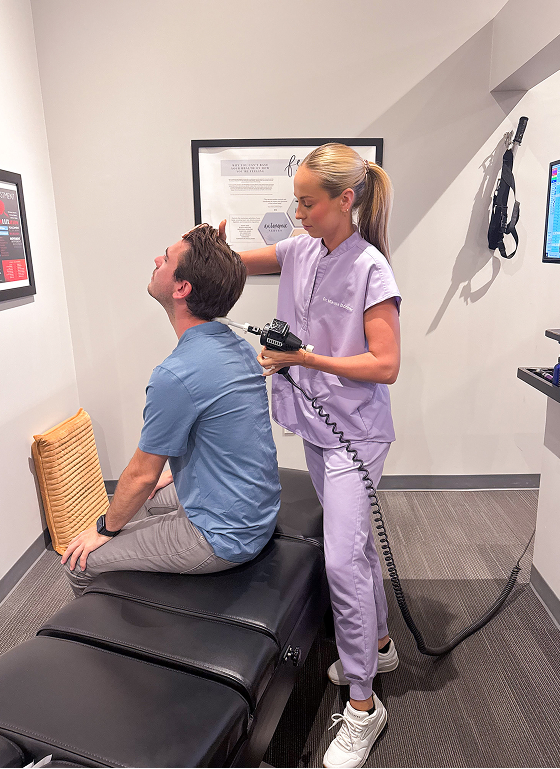
Key Takeaways: What You Need to Know About Tech Neck and Forward Head Posture
- Forward head posture increases the load on your neck: Kapandji (1974) estimated that each inch the head moves forward adds approximately 10 pounds of perceived weight to the cervical spine. A 2-inch forward shift could therefore add about 20 pounds to the load on a 10- to 12-pound head.
- Tech neck involves more than muscle tightness: A systematic review of 15 studies found a significant difference in forward head posture between people with and without neck pain, suggesting that postural changes can be measured clinically (Mahmoud et al., 2019).
- Cervical alignment can improve with corrective care: A systematic review of 9 controlled trials found that cervical extension protocols improved cervical lordosis by 12 to 18 degrees over 5 to 15 weeks, along with improvements in pain, disability, and neurological function (Oakley et al., 2021).
- Forward head posture may contribute to headaches: Fernandez-de-las-Penas et al. (2006) found greater forward head posture in patients with chronic tension-type headaches than in healthy controls. The study also identified trigger points in the suboccipital muscles that may contribute to referred head pain.
- Some improvements can last beyond treatment: Moustafa, Diab, and Harrison (2022) found that patients who completed a cervical lordosis rehabilitation protocol maintained improvements at the 2-year follow-up.
- Tech neck is a common concern at Elite Wellness Chiropractic: According to the practice, 40% of patients present with tech neck or forward head posture as a primary concern, making it one of the more common conditions treated in the Bee Cave area.
What Is Tech Neck?
Tech neck is more than a sore neck after a long day on your phone or computer. Spending hours with your head pushed forward can change the position of your head and affect the natural curve of your neck. Over time, that can put more stress on the muscles, joints, and other structures that support your neck.
Stretching or getting a massage may help with the tension, but the relief may not last if the underlying posture doesn't change.
How Forward Head Posture Changes the Load on Your Neck
That's a lot of extra demand on your neck, especially when the same position becomes part of your daily routine.
Your cervical spine has a natural C-shaped curve called lordosis. When your head is in a neutral position, that curve helps distribute the weight of your 10 to 12-pound head across your vertebrae, discs, and supporting structures.
Kapandji's work on joint biomechanics (1974) also found that each inch the head moves forward can add approximately 10 pounds of perceived weight to the cervical spine. For someone whose head sits about 2 inches forward while working at a desk, that can mean roughly 20 additional pounds of cervical load during hours of computer use.
When your head moves forward in relation to your shoulders, the load on your neck increases. Hansraj (2014) used a computational model to estimate how much the load changes with different degrees of forward head position: 15 degrees: 27 pounds, 30 degrees: 40 pounds, 45 degrees: 49 pounds, 60 degrees: 60 pounds
At 60 degrees, which is similar to the position many people use when looking down at a phone in their lap, the estimated load is about five times the normal weight of the head.
Signs, Symptoms & When to Pay Attention
Tech neck doesn't always show up as neck pain. You may notice stiffness after a long day at your computer, headaches that start at the base of your skull, or tightness between your shoulder blades. Other symptoms can be less obvious.
Primary Symptoms of Tech Neck:
- Aching or stiffness at the base of your skull or along the back of your neck, especially after extended screen time
- Neck pain that gets worse throughout the workday and eases with movement or lying down
- A visible hump or rounded posture at the base of your neck
- Tension headaches that start at the back of your head and spread toward your temples
- Tightness or pain between your shoulder blades
Secondary Symptoms Most People Don't Connect to Posture
Forward head posture can also show up in ways you might not immediately associate with your neck:
- Numbness or tingling in your hands, fingers, or arms
- Jaw clenching or TMJ pain
- Brain fog, difficulty concentrating, or fatigue. Moustafa et al. (2021) found changes in central nervous system conduction times associated with loss of cervical lordosis.
- Reduced grip strength
- Shoulder pain, especially around the front of the shoulder or rotator cuff
- Difficulty sleeping because you can't find a comfortable position for your neck
Decision Logic: When to Seek Evaluation
A structural evaluation may be worth considering if:
- Your neck pain or stiffness has lasted more than 2 weeks despite rest, stretching, or over-the-counter medication
- You can see that your head sits forward of your shoulders when you look in a mirror or at a side-view photo
- Your symptoms keep coming back after massage, stretching, or other temporary relief
- Your symptoms are getting worse instead of staying the same
- You spend more than 4 hours a day at a computer, on your phone, or in another forward-flexed position
Red Flags Requiring Immediate Medical Attention:
Some symptoms shouldn't wait for a chiropractic evaluation. Seek medical attention if you have:
- Sudden, severe neck pain with no clear cause
- Neck pain accompanied by weakness that radiates into both arms or legs
- Loss of bladder or bowel control along with neck or back pain
- Neck pain after significant trauma, such as a fall, car accident, or sports injury
- Fever, unexplained weight loss, or night sweats along with neck pain
These symptoms can point to a condition that needs urgent medical evaluation rather than chiropractic care.
EVIDENCE-BASED OUTCOMES
What the Research Says About Chiropractic Care for Tech Neck
of patients in one study improved within 2 weeks
Pengel et al., 2003
average pain reduction on a 100-point scale in one review
Paige et al., 2017
Serious events were rare, estimated at about 1 in 1 to 2 million treatments
Haldeman et al., 1999
Landmark Posture Study
Hansraj et al. (2014) found that forward head posture puts significantly more stress on the cervical spine. At 60° of forward flexion, the estimated load on the neck reaches nearly 60 lbs.
Systematic Review
Oakley et al. (2021) reviewed 9 controlled clinical trials and found that cervical extension protocols improved cervical lordosis. The studies showed measurable changes in posture, while the control groups saw little to no structural improvement.
Randomized Clinical Trial
Moustafa et al. (2022) found that combining cervical extension treatment with exercise improved posture, pain, and nerve function. These improvements remained at the two-year follow-up.
Neuroplasticity Research
Moustafa et al. (2021) found that restoring cervical alignment was associated with changes in both posture and nervous system function. The findings point to a connection between cervical alignment and neurological function.
Our Approach at Elite Wellness Chiropractic
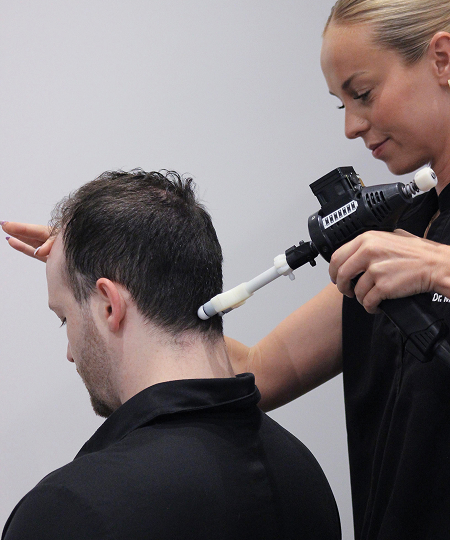
At Elite Wellness Chiropractic, Dr. Mikala Hiben, DC, looks beyond the discomfort itself. Instead of focusing only on temporary symptom relief, she looks at the alignment and movement issues that may be keeping the problem going. The goal is to help your body move and function without having to keep compensating for the same problem.
Comprehensive Evaluation
New Patient Experience (for $60) includes a detailed exam, digital X-rays, and posture analysis. Dr. Hiben looks at your cervical curve, forward head posture, and overall spinal alignment to determine what may be contributing to your symptoms.
Digital X-Rays
Digital X-rays give Dr. Hiben a clear picture of your cervical alignment and provide a baseline for tracking changes over time. They also help identify the areas that may need attention as part of your corrective care plan.
Personalized Care Plan
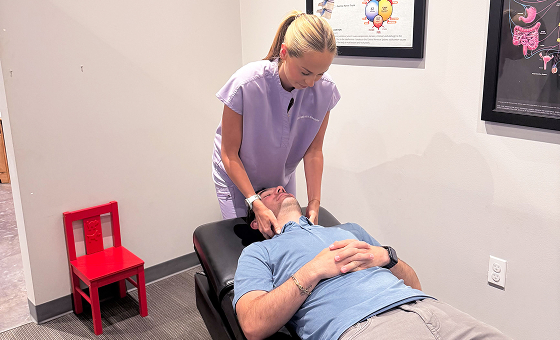
Your care plan is based on what the examination and X-rays show. Cervical adjustments are used to improve spinal mobility and address alignment issues, with Gentle Activator Method adjustments available if you prefer a lower-force approach.
Precision Chiropractic Care
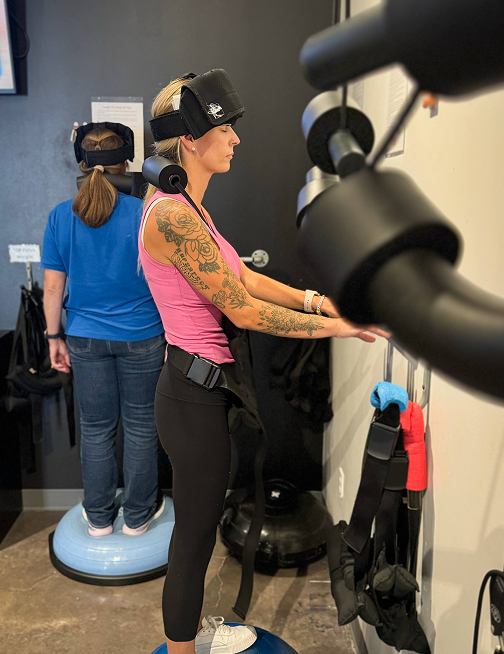
Corrective exercises, weighted posture training, and home exercises are used alongside chiropractic care. These exercises help reinforce the changes made during treatment and give you practical ways to work on your posture between visits.
Rehabilitation & Strength Training
Progress X-rays may be taken at key points during care to track changes in cervical curvature, head posture, and spinal alignment. This gives Dr. Hiben measurable information to help guide your treatment as you progress.
Progress & Recovery Tracking
EWC's corrective approach follows a simple process: assess the problem, make corrections, retrain the body, and check your progress. Your care can then be adjusted based on how your structure and movement are changing, not just how you feel from one visit to the next.
Your Clear Path to Relief: Our 3-Step Process
STEP 01
The Exam
Your first visit includes a detailed exam and digital X-rays when needed. Dr. Hiben looks at your posture, cervical curve, and spinal alignment to identify the areas that may be contributing to your symptoms.
STEP 02
Corrective Care
Your care plan is based on what the exam shows. Treatment may include spinal adjustments, manual therapy, and other corrective techniques that address your specific alignment and movement issues.
STEP 03
Exercises and Progress Checks
Corrective exercises and motor control retraining help reinforce the changes made during treatment. Dr. Hiben also reassesses your progress at key points so your care can be adjusted as needed.
Your Recovery Timeline
Weeks 1 to 4
Most tech neck patients start with 2 to 3 visits per week. Visits may include targeted cervical adjustments, postural exercises using the weighted systems, and specific exercises to do at home each day.
Some people notice changes in stiffness, headaches, or other symptoms within the first few weeks. That doesn't necessarily mean the underlying structural changes are complete. Those changes generally take more time.
Weeks 6 to 12
As your neck and posture improve, visits typically decrease to 1 to 2 times per week. The exercises also become more challenging as your strength and control improve.
Dr. Hiben reassesses your range of motion and symptom scores every 2 to 4 weeks. Progress X-rays may be taken when clinically indicated to check for changes in your cervical alignment.
Weeks 12 to 24
By this point, the focus shifts toward maintaining the changes you've made. Visits may decrease to weekly or every other week, while corrective exercises continue at home.
Moustafa et al. (2022) found that patients who completed a full corrective protocol maintained their improvements at a 2-year follow-up. The original draft states that most patients reach their maximum structural correction during this 12- to 24-week window.
Long-Term Maintenance
Once you've completed corrective care, you may choose to come in for periodic check-ups, such as monthly or quarterly visits. This can be helpful if your daily routine still involves long hours at a desk or frequent technology use.
Maintenance visits are optional. They're not required to complete care.
When Chiropractic Care May Not Be the Right Fit
Not every neck problem is appropriate for chiropractic care on its own. Some conditions need medical evaluation first, while others may call for a modified approach.
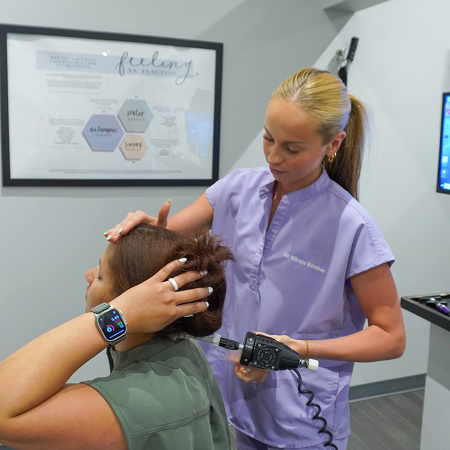
Conditions That Require Medical Referral First
- Cervical myelopathy with progressive neurological changes: Worsening weakness, changes in walking, or loss of fine motor control may require a surgical evaluation before or instead of conservative care.
- Active cervical disc herniation with severe or worsening radiculopathy: Many disc herniations respond well to conservative care, but severe or worsening cases may need to be managed alongside a spine specialist.
- Inflammatory conditions: Rheumatoid arthritis affecting the cervical spine and ankylosing spondylitis require appropriate rheumatological management.
- Fractures, tumors, or infections: These conditions involving the cervical spine require medical evaluation.
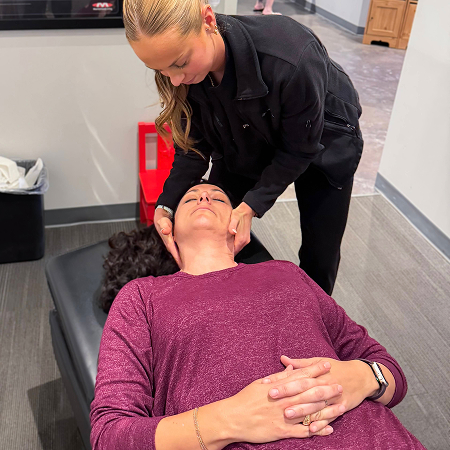
Situations Where Care May Need to Be Modified
- Osteoporosis or significant bone density loss: Lighter-force techniques, such as Activator Method, may be used instead of manual high-velocity adjustments.
- Post-surgical cervical spine: Care is adjusted based on the type of surgery and the surgeon's clearance.
- Acute whiplash within the first 72 hours: Care may initially focus on gentle mobilization and pain management before progressing to corrective care.
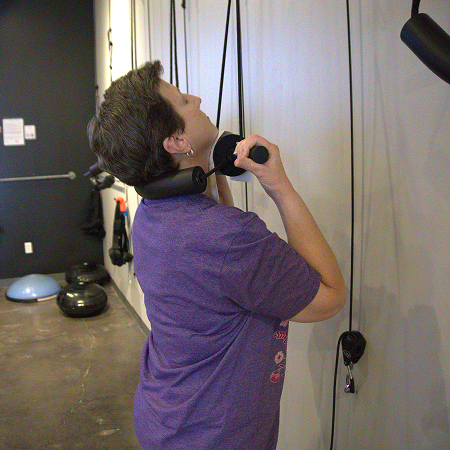
When Other Providers May Be Part of Your Care
Some people benefit from more than one type of care. If forward head posture is also accompanied by chronic headaches, TMJ dysfunction, or thoracic outlet syndrome, Dr. Hiben may recommend working with a physical therapist, massage therapist, or medical specialist at the same time.
That doesn't mean you have to choose one type of care over another. When several factors are contributing to your symptoms, care from different providers may address different parts of the problem.

Setting Realistic Expectations
If you've had significant forward head posture for decades and imaging shows substantial degenerative changes, completely restoring a normal cervical curve may not be realistic. That doesn't mean treatment can't make a difference. Meaningful structural improvement and symptom relief may still be possible.
Dr. Hiben discusses what is realistic for your situation during your Report of Findings, based on your imaging and clinical presentation.
Frequently Asked Questions About Tech Neck Treatment
“Tech neck” is a common term for the forward head posture and changes in the natural curve of the neck that can develop from spending long periods on phones, tablets, and computers. It isn't the name of a specific medical diagnosis, but the postural changes it describes are real and can affect how your neck handles everyday loads.
Hansraj (2014) found that the estimated load on the cervical spine increases substantially as the head moves farther forward. At 60 degrees of forward flexion, the estimated load reaches about 60 pounds.
It can contribute to certain types of headaches, particularly tension-type and cervicogenic headaches. Forward head posture can place extra strain on the muscles at the base of the skull and around the neck, which may contribute to headache symptoms.
Fernandez-de-las-Penas et al. (2006) found that people with chronic tension-type headaches had greater forward head posture than healthy controls. If you're dealing with recurring headaches along with neck pain or stiffness, your neck and posture may be worth evaluating.
There isn't one timeline that applies to everyone. It depends on how significant the postural changes are, how long they've been present, and how consistently you follow the care plan.
Oakley et al. (2021) reviewed 9 controlled trials and reported improvements in cervical lordosis over treatment periods ranging from 5 to 15 weeks. At Elite Wellness, patients may notice changes in symptoms within the first 2 to 3 weeks, while measurable changes in cervical alignment generally take longer.
Corrective care may continue for 12 to 24 weeks depending on your starting point and progress. Moustafa et al. (2022) also reported that improvements from a full corrective protocol were maintained at a 2-year follow-up.
Elite Wellness Chiropractic is a cash-pay practice. The $60 New Patient Experience includes your exam and X-rays during the first visit, followed by your Report of Findings and first adjustment on the second visit.
The practice also accepts letters of protection (LOPs) for patients involved in auto accidents. For current pricing or questions about payment, contact Elite Wellness at (512) 817-1653.
Exercises can play an important role in improving posture, strength, and movement. Whether exercises alone are enough depends on what is contributing to your symptoms and the changes in your cervical alignment.
Moustafa et al. (2022) compared exercise and stretching with a more comprehensive corrective protocol. The study found that the group receiving the full protocol maintained its improvements at follow-up, while some of the changes in the exercise-only group were not maintained.
That doesn't mean you need to rely on in-office care forever. Corrective exercises are an important part of care at Elite Wellness and can be continued at home. The practice provides specific corrective exercises for home care based on your needs.
There isn't a specific age when a child's posture suddenly becomes a problem. It's worth paying attention when you consistently notice forward head posture, rounded upper-back posture, neck pain, or recurring headaches.
Children and teenagers spend a lot of time using phones, tablets, computers, and other devices, so posture can become part of their daily routine. If you're concerned about your child's posture or symptoms, a professional evaluation can help determine whether there is an issue that needs attention.
Dr. Hiben works with patients of different ages and can adjust techniques for younger patients.
The changes can last, but what you do after treatment matters too. Moustafa et al. (2022) followed patients for 2 years after a corrective protocol and found that their improvements were maintained.
Continuing your home exercises and paying attention to the positions you spend hours in each day can help support those changes. If you go straight back to spending long periods in the same forward-flexed position, your posture may be affected again.
That's why care at Elite Wellness includes postural retraining strategies and ergonomic changes you can use outside the office.
Still have questions?
What Our Patients Say About Tech Neck Relief.
Sean
Google review
"I was honestly skeptical about chiropractors, but after developing some neck pain I decided to give Elite Wellness a try... Dr. Mikala took the time to explain the science behind every recommendation and treatment in a way that made complete sense."
James T.
Lakeway, TX
"I was skeptical of chiropractic care until I saw my X-rays. Now I understand WHY I was hurting. Finally getting real answers instead of just masking symptoms."
Michael R.
Westlake, TX
"Most chiropractors just adjusted me and sent me home. Dr. Booher gave me a whole corrective plan with exercises. Night and day difference in my recovery."
Related Conditions We Also Treat
Take the First Step Toward Better Neck Health
If neck pain, stiffness, or forward head posture has become part of your daily routine, it may be worth taking a closer look at what's contributing to it.
At Elite Wellness Chiropractic in Bee Cave, Dr. Mikala Hiben, DC, evaluates your posture, cervical alignment, and movement to determine whether corrective care may be appropriate for you. The $60 New Patient Experience includes an exam and digital X-rays, followed by your Report of Findings and first adjustment on the second visit.
Elite Wellness Chiropractic also serves patients from Lakeway and the greater Lake Travis area.
- Fernandez-de-las-Penas, C., Alonso-Blanco, C., Cuadrado, M. L., & Pareja, J. A. (2006). Forward head posture and neck mobility in chronic tension-type headache: A blinded, controlled study. Cephalalgia, 26(3), 314–319. https://doi.org/10.1111/j.1468-2982.2005.01042.x
- Fernandez-de-las-Penas, C., Cuadrado, M. L., & Pareja, J. A. (2007). Myofascial trigger points, neck mobility, and forward head posture in episodic tension-type headache. Headache, 47(5), 662–672. https://doi.org/10.1111/j.1526-4610.2006.00632.x
- Gustafsson, E., Thomee, S., Grimby-Ekman, A., & Hagberg, M. (2017). Texting on mobile phones and musculoskeletal disorders in young adults: A five-year cohort study. Applied Ergonomics, 58, 208–214. https://doi.org/10.1016/j.apergo.2016.06.012
- Hansraj, K. K. (2014). Assessment of stresses in the cervical spine caused by posture and position of the head. Surgical Technology International, 25, 277–279. https://pubmed.ncbi.nlm.nih.gov/25393825/
- Kapandji, I. A. (1974). The physiology of the joints, volume 3: The trunk and the vertebral column. Churchill Livingstone. ISBN 978-0443006579
- Mahmoud, N. F., Hassan, K. A., Abdelmajeed, S. F., Moustafa, I. M., & Silva, A. G. (2019). The relationship between forward head posture and neck pain: A systematic review and meta-analysis. Current Reviews in Musculoskeletal Medicine, 12(4), 562–577. https://doi.org/10.1007/s12178-019-09594-y
- Moustafa, I. M., Diab, A. A., & Harrison, D. E. (2022). The efficacy of cervical lordosis rehabilitation for nerve root function and pain in cervical spondylotic radiculopathy: A randomized trial with 2-year follow-up. Journal of Clinical Medicine, 11(21), 6515. https://doi.org/10.3390/jcm11216515
- Moustafa, I. M., Diab, A. A., Hegazy, F., & Harrison, D. E. (2021). Demonstration of central conduction time and neuroplastic changes after cervical lordosis rehabilitation in asymptomatic subjects: A randomized, placebo-controlled trial. Scientific Reports, 11, 15379. https://doi.org/10.1038/s41598-021-94548-z
- Oakley, P. A., Ehsani, N. N., Moustafa, I. M., & Harrison, D. E. (2021). Restoring cervical lordosis by cervical extension traction methods in the treatment of cervical spine disorders: A systematic review of controlled trials. Journal of Physical Therapy Science, 33(10), 784–794. https://doi.org/10.1589/jpts.33.784
- Yip, C. H. T., Chiu, T. T. W., & Poon, A. T. K. (2008). The relationship between head posture and severity and disability of patients with neck pain. Manual Therapy, 13(2), 148–154. https://doi.org/10.1016/j.math.2006.11.002