Google Reviews
Auto Injury Chiropractor in Bee Cave, TX | Insurance & LOPs Accepted
Your recovery starts with finding out what was actually injured.
From the initial evaluation through ongoing corrective care, we help address accident-related injuries while tracking your progress and providing the documentation you may need.
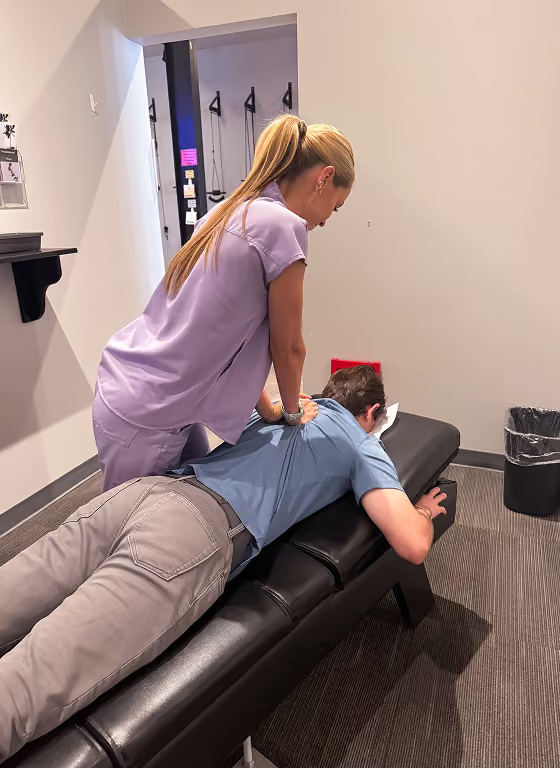
Key Takeaways: Auto Injury Care at Elite Wellness Chiropractic
- Get evaluated early after a car accident. You may feel fine immediately after a crash and still develop pain, stiffness, or other symptoms later.
- Common auto injuries include Whiplash, neck pain, back pain, headaches, sciatica, numbness and tingling, shoulder pain, and hip pain.
- Your first visit gives you a clear starting point. The $60 New Patient Experience includes a comprehensive exam and full-spine X-rays.
- Your treatment plan depends on your injuries. Care may include adjustments, corrective exercises, soft tissue rehabilitation, or spinal decompression when appropriate.
- Your progress is tracked throughout care. Exams, imaging, outcome measurements, and progress notes help document how your condition changes over time.
- You have payment options for auto injury care. Depending on your situation, these may include auto insurance, PIP, Med-Pay, third-party liability coverage, or a Letter of Protection.
- Serious symptoms need medical attention first. If you have signs of a potentially serious injury, seek emergency care before pursuing chiropractic treatment.
Why Early Chiropractic Care After a Car Accident Matters
The biggest mistake people make after a car accident is assuming they’re fine because they don’t feel much pain right away. You might walk away feeling shaken but mostly okay, with a little neck stiffness or a dull headache. Then, a day or two later, you may notice that your neck hurts more, your range of motion is worse, or a headache has set in.
Delayed symptoms are common after whiplash. The Quebec Task Force on Whiplash-Associated Disorders (Spitzer et al., 1995) found that symptoms can develop after the initial injury rather than showing up right away. In the first 24 to 72 hours, inflammation and swelling can increase as the body responds to the damage, which can contribute to pain, stiffness, and other symptoms.
Research also suggests that what happens in the first few days can affect recovery. Sterling et al. (2003) found that sensory changes can develop within the first week after whiplash and may be associated with poorer recovery. In simple terms, the nervous system can become more sensitive after an injury, which may make pain feel more intense and harder to settle.
Early treatment may help. In a randomized controlled trial, Rosenfeld et al. (2003) found that patients who received early active treatment, including cervical mobilization and specific movement exercises, had better pain and functional outcomes at six months and three years than those who followed a more passive approach. A 2006 follow-up study also found that early active treatment was more effective and less costly than standard care.
That doesn’t mean every person who has been in a car accident needs the same treatment or will follow the same recovery timeline. It does mean that getting evaluated early gives you a better understanding of what happened to your body and whether there are injuries that need attention.
If you’ve been in a car accident in the Bee Cave area, don’t wait for significant pain to show up before getting checked. An early evaluation can help identify problems sooner and create a clear record of your injuries and recovery.
How We Help Auto Injury Patients in Bee Cave
After a car accident, you want to know what’s actually going on and what you should do next. That starts with a thorough evaluation, not just a quick adjustment to make the pain feel better for a little while.
The goal of corrective care is to understand how the accident affected your spine and movement, then build a treatment plan around what the exam and imaging show. Your care and progress are also documented throughout treatment, which is important if you’re working with an attorney or insurance company.
Comprehensive Exam and Full-Spine X-Rays ($60 New Patient Experience)
Your first visit is focused on understanding what happened and getting a clear picture of your injuries. Dr. Mikala Hiben, DC, reviews your accident history, performs orthopedic and neurological testing, checks your range of motion, and takes full-spine digital X-rays.
If you have imaging or records from the ER or another provider, bring them with you. They can give Dr. Hiben more information to work with when assessing your condition and planning your care.
The exam also establishes a baseline for your recovery. Findings are recorded using standardized measures, including the Neck Disability Index (NDI) and Visual Analog Scale (VAS) for pain, so your progress can be tracked over time.
Report of Findings and First Adjustment
At your second visit, Dr. Hiben goes over your exam and X-ray findings with you. She explains what was found, what it means, and what she recommends for your care.
You’ll also go over the expected milestones and timeline for your recovery, so you know what to expect before treatment begins. If you decide to move forward with a care plan, your first chiropractic adjustment typically takes place during this visit.
This keeps the focus where it should be: understanding your injury first, then deciding how to address it.
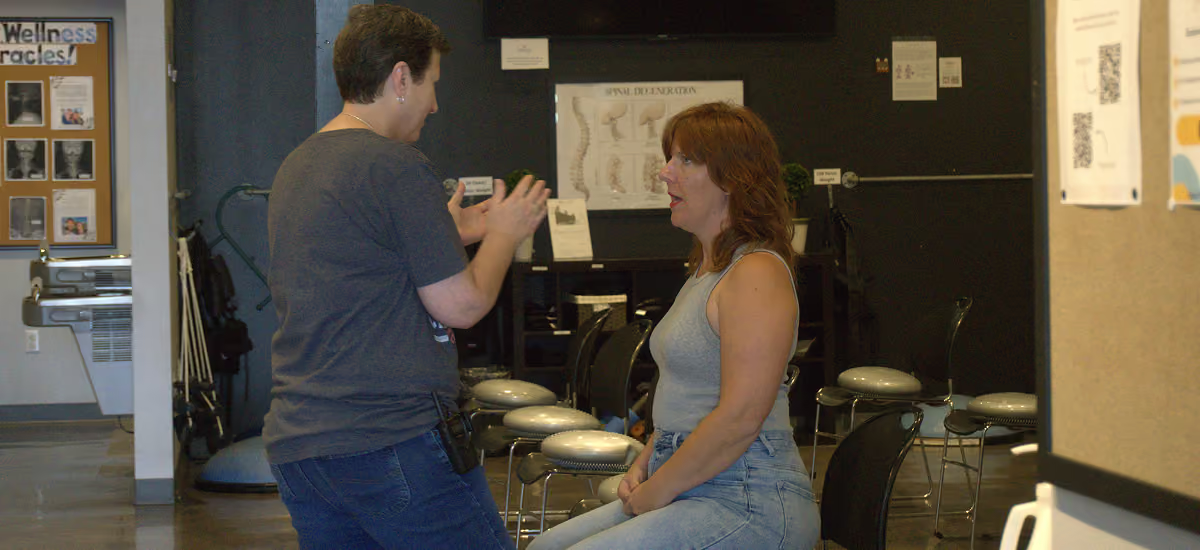
Ongoing Treatment: Corrective Care, Not Just Pain Relief
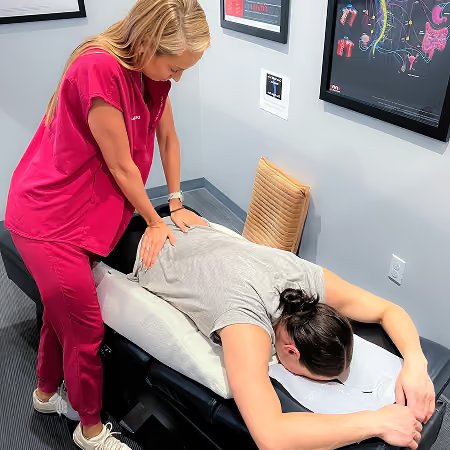
Once your injuries have been evaluated, treatment can include different approaches depending on what was found during your exam and imaging. The goal is not just to make the pain feel better for a little while, but to address the changes caused by the accident and help you regain normal movement.
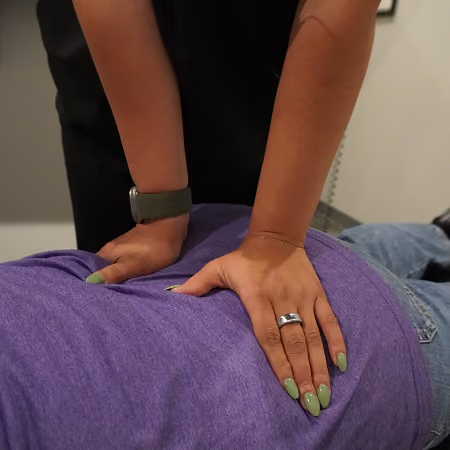
- Spinal adjustments help improve alignment and movement that may have been affected by the collision.
- Corrective exercises help strengthen the muscles that support your spine and help you move normally as you recover.
- Spinal decompression may be used when a disc injury, such as a bulge or herniation, is part of the problem.
- Soft tissue rehabilitation can help with muscle tension, restricted movement, and other soft tissue problems following an accident.
Research supports combining hands-on care with active rehabilitation for some types of neck pain. Bronfort et al. (2001) found greater improvement with spinal manipulation than medication alone at one-year follow-up, while Cleland et al. (2007) found that combining manipulation with targeted exercises improved disability in patients with neck pain.
The right combination depends on your injuries, symptoms, and how your body responds as you recover.
Letters of Protection (LOPs) and Insurance: No Upfront Cost to You
If you were injured in a car accident, figuring out how to pay for treatment may be one of your first concerns. For auto injury cases, Elite Wellness Chiropractic accepts several payment options, including Letters of Protection, auto insurance, Med-Pay, and third-party liability claims.
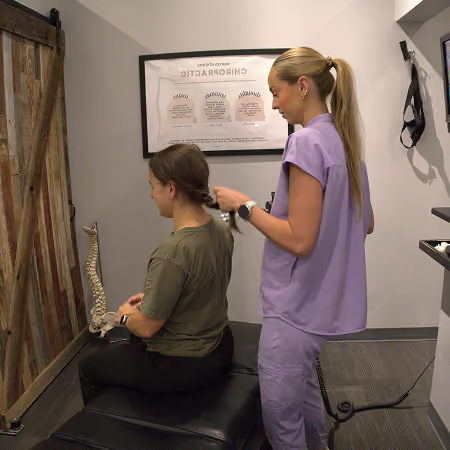
What Is a Letter of Protection?
A Letter of Protection (LOP) is an agreement between you, your attorney, and your healthcare provider. It allows you to receive treatment while your personal injury claim is being resolved, with the cost of care paid from the proceeds of your settlement or judgment.
In other words, you can receive the care you need now without paying the treatment costs out of pocket while your claim is active. Once your case is resolved, your attorney coordinates payment with the chiropractic office.
If you don't have an attorney yet, an LOP isn't the only option. The other payment options available for auto injury cases are explained below.
Your Clear Path to Back Pain Relief: Our 3-Step Process
Elite Wellness Chiropractic is a cash-pay practice for general chiropractic care. Auto injury cases are the exception. If you were injured in a car accident, several payment options may be available:
Letters of Protection (LOPs)
Coordinated through your personal injury attorney.
Auto insurance / PIP (Personal Injury Protection)
Coverage where applicable
Med-Pay
Coverage through your auto insurance policy.
Third-party liability claims
When the at-fault driver's insurance is covering your medical expenses.
HSA and FSA
Can be used for any portion of your care that you need to pay out of pocket.
Texas is an at-fault state, so the driver's insurance may cover medical expenses when that driver is responsible for the accident. Depending on your situation, payment may instead come through your own PIP or Med-Pay coverage, or through a Letter of Protection tied to your personal injury settlement.
The office coordinates with your insurance company or attorney based on the payment option being used, so you know how your treatment will be handled financially before moving forward.
What If I Don't Have an Attorney Yet?
You do not need an attorney to start treatment. Some patients begin care first and decide to work with an attorney later, once they have a better understanding of their injuries and what their case involves.
If you decide you want legal representation, Elite Wellness Chiropractic can also provide referrals to personal injury attorneys in the Austin and Bee Cave area who are familiar with the documentation used in auto injury cases.
Common Auto Injury Conditions We Treat
A car accident can affect more than one part of your body, and symptoms do not always show up right away. Some of the most common problems seen after an auto injury include:
Neck Pain
Neck stiffness, soreness, or reduced range of motion, including symptoms that develop after the accident.
Heading
Disc Herniations & Bulges
Disc injuries that can cause pain, stiffness, or other symptoms depending on where the disc is affected.
Heading
Numbness & Tingling
These symptoms can occur when nerves are irritated or compressed after an injury.
Heading
Whiplash & Auto Injuries
Neck and soft tissue injuries that can happen when the head and body are suddenly moved by the force of a collision.
Heading
What to Expect: Your Auto Injury Treatment Timeline
Every auto injury case is different, and treatment timelines depend on injury severity, the number of body regions involved, and how quickly you begin care. That said, the research provides a general framework that most patients can expect.
Initial Evaluation and Baseline Documentation
Your $60 New Patient Experience includes two visits during the first week. During your first visit, you’ll have a comprehensive examination and full-spine X-rays. At the second visit, Dr. Hiben reviews the findings with you, explains the recommended treatment plan, and, if you decide to move forward with care, provides your first adjustment.
Baseline measurements are also recorded at this stage so your condition and progress can be tracked throughout treatment.
Acute Phase Treatment
During the first few weeks, care generally focuses on helping reduce pain and inflammation, improving your range of motion, and getting you moving more comfortably. Many auto injury patients begin with two to three visits per week, although the frequency can vary from person to person.
Carroll et al. (2009) found that staying active during the early stages of whiplash recovery may help reduce the risk of longer-term problems. A formal reassessment using the Neck Disability Index (NDI) and Visual Analog Scale (VAS) is typically done around the two-week mark to see how you’re progressing.
Corrective Phase
As your symptoms improve, treatment may shift toward rebuilding strength and improving the way your body moves. Visit frequency typically decreases to one or two visits per week, depending on your progress.
Corrective exercises may be introduced to strengthen the muscles that support your spine and help restore normal movement. Another formal reassessment around week four helps track your progress and provides updated documentation for your case.
Stabilization and Maximum Medical Improvement
For some Grade I and Grade II whiplash injuries, maximum medical improvement (MMI) may be reached during this period. MMI means your condition has reached a point where significant further improvement is no longer expected with continued care.
If you are still improving, your treatment plan may continue. As care progresses, visit frequency may decrease, with more emphasis on maintaining the progress you’ve made. A reassessment around week eight or twelve can help determine where you are in your recovery.
Complex or Multi-Region Injuries
Not every auto injury follows a 12-week timeline. Injuries involving disc herniations, multiple areas of the spine, or pre-existing degenerative conditions aggravated by the accident may require a longer course of care.
If your recovery is taking longer, Dr. Hiben can explain why and adjust your treatment plan as needed. Updated findings and progress can also be documented for your attorney when applicable.
Documentation & Legal Coordination
After a car accident, keeping clear records of your injuries, treatment, and progress is important. These records can also be provided to your attorney or insurance company when needed.
What We Provide to Your Attorney
Your records may include:
- Complete intake records, including your accident history, how the injury occurred, and your initial symptoms
- Diagnostic imaging reports, including X-ray findings and referrals for an MRI when clinically indicated
- Standardized outcome measurements, such as the NDI and VAS, recorded at regular intervals
- Progress notes from each visit, including the treatment provided, your response to care, and changes in your condition
- Formal reassessment reports at key points during treatment
- Treatment summaries explaining your injuries, the care provided, and your progress during recovery
- Impairment rating documentation when applicable

How We Handle Insurance Coordination
If your care is being covered through auto insurance, PIP, Med-Pay, or a third-party liability claim, the office verifies your coverage and submits claims on your behalf. The administrative side of the process is handled with the appropriate insurance company.
If you are using a Letter of Protection, the office coordinates billing and lien documentation directly with your attorney's office.
What Gets Documented During Your Care
| Milestone | Timing | What Is Documented |
|---|---|---|
| Baseline Assessment | Week 1 | Exam findings, X-ray results, NDI/VAS scores, and accident history |
| First Reassessment | Week 2 | Pain levels, range of motion, and changes in function |
| Mid-Treatment Reassessment | Week 4-6 | Progress compared with your baseline and any treatment plan changes |
| MMI Evaluation | Week 8-12 | Outcome measurements, treatment summary, and impairment rating if applicable |
| Discharge Summary | End of care | Complete treatment summary and documented progress |
What Makes Strong Documentation
Insurance adjusters and defense attorneys look for gaps in treatment, inconsistent records, and subjective complaints without objective findings. EWC's documentation approach is built to withstand scrutiny. Every clinical claim is supported by examination findings, imaging evidence, or standardized outcome measurements. Treatment frequency and duration are consistent with published clinical guidelines. Progress is tracked objectively, not just by patient-reported symptoms.
This level of documentation protects the value of your claim. It also ensures that the care you receive is clinically justified and evidence-based, which is the standard Dr. Hiben holds regardless of whether a legal case is involved.
When to Seek Emergency Care vs. Chiropractic Evaluation
Some injuries after a car accident need immediate medical attention. Others can be evaluated after serious injuries have been ruled out. If you are unsure about your symptoms or believe you may have a serious injury, seek medical attention.
Go to the Emergency Room Immediately If You Experience:
- Loss of consciousness at the scene, even briefly
- A severe headache with neck stiffness and fever
- Weakness in your arms or legs that is getting worse
- Numbness or tingling in both arms or both legs at the same time
- Loss of bowel or bladder control
These symptoms can be associated with serious injuries that require immediate medical evaluation and, in some cases, emergency imaging or other treatment.
Seek Chiropractic Evaluation When:
- Neck stiffness, soreness, or reduced range of motion after the accident
- Headaches that develop in the hours or days following the collision
- Back pain that starts immediately or develops later
- Mild to moderate numbness or tingling affecting one arm or one leg
- Feeling mostly fine after a significant collision, since some symptoms can take time to appear
The ER and Chiropractic Serve Different Roles
An emergency department is equipped to evaluate urgent problems such as fractures, internal bleeding, and spinal cord injuries. If you were seen in the ER and serious injuries were ruled out, you may still have pain, stiffness, or other musculoskeletal symptoms that need follow-up.
A chiropractic evaluation can help assess those problems and determine whether chiropractic care is appropriate for your situation. If additional medical evaluation is needed, that should come first.
Frequently Asked Questions About Auto Injury Chiropractic Care
No. In Texas, you do not need a referral from a medical doctor to receive chiropractic care. You can schedule directly with Elite Wellness Chiropractic. If you were seen at the ER or by your primary care physician, bring any records or imaging from those visits. They help Dr. Hiben build a more complete picture of your injuries and strengthen the documentation for your claim.
Yes. This is one of the most important things to understand about auto injuries. Spitzer et al. (1995) documented that whiplash symptoms commonly appear 24 to 72 hours after the accident due to the body's inflammatory response and the time it takes for tissue swelling to compress nerves. Sterling et al. (2003) showed that early sensory changes, even before significant pain develops, predict whether an injury will become chronic. Getting evaluated within the first few days, even if you feel relatively fine, allows us to identify injury patterns before they progress and creates a documented link between the accident and your injuries for insurance and legal purposes.
For auto injury cases specifically, yes. This is the one exception to EWC's cash-pay model. We accept auto insurance (PIP and Med-Pay coverage), third-party liability claims through the at-fault driver's insurance, and Letters of Protection coordinated through personal injury attorneys. HSA and FSA payments are also accepted. For most car accident patients, there is no upfront out-of-pocket cost.
A Letter of Protection is an agreement between you, your attorney, and your healthcare provider. It allows you to receive treatment while your personal injury claim is being resolved, with the cost of care paid from the proceeds of your settlement or judgment.
You generally do not pay the treatment costs out of pocket while the claim is active. Your attorney coordinates payment with the office once the case is resolved.
There isn't one timeline that applies to every auto injury. Treatment depends on the severity of your injuries, how many areas were affected, and how you respond to care.
Some people recover within several weeks, while more complex injuries may require longer treatment. Your progress is reassessed throughout care, and your treatment plan can be adjusted as your condition changes.
Yes. Auto injury records can include your initial examination findings, imaging reports, standardized outcome measurements, progress notes, reassessments, and a treatment summary.
If you have an attorney, these records can be provided to their office as needed throughout your case.
Absolutely. Many auto injury patients come to EWC after they have already retained a personal injury attorney. The office can coordinate directly with your attorney regarding Letters of Protection, billing, and medical records.
If your attorney has specific documentation requests, you can provide those when you begin treatment.
Texas is an at-fault state, so the other driver's liability insurance may cover medical expenses when that driver is responsible for the accident. Depending on your situation, your care may also be covered through your own PIP or Med-Pay coverage, or handled through a Letter of Protection tied to your personal injury claim.
The payment option available to you will depend on your coverage and circumstances. EWC can coordinate with your insurance company or attorney based on the arrangement being used.
Still have questions?
Don't Wait. Early Treatment Means Better Recovery and a Stronger Claim.
You may feel fine after a crash and still have an injury that becomes more noticeable over the following hours or days. Getting evaluated early gives you a clearer picture of what happened and provides a baseline for tracking your recovery.
The $60 New Patient Experience includes a comprehensive exam and full-spine X-rays. From there, Dr. Mikala Hiben, DC, can explain what was found and what your next steps may look like.
If you've been injured in a car accident in Bee Cave, Lakeway, Westlake, or the greater Austin area, schedule your evaluation with Elite Wellness Chiropractic.
to schedule your auto injury evaluation today. The sooner you start, the better your outcome.
Dr. Mikala Hiben, DC, provides auto injury chiropractic care in Bee Cave, TX, serving patients throughout the greater Austin area including Lakeway, Westlake, Dripping Springs, and Southwest Austin. Elite Wellness Chiropractic is located at 12101 Bee Caves Rd #5B, Bee Cave, TX 78738. For attorney referrals and legal documentation inquiries, visit our Attorney resources page.
- Bronfort, G., Evans, R., Nelson, B., Aker, P. D., Goldsmith, C. H., & Vernon, H. (2001). A randomized clinical trial of exercise and spinal manipulation for patients with chronic neck pain. Spine, 26(7), 788-797. DOI
- Carroll, L. J., Holm, L. W., Hogg-Johnson, S., Cote, P., Cassidy, J. D., Haldeman, S., Nordin, M., Hurwitz, E. L., Carragee, E. J., van der Velde, G., Peloso, P. M., & Guzman, J. (2009). Course and prognostic factors for neck pain in whiplash-associated disorders (WAD): Results of the Bone and Joint Decade 2000-2010 Task Force on Neck Pain and Its Associated Disorders. Journal of Manipulative and Physiological Therapeutics, 32(2 Suppl), S97-S107. DOI
- Cleland, J. A., Glynn, P., Whitman, J. M., Eberhart, S. L., MacDonald, C., & Childs, J. D. (2007). Short-term effects of thrust versus nonthrust mobilization/manipulation directed at the thoracic spine in patients with neck pain: A randomized clinical trial. Physical Therapy, 87(4), 431-440. DOI
- Hurwitz, E. L., Morgenstern, H., Harber, P., Kominski, G. F., Yu, F., & Adams, A. H. (2002). A randomized trial of chiropractic manipulation and mobilization for patients with neck pain: Clinical outcomes from the UCLA neck-pain study. American Journal of Public Health, 92(10), 1634-1641. DOI
- Rosenfeld, M., Gunnarsson, R., & Borenstein, P. (2000). Early intervention in whiplash-associated disorders: A comparison of two treatment protocols. Spine, 25(14), 1782-1787. DOI
- Rosenfeld, M., Seferiadis, A., Carlsson, J., & Gunnarsson, R. (2003). Active intervention in patients with whiplash-associated disorders improves long-term prognosis: A randomized controlled clinical trial. Spine, 28(22), 2491-2498. DOI
- Rosenfeld, M., Seferiadis, A., & Gunnarsson, R. (2006). Active involvement and intervention in patients exposed to whiplash trauma in automobile crashes reduces costs: A randomized, controlled clinical trial and health economic evaluation. Spine, 31(16), 1799-1804. DOI
- Spitzer, W. O., Skovron, M. L., Salmi, L. R., Cassidy, J. D., Duranceau, J., Suissa, S., & Zeiss, E. (1995). Scientific monograph of the Quebec Task Force on Whiplash-Associated Disorders: Redefining "whiplash" and its management. Spine, 20(8S), 1S-73S. DOI
- Sterling, M., Jull, G., Vicenzino, B., & Kenardy, J. (2003). Sensory hypersensitivity occurs soon after whiplash injury and is associated with poor recovery. Pain, 104(3), 509-517. DOI
- Sterling, M., Jull, G., Vicenzino, B., Kenardy, J., & Darnell, R. (2004). The development of psychological changes following whiplash injury. Pain, 106(3), 481-489. DOI