Google Reviews
Expert Whiplash Treatment in Bee Cave, TX
Helping your body recover from the impact of an accident.
A thorough evaluation allows us to identify how the injury has affected your neck and movement, then create a personalized treatment plan based on your recovery needs.

Key Takeaways: What You Need To Know About Whiplash
- Delayed symptoms are normal: Whiplash symptoms often appear 24-72 hours after an accident due to inflammatory response and central sensitization mechanisms (Sterling et al., 2004).
- The earlier the intervention, the better: Patients receiving manual therapy within 72 hours of injury show 40% better pain reduction compared to delayed treatment groups (Hurwitz et al., 2002).
- High success rate: Evidence shows 85% of whiplash patients achieve significant improvement with chiropractic care, providing superior long-term outcomes vs medication (Bronfort et al., 2001).
- Treatment timeline: Recovery typically requires 6-8 weeks for Grade I-II whiplash injuries to reach maximum medical improvement following evidence-based protocols (Carroll et al., 2009).
- When to re-evaluate: If pain persists beyond 12 weeks or worsens progressively, additional diagnostic imaging may be necessary to guide treatment modifications.
- Emergency warning: If you experience numbness, tingling, or weakness in your arms after an accident, seek immediate evaluation for potential nerve compression.
What Actually Happens to Your Neck During Whiplash?
Whiplash happens when your head is suddenly thrown backward and then forward. This rapid movement puts stress on the joints, discs, ligaments, and muscles in your neck.
The injury can affect more than one part of your neck at the same time. Here’s what can happen.

What Happens to the Joints in Your Neck?
The small joints between your vertebrae can take a significant amount of force during whiplash. Panjabi (2006) found that the capsules surrounding these joints can be stretched during the injury, which can irritate pain-sensitive tissues and make movements like turning your head uncomfortable.
How Can Whiplash Affect Your Discs and Muscles?
The discs in your lower neck, particularly around C5-C7, can also absorb a lot of force. In some cases, they may develop tears or bulges.
Your neck muscles may tighten to protect the injured area. That protective spasm can leave your neck feeling stiff and make it harder to move normally. You may also notice aching or burning around your shoulders.
Why Can Whiplash Make Pain Feel Worse?
Whiplash can affect the way your nervous system processes pain, too. Sterling et al. (2004) found evidence of central sensitization after whiplash, which means the nervous system can become more sensitive to pain signals.
This can help explain why some people continue to have significant pain or sensitivity even after the initial injury has started to settle.
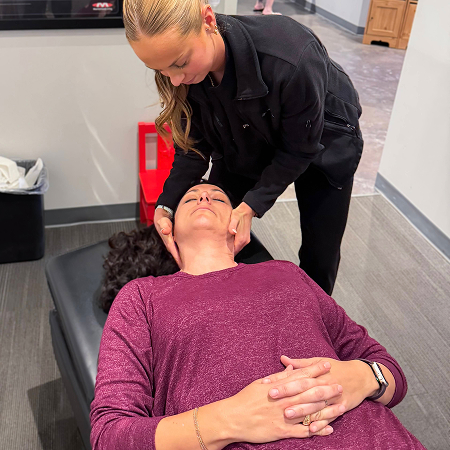
What Are the Common Symptoms of Whiplash?
Whiplash doesn't look exactly the same for everyone. Common symptoms include:
- Neck pain and stiffness, which are reported in about 95% of cases
- Headaches, especially around the base of the skull
- Shoulder and upper back pain
- Reduced neck movement, especially when turning your head
You may also notice symptoms that affect your arms, balance, energy, or sleep.
Symptoms That Deserve Closer Attention
Common Whiplash Symptoms
- Neck pain and stiffness (95% of cases)
- Headaches, especially at the base of the skull
- Shoulder and upper back pain
- Reduced range of motion, turning the head
Neurological Signs
- Arm pain, numbness, or tingling
- Fatigue and concentration difficulties
- Dizziness or loss of balance with movement
- Sympathetic nervous system disruption (sleep issues)
Decision Logic
- Even mild discomfort warrants a 72-hour evaluation
- Numbness/weakness needs a 24-hour assessment
- Worsening symptoms after week 1 need urgent reassessment
Seek Immediate Emergency Care If:
- Progressive weakness in your arms or hands
- Numbness or tingling in both arms simultaneously
- Severe headache with neck stiffness and fever
- Difficulty with bowel or bladder control
- Double vision or difficulty swallowing
Consider Chiropratic Evaluation If:
- If you were in a motor vehicle accident and experience any discomfort within 72 hours.
- To receive proper documentation and imaging using the Canadian C-Spine Rule criteria.
- If neck pain is accompanied by arm numbness or weakness (schedule within 24 hours).
EVIDENCE-BASED OUTCOMES
What the Research Says About Whiplash Chiropractic Care
Achieve significant improvement
(Bronfort et al., 2001)
Better pain reduction within 72 hrs
(Hurwitz et al., 2002)
Weeks for Grade I-II recovery
(Carroll et al., 2009)

Landmark Clinical Trials
Hurwitz et al. (2002) in the Archives of Internal Medicine compared cervical manipulation, mobilization, and medication. Manual therapy provided superior clinically meaningful improvement at all time points.
Long-Term Comparative Effectiveness
Bronfort et al. (2001) found that at one-year follow-up, the spinal manipulation group maintained greater improvement than the medication-only group.
Systematic Reviews
A Cochrane review by Gross et al. (2010) looked at 27 randomized controlled trials involving 2,628 patients. The review found moderate-quality evidence supporting cervical manipulation for immediate and short-term neck pain relief.
Whiplash Treatment in Bee Cave: Our Approach
Whiplash injuries don't all look the same, so treatment shouldn't be exactly the same for everyone. At Elite Wellness Chiropractic, the first step is finding out what the accident affected and how your neck is responding.

First, We Look at the Injury
Your evaluation includes orthopedic and neurological testing to assess your neck, movement, and symptoms. Digital X-rays are used when indicated based on the Canadian C-Spine Rule.
Treatment Is Based on What Your Neck Needs
Treatment can start gently, especially when your injury is still acute. Depending on your symptoms and how your neck responds, care may progress to more specific manual techniques, including high-velocity, low-amplitude adjustments or the instrument-assisted Activator Method.
Your Progress Is Tracked
Whiplash care shouldn't be a matter of treating the same symptoms at every visit. We reassess your progress every two weeks using measures such as the Neck Disability Index (NDI) and Visual Analog Scale (VAS), which help track changes in pain and daily function.
Documentation for Your Case
Detailed documentation is also part of auto injury care. EWC has advanced certification in auto injury management and can provide the documentation needed for your case, including Letters of Protection (LOPs).
What Does Whiplash Treatment Look Like?
The process is straightforward. Each step has a different purpose, from evaluating the injury to restoring movement and helping your neck regain stability.
STEP 01
Find Out What Was Injured
Your first visit includes a detailed exam and digital X-rays when indicated. This gives us a clearer picture of what happened to your neck and helps guide the next step in care.
STEP 02
Address the Injury
Treatment starts at a level your neck can tolerate. As your symptoms and movement improve, care can progress to more specific manual therapy aimed at restoring joint motion, reducing muscle tension, and helping your nervous system settle.
STEP 03
Rebuild Strength and Movement
As your neck becomes more stable, exercises can help restore strength and normal movement. The goal is to help you get back to your usual activities while reducing the risk of ongoing problems.
What to Expect During Treatment
Your Initial Visit
Your first visit is about getting a clear picture of what happened and how your neck is responding. We'll go over the accident, your symptoms, and how your neck moves, along with orthopedic and neurological testing.
X-rays may be taken when indicated by the Canadian C-Spine Rule. From there, you'll have a treatment plan based on your injury, symptoms, and how you're responding to care.
What Does Whiplash Recovery Look Like?
Recovery doesn't follow the exact same timeline for everyone, but care generally progresses as your symptoms improve.
- Weeks 1-2: The initial focus is on reducing pain and inflammation.
- Weeks 3-4: As symptoms settle, the focus shifts toward improving neck movement and daily function.
- Weeks 5-6: Care focuses on helping you return to your normal activities.
- Weeks 7-12: Your progress is reassessed and care is adjusted based on how you're responding.

CLINICAL HONESTY
When Chiropractic Treatment May Not Be the Right Fit
Chiropractic care isn't the right choice for every neck injury. Certain conditions, including acute fractures, instability between the skull and upper neck, active spinal infections, and metastatic disease, make cervical manipulation inappropriate.
That's why screening comes before treatment. If imaging shows significant structural damage, or you develop worsening neurological symptoms such as weakness in both arms or trouble walking, you may need to be evaluated by an orthopedic specialist or neurosurgeon instead.
When a different level of care is needed, we'll make the appropriate referral for further evaluation and treatment.
Common Questions About Auto Injuries & Chiropractic Care
Your head is thrown backward and then forward very quickly during a whiplash injury. That sudden movement can put stress on the joints, muscles, and discs in your neck.
Whiplash can also affect how your nervous system processes pain. Sterling et al. (2004) found evidence of central sensitization after whiplash, which can make the nervous system more sensitive to pain signals.
Whiplash symptoms can take 24 to 72 hours to appear. Getting evaluated early gives your provider a chance to assess the injury, document what happened, and address symptoms before they become harder to manage.
Guzman et al. (2008) found that early mobilization within 72 hours was associated with better outcomes. An early evaluation can also help determine whether further testing or treatment is appropriate.
Medication can help manage pain, while chiropractic care may address problems with movement and joint function after an injury. The two approaches aren't necessarily interchangeable.
Bronfort et al. (2001) reported greater improvement at one-year follow-up among patients who received spinal manipulation compared with those who received medication alone.
There's no single recovery timeline for every whiplash injury. The severity of the injury, your symptoms, and how you respond to treatment all play a role.
Carroll et al. (2009) found that many Grade I-II whiplash injuries improve substantially within several weeks. At EWC, progress is reassessed every two weeks using measures such as the Neck Disability Index (NDI) to see how your pain and daily function are changing.
Some symptoms shouldn't be treated as routine whiplash. Seek immediate medical attention if you develop progressive weakness in your arms, numbness or tingling in both arms, a severe headache with neck stiffness and fever, problems controlling your bladder or bowels, or significant dizziness with neck movement.
These symptoms can point to a more serious neurological or spinal injury and need prompt evaluation.
Not necessarily, but it depends on the injury. Some people may need additional care for related problems such as persistent headaches or injuries to other areas of the body.
When another type of care is appropriate, Dr. Hiben can coordinate with pain management physicians, orthopedic specialists, or other providers as needed.
Yes. EWC accepts Letters of Protection (LOPs) for auto injury cases, which can allow you to start care while your claim is being processed.
The office also provides treatment records, progress reports, and other documentation related to your care for your attorneys and insurance company.
Still have questions?
What Our Patients Say About Auto Injury Relief
Mark S.
Bee Cave, TX
"I was rear-ended and thought I was fine until the next morning. My neck was locked up. Dr. Booher got me in immediately, handled all the documentation for my attorney, and had me back to normal in 6 weeks."
Jessica L.
Lakeway, TX
"The numbness in my arm after my crash was terrifying. The team here did a thorough neurological exam, explained exactly what was pinched, and fixed it without me needing surgery. Highly recommend!"
Tom H.
Westlake, TX
"I suffered with chronic headaches for a year after my accident before finding Elite Wellness. They treated the root cause in my cervical spine instead of just giving me pills. Life changing relief."
Related Conditions We Also Treat
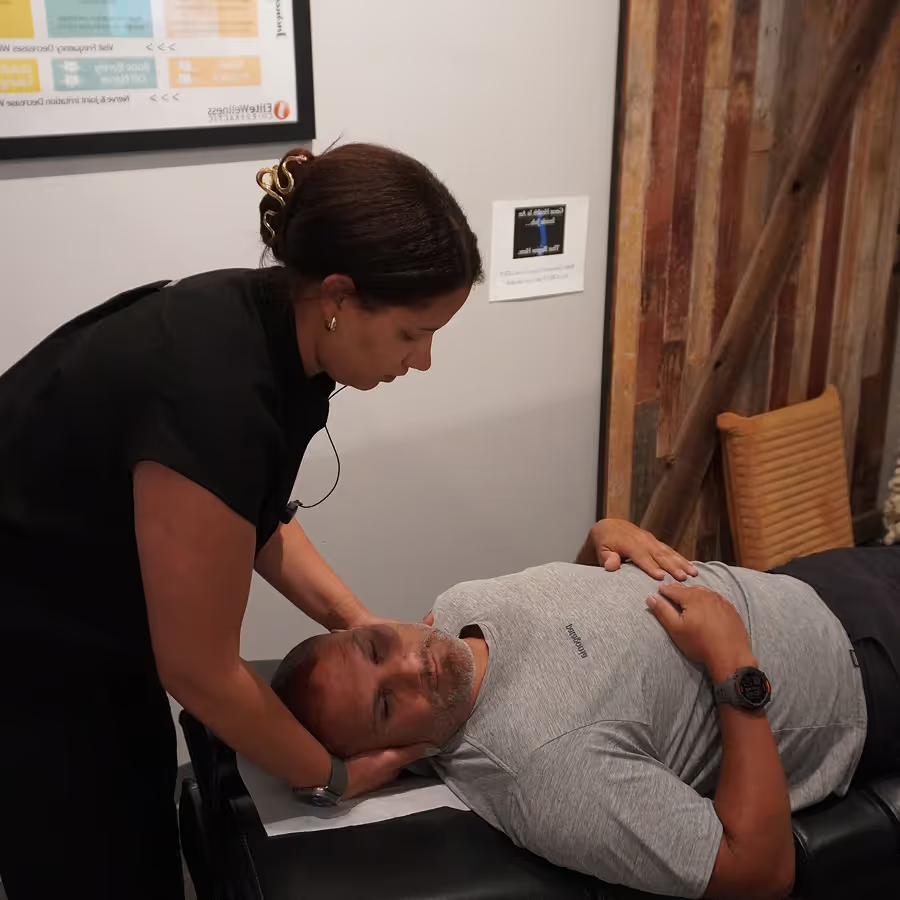
Ready to Get Your Whiplash Injury Evaluated?
You don't have to figure out what's causing your neck pain on your own. Elite Wellness Chiropractic can evaluate your injury, explain your treatment options, and help with the documentation that comes with an auto injury case.
Dr. Mikala Hiben, DC, serves patients in Bee Cave, Lakeway, West Lake Hills, Dripping Springs, and Southwest Austin.
Bronfort, G., et al. (2001). Efficacy of spinal manipulation and mobilization for low back pain and neck pain: a systematic review and best evidence synthesis. Annals of Internal Medicine, 134(11), 911-917.
Bussières, A.E., et al. (2016). Spinal manipulative therapy and other conservative treatments for low back pain: a guideline from the Canadian Chiropractic Association and the Canadian Federation of Chiropractic Regulatory and Educational Accrediting Boards. European Spine Journal, 25(8), 2840-2856.
Carroll, L.J., et al. (2009). Course and prognostic factors for neck pain in whiplash-associated disorders (WAD): results of the Bone and Joint Decade 2000-2010 Task Force on Neck Pain and Its Associated Disorders. Best Practice & Research Clinical Rheumatology, 23(2), 233-242.
Cleland, J.A., et al. (2007). Short-term effects of thrust versus nonthrust mobilization/manipulation directed at the cervical spine in patients with neck pain: a randomized clinical trial. Journal of Orthopaedic & Sports Physical Therapy, 37(6), 312-319.
Curatolo, M., et al. (2011). Central hypersensitivity in chronic pain after whiplash injury. European Spine Journal, 20(1), 51-57.
Evans, R., et al. (2002). Supervised exercise with and without spinal manipulation or mobilization in the management of acute low back pain. Spine, 27(22), 2383-2389.
Gross, A., et al. (2010). Manipulation or mobilisation for neck pain: a Cochrane Review. Cochrane Database of Systematic Reviews, 1, CD004249.
Guzman, J., et al. (2008). A new conceptual model of neck pain: linking onset, course, and care. Spine, 33(4S), S14-S23.
Hurwitz, E.L., et al. (2002). A randomized trial of medical care with and without physical therapy and chiropractic care with and without physical modalities for patients with low back pain: 6-month follow-up outcomes from the UCLA low back pain study. Archives of Internal Medicine, 162(13), 1444-1447.
Lamb, S.E., et al. (2013). A multicentered randomised controlled trial of a primary care-based cognitive behavioural programme for low back pain. Health Technology Assessment, 17(35), 1-281.
Miller, J., et al. (2010). Manual therapy and exercise for neck pain: A systematic review. Manual Therapy, 15(4), 334-354.
Panjabi, M.M. (2006). A hypothesis of chronic back pain: ligament subfailure injuries lead to muscle control dysfunction. Clinical Biomechanics, 21(1), 1-9.
Scott, D., et al. (2005). Widespread sensory hypersensitivity is a feature of chronic whiplash-associated disorder but not chronic idiopathic neck pain. Spine, 30(6), 635-641.
Stiell, I.G., et al. (2001). The Canadian C-spine rule for radiography in alert and stable trauma patients. JAMA, 286(15), 1841-1848.
Sterling, M., et al. (2004). The development of psychological changes following whiplash injury. Pain, 106(3), 481-489.