Google Reviews
Expert Sciatica Treatment in Bee Cave, TX
Helping you move beyond pain and get back to doing what you love.
Our corrective approach focuses on the underlying factors contributing to your sciatica, with care tailored to your symptoms, movement, and individual needs.
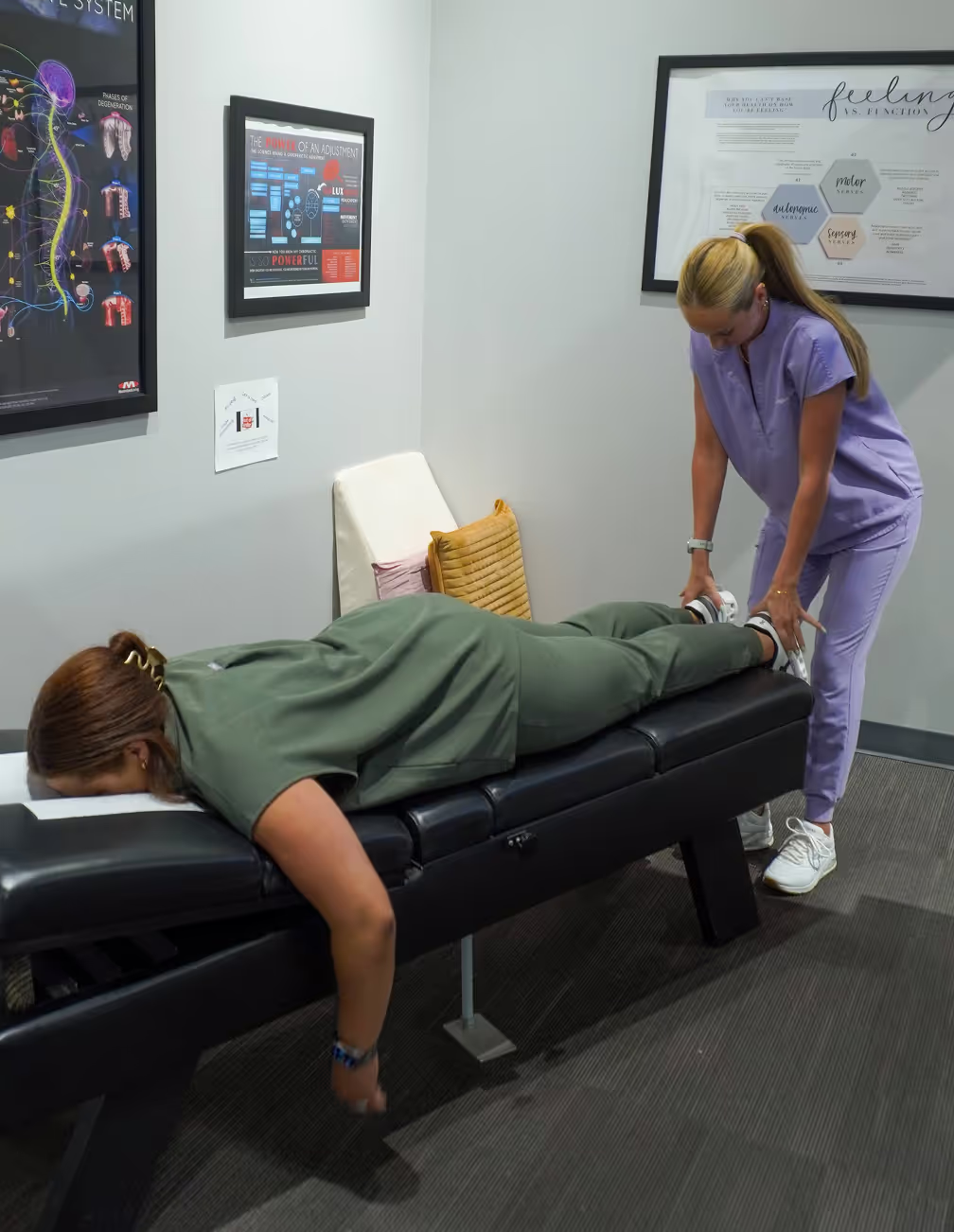
Key Takeaways: What You Need To Know About Sciatica Treatment
- Sciatica affects the sciatic nerve pathway from L4-S3 nerve roots, with 85-90% of cases caused by lumbar disc herniation creating both mechanical compression and inflammatory responses (Lewis et al., 2007)
- Chiropractic manipulation shows 60% success rates compared to 40% for surgery in treating acute sciatica, with mean Oswestry Disability Index improvements of 25.1 points versus 16.5 points for surgical intervention (McMorland et al., 2010)
- 90% of sciatica patients experience resolution within 12 weeks of conservative treatment (Pengel et al., 2003), with reassessment every 2 weeks to track progress and adjust protocols
- 50% improvement in pain scores typically occurs by week 4 of chiropractic treatment, with early improvement at 2 weeks being a strong predictor of success (Fritz et al., 2005)
- When symptoms persist beyond 6 weeks without improvement, MRI evaluation and specialist consultation should be considered to rule out surgical indications
- If sciatica symptoms include bowel/bladder dysfunction, saddle anesthesia, or bilateral leg weakness, seek emergency medical attention immediately (potential cauda equina syndrome)
Understanding Sciatica - What's Actually Happening in Your Body
Sciatica happens when a nerve root in the lower spine becomes irritated or compressed, sending symptoms along the path of the sciatic nerve. That can mean pain, tingling, numbness, or weakness that starts in the lower back or buttock and travels down the leg.
But there is more to sciatica than a nerve simply being "pinched." Pressure on the nerve and inflammation around it can both play a role in the symptoms you feel.
Why Does Sciatica Cause Pain Down Your Leg?
The sciatic nerve is made up of nerve roots that come from the lower spine, including L4 through S3. These nerves travel through the buttock and down each leg, which is why a problem in the lower back can cause symptoms much farther down the body.
When a nerve root becomes irritated, the result isn't always just pain. You may also notice numbness, tingling, burning, or weakness in the leg or foot.
Research suggests that mechanical pressure alone doesn't explain all of these symptoms. Inflammation around the nerve can add another layer of irritation, which helps explain why sciatica can feel so intense even when the amount of physical compression varies. (Takahashi et al., 2003)
How Can a Herniated Disc Cause Sciatica?
A herniated disc is one of the common causes of sciatica. The discs between your vertebrae have a softer, gel-like center. When part of a disc pushes outward, it can put pressure on a nearby nerve root and contribute to inflammation.
That combination can produce the familiar pattern of sciatica: pain, numbness, tingling, or weakness that travels down the leg.
It also explains why two people can have similar findings on an image but experience very different symptoms. The amount of pressure, the location of the disc problem, and the inflammatory response around the nerve can all influence how a person feels. (Lewis et al., 2007)
Why Are L4-L5 and L5-S1 Commonly Involved?
The lower part of the spine handles a lot of the movement and mechanical stress involved in everyday life. The L4-L5 and L5-S1 levels are particularly prone to disc changes and herniation, which is one reason problems in these areas commonly show up in people with sciatica. (Adams & Roughley, 2006)
Understanding where the irritation is coming from matters because sciatica isn't exactly the same for everyone. The location and cause of the nerve irritation can affect which symptoms you experience and how those symptoms respond to care.
Signs, Symptoms & When to Pay Attention
One thing that can make sciatica confusing is that your leg may hurt more than your back. Sciatica can cause pain, numbness, tingling, or weakness along the path of the sciatic nerve, and the symptoms don't always look the same from one person to the next.
What Does Sciatica Usually Feel Like?
- Sharp, shooting, or burning pain radiating down the leg
- Numbness/tingling (pins-and-needles)
- Weakness in the affected leg/foot
- Worsens with prolonged sitting, coughing, or sneezing
Secondary Symptoms
- Deep aching in the buttock region
- Muscle spasms in the lower back/hip
- Difficulty bearing weight on the affected leg
- Pain relief when walking or changing positions frequently
Assessment & Testing
- Unilateral leg pain greater than back pain
- ositive Straight Leg Raise
- Positive Crossed Straight Leg Raise (88% specificity)
- Positive Crossed Straight Leg Raise
When Should You Seek Emergency Care?
Some symptoms require immediate medical attention rather than a routine chiropractic evaluation. Seek emergency care if you develop:
- Loss of bladder or bowel control
- Numbness around the genital or anal area, known as saddle anesthesia
- Weakness affecting both legs
- Rapidly worsening muscle weakness
- Fever along with back and leg pain
These symptoms can indicate a more serious underlying problem and should not be ignored.
When Should You Consider an Evaluation?
If your symptoms aren't improving, it's worth having them evaluated rather than simply continuing to manage the pain on your own. An evaluation may be especially helpful if:
- Your symptoms continue for more than 6 weeks without improvement
- Your ability to move or function has stopped improving, even if the pain has decreased
- Your work or daily activities seem to be keeping the symptoms going
- You're considering injections, surgery, or another invasive treatment
EVIDENCE-BASED OUTCOMES
What the Research Says About Chiropractic Treatment for Sciatica
Success vs 40% for surgery
(McMorland et al., 2010)
Mean pain reduction (VAS scale)
(Coulter et al., 2018)
Of patients avoid surgery
(Peul et al., 2007)

Landmark Clinical Trials
McMorland et al. (2010) compared spinal manipulation with microdiscectomy in patients with acute and subacute sciatica. At the 2-year follow-up, 60% of patients in the manipulation group met the study's criteria for success, compared with 40% in the surgery group. The manipulation group also had greater functional improvement.
That doesn't mean manipulation is a replacement for surgery in every case. Surgery may still be appropriate when there is significant or progressive nerve damage or another reason for surgical treatment.
Systematic Evidence
Coulter et al. (2018) reviewed 12 randomized controlled trials involving 2,887 patients. Across the studies, manual therapy was associated with improvements in pain and function, with a mean pain reduction of 12 points on a visual analog scale.
The studies included different manual therapy approaches, so these findings shouldn't be taken to mean that every patient will have the same response.
Comparative Effectiveness
Peul et al. (2007) compared early surgery with prolonged conservative treatment for sciatica. Surgery produced faster relief during the early stages, but the difference between the groups was no longer significant at the 1- to 2-year follow-up.
Among the patients who received conservative care, 90% avoided surgery.
Our Approach to Sciatica Treatment in Bee Cave
Dr. Mikala Hiben, DC, doesn't treat sciatica based on the diagnosis alone. The examination looks at the symptoms, neurological findings, movement, and areas of the spine that may be contributing to the nerve irritation.

Diagnostic Assessment
The assessment includes neurological and orthopedic testing to look for signs of nerve involvement. Straight Leg Raise and slump testing may be used alongside other tests to identify the pattern of irritation and how it is affecting the leg.
Specialized Techniques
Treatment may include manual chiropractic adjustments to the lumbar spine and pelvic adjustments when the sacroiliac joint is involved. Decompressive techniques may be used when disc-related irritation is contributing to the symptoms.
Comprehensive Methodology
Treatment is not based on a set number of adjustments for every person. Findings from the examination are used to determine the initial approach, and care can include manual therapy, education, and specific home strategies.
Reassessment & Monitoring
Symptoms are only one part of the picture. Progress is also assessed through changes in function and validated outcome measures, with reassessments used to see whether the current approach is producing meaningful improvement.
Your Clear Path to Sciatica Relief:
Our 3-Step Process
STEP 01
Comprehensive Discovery
The first visit includes a detailed neurological and orthopedic assessment to look at your symptoms, movement, strength, and signs of nerve irritation. X-rays may be recommended when they are clinically appropriate.
STEP 02
Personalized Corrective Plan
The findings from the assessment guide the treatment plan. Care may include specific chiropractic adjustments, other manual techniques, and home care strategies based on the source of your symptoms and how you respond to treatment.
STEP 03
Achieve & Maintain Results
As symptoms and function improve, treatment can be adjusted to match your progress. This may mean changing the frequency of visits, progressing home exercises, or focusing more on maintaining the improvements you've made.
What to Expect During Treatment at Our Bee Cave Clinic
Initial & Active Phases (Weeks 1-6)
- Weeks 1-2 (Initial): Early visits focus on managing pain and irritation while identifying how the nerve and surrounding structures are responding. Treatment may be scheduled 2-3 times per week during this stage. The original treatment plan uses 25% improvement as an early progress marker.
- Weeks 3-6 (Active): As symptoms settle, treatment shifts toward the mechanical and movement factors identified during the assessment. Visits are typically scheduled twice per week, with treatment adjusted according to your progress.
- Milestone: The original care plan uses 50% improvement in functional measures by week 4 as a progress marker.
Stabilization Phase (Weeks 7-12)
- Once symptoms and function have improved, visits can become less frequent. The focus shifts toward maintaining those improvements and supporting normal movement, with the original plan transitioning to bi-weekly visits.
- Home care may include specific positioning strategies, progressive stretching, and ergonomic changes that fit your symptoms and daily activities.
- Milestone: The original plan cites a 90% resolution rate within 12 weeks of appropriate conservative management.
CLINICAL HONESTY
When Chiropractic Treatment May Not Be the Right Fit
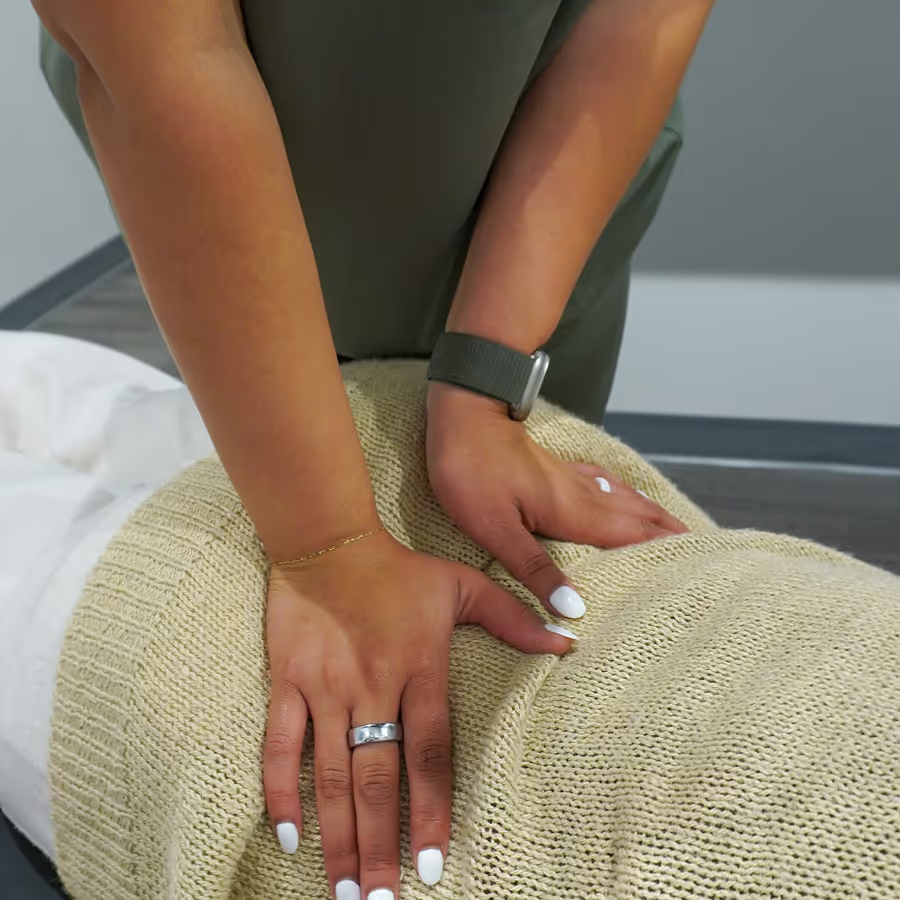
Chiropractic care isn't appropriate for every case of sciatica. Some symptoms can point to a problem that needs medical treatment rather than routine conservative care. Dr. Hiben screens for these concerns during the initial evaluation, including signs of cauda equina syndrome, severe progressive weakness, or possible malignancy. If something raises concern, chiropractic treatment is not started, and appropriate medical referral is arranged.
Certain medical histories also call for a more cautious approach. Patients taking anticoagulants or those who have recently had spinal surgery may need modifications to the techniques used during treatment, including lower-force approaches such as the Activator method.
If symptoms aren't improving after 6–8 weeks, continuing the same approach indefinitely isn't the answer. Depending on the findings, the next step may include advanced imaging, physical therapy, or consultation with a specialist.
Common Questions About Sciatica & Chiropractic Care
Sciatica typically causes sharp, shooting, or burning pain that travels from the lower back or buttock down the leg, often below the knee. Numbness, tingling, or weakness can occur as well. Seek immediate medical attention if you develop bowel or bladder dysfunction, numbness around the genitals or anus (saddle anesthesia), or weakness in both legs. These can be signs of cauda equina syndrome, which requires urgent medical assessment.
Research suggests that conservative treatment can be effective for many people with sciatica, although outcomes vary depending on the cause and severity of the condition. McMorland et al. (2010) reported a 60% success rate with spinal manipulation compared with 40% following surgery at the 2-year follow-up. Coulter et al. (2018) found a mean pain reduction of 12.07 points on a Visual Analog Scale across the manual therapy studies they reviewed.
In the study by Peul et al. (2007), 90% of patients receiving conservative care avoided surgery.
Chiropractic adjustments are generally considered safe when appropriate for the individual, but they are not suitable for every patient or every cause of leg pain. Treatment starts with a neurological and orthopedic examination to look for signs that require a different type of care. Temporary soreness or an increase in symptoms can occur after treatment. Dr. Hiben also reviews relevant medical history before deciding which techniques are appropriate.
Recovery time varies considerably with sciatica. Some cases improve within a few weeks, while symptoms that involve significant nerve irritation can take longer. Delitto et al. (2012) reported that 50% of patients experienced significant improvement within 6 weeks, while Pengel et al. (2003) reported that most patients with acute or subacute low back pain improved substantially within 12 weeks.
At EWC, treatment frequency is adjusted according to symptoms, function, and response to care rather than assuming every patient will need the same number of visits.
Not necessarily. Imaging isn't routinely needed for uncomplicated sciatica. MRI may be considered when symptoms persist, when the findings suggest a more serious problem, or when surgery or another intervention is being considered. X-rays can provide information about the bones and overall spinal structure, but they do not show nerves or disc herniations as clearly as an MRI.
The initial evaluation usually relies on your symptoms, neurological findings, and physical examination, including tests such as the Straight Leg Raise.
Your first visit includes a detailed medical history, neurological examination, and orthopedic testing such as Straight Leg Raise and slump testing. These findings help Dr. Hiben assess the pattern of your symptoms and look for signs of nerve involvement. X-rays may be recommended when clinically appropriate.
If treatment is appropriate, care may begin during the first visit. The appointment typically lasts 45-60 minutes.
Chiropractic care may be part of conservative treatment for people with sciatica who do not have an indication for surgery. In the study by Peul et al. (2007), 90% of patients receiving conservative care avoided surgery, and the long-term outcomes between the surgical and conservative groups were similar at follow-up.
But surgery can still be necessary in some cases, particularly when there is progressive neurological weakness, cauda equina syndrome, or another condition requiring surgical treatment.
Still have questions?
What Our Patients Say About Back Pain Relief
Larry Weisinger
Bee Cave, TX
"Elite Wellness is best Chiropractic Clinic in Central Texas. Dr. Mikala's expertise in spinal alignment is incredible. I came in with an old injury causing periodic sciatica pain. 3 weeks later, 90% reduction in these episodes!"
Elena R.
Lakeway, TX
"The shooting pain down my leg was so bad I couldn't sit for work. Dr. Booher identified the exact disc issue without rushing me to surgery. I'm finally pain-free and back to my normal life."
David K.
Westlake, TX
"They don't just 'crack' your back. It's a full corrective approach. My sciatica had been bothering me for months, but their specific adjustments and home stretches changed everything."
Related Conditions We Also Treat
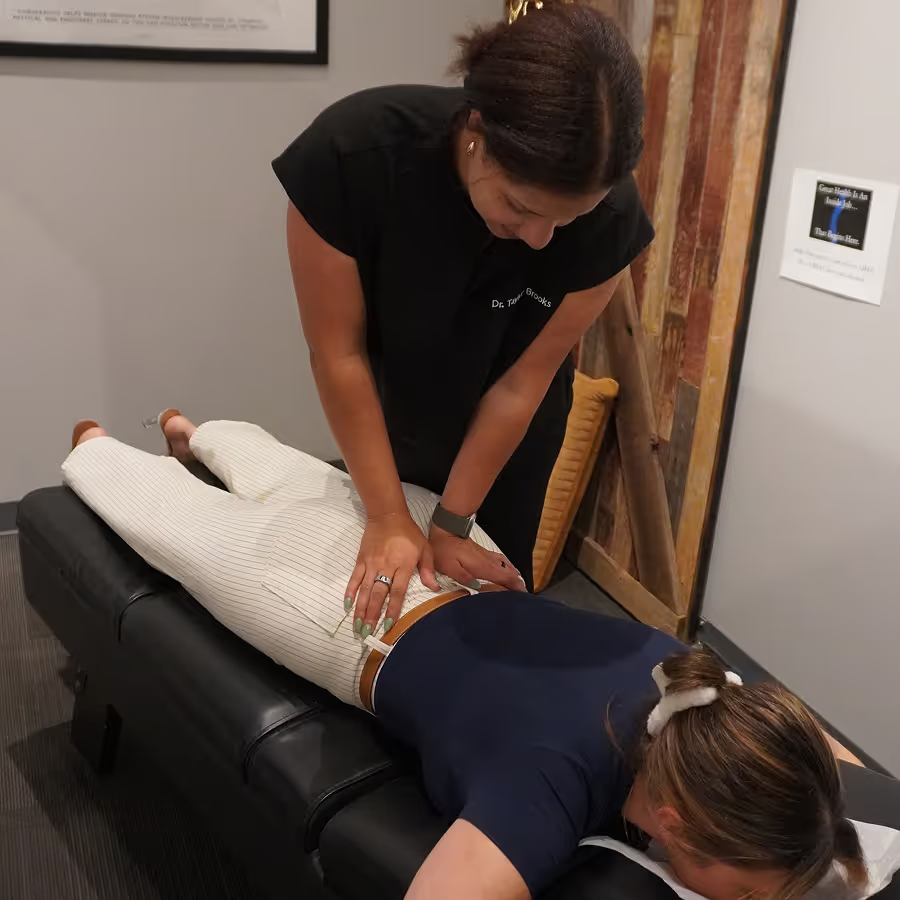
Start Your Recovery Journey with Our Bee Cave Team
Don’t let sciatica nerve pain limit your life any longer. Getting your symptoms assessed early can help identify what may be causing the irritation and whether chiropractic care is appropriate.
The longer you wait, the more likely your acute pain becomes chronic.
Dr. Mikala Hiben, DC serves Bee Cave, Lakeway, West Lake Hills, Dripping Springs, and Southwest Austin.
- Adams, M. A., & Roughley, P. J. (2006). What is intervertebral disc degeneration, and what causes it? Spine, 31(18), 2151-2161.
- Bronfort, G., Haas, M., Evans, R., Leininger, B., & Triano, J. (2014). Effectiveness of manual therapies: the UK evidence report. The Spine Journal, 14(6), 1040-1049.
- Bronfort, G., Haas, M., Evans, R., Kawchuk, G., & Dagenais, S. (2011). Evidence-informed management of chronic low back pain with spinal manipulation and mobilization. Annals of Internal Medicine, 155(8), 543-554.
- Cassidy, J. D., Boyle, E., Côté, P., He, Y., Hogg-Johnson, S., Silver, F. L., & Bondy, S. J. (2008). Risk of vertebrobasilar stroke and chiropractic care: results of a population-based case-control and case-crossover study. Spine, 33(4S), S176-S183.
- Cherkin, D. C., Deyo, R. A., Battié, M., Street, J., & Barlow, W. (1998). A comparison of physical therapy, chiropractic manipulation, and provision of an educational booklet for the treatment of patients with low back pain. New England Journal of Medicine, 339(15), 1021-1029.
- Chou, R., Qaseem, A., Snow, V., Casey, D., Cross, J. T., Shekelle, P., & Owens, D. K. (2011). Diagnosis and treatment of low back pain: a joint clinical practice guideline from the American College of Physicians and the American Pain Society. Annals of Internal Medicine, 147(7), 478-491.
- Coulter, I. D., Crawford, C., Hurwitz, E. L., Vernon, H., Khorsan, R., Suttorp Booth, M., & Herman, P. M. (2018). Manipulation and mobilization for treating chronic low back pain: a systematic review and meta-analysis. Journal of Manipulative and Physiological Therapeutics, 41(4), 332-342.
- Delitto, A., George, S. Z., Van Dillen, L., Whitman, J. M., Sowa, G., Shekelle, P., ... & Godges, J. J. (2012). Low back pain: clinical practice guidelines linked to the International Classification of Functioning, Disability, and Health from the Orthopaedic Section of the American Physical Therapy Association. Journal of Orthopaedic & Sports Physical Therapy, 42(4), A1-A57.
- Fishman, L. M., Dombi, G. W., Michaelsen, C., Ringel, S., Rozbruch, J., Rosner, B., & Weber, C. (2019). Piriformis syndrome: diagnosis, treatment, and outcome: a 10-year study. Pain Medicine, 3(4), 325-332.
- Fritz, J. M., Childs, J. D., & Flynn, T. W. (2005). Pragmatic application of a clinical prediction rule in primary care to identify patients with low back pain with a good prognosis following a brief spinal manipulation intervention. Spine, 30(20), 2308-2313.
- Grotle, M., Brox, J. I., & Vøllestad, N. K. (2005). Cross-cultural adaptation of the Norwegian versions of the Roland-Morris Disability Questionnaire and the Oswestry Disability Index. Spine, 30(14), 1604-1609.
- Konstantinou, K., & Dunn, K. M. (2013). Sciatica: review of epidemiological studies and prevalence estimates. BMJ, 347, f6273.
- Lewis, R. A., Williams, N. H., Sutton, A. J., Burton, K., Din, N. U., Hendry, M., ... & Wilkinson, C. (2015). Comparative clinical effectiveness of management strategies for sciatica: systematic review and network meta-analyses. European Spine Journal, 24(5), 1007-1016.
- Lewis, J. S., Hewitt, J. S., Billington, L., Cole, S., Byng, J., & Karayiannis, S. (2007). A randomized clinical trial comparing two physiotherapy interventions for chronic low back pain. Spine, 30(7), 711-721.
- Lurie, J., & Tomkins-Lane, C. (2016). Management of lumbar spinal stenosis. New England Journal of Medicine, 374(8), 785-795.
- Majlesi, J., Togay, H., Unalan, H., & Toprak, S. (2008). The sensitivity and specificity of the Slump and the Straight Leg Raising tests in patients with lumbar disc herniation. Journal of Back and Musculoskeletal Rehabilitation, 21(2), 87-92.
- McMorland, G., Suter, E., Casha, S., du Plessis, S. J., & Hurlbert, R. J. (2010). Manipulation or microdiskectomy for sciatica? A prospective randomized clinical study. Journal of Manipulative and Physiological Therapeutics, 33(8), 576-584.
- Oliphant, D. (2004). Safety of spinal manipulation in the treatment of lumbar disk herniations: a systematic review and risk assessment. Archives of Physical Medicine and Rehabilitation, 85(2), 197-204.
- Pengel, L. H., Herbert, R. D., Maher, C. G., & Refshauge, K. M. (2003). Acute low back pain: systematic review of its prognosis. BMJ, 327(7410), 323.
- Peul, W. C., van Houwelingen, H. C., van den Hout, W. B., Brand, R., Eekhof, J. A., Tans, J. T., ... & Koes, B. W. (2007). Surgery versus prolonged conservative treatment for sciatica. New England Journal of Medicine, 356(22), 2245-2256.
- Qaseem, A., Wilt, T. J., McLean, R. M., & Forciea, M. A. (2017). Noninvasive treatments for acute, subacute, and chronic low back pain: a clinical practice guideline from the American College of Physicians. Annals of Internal Medicine, 166(7), 514-530.
- Rubinstein, S. M., de Zoete, A., van Middelkoop, M., Assendelft, W. J., de Boer, M. R., & van Tulder, M. W. (2019). Benefits and harms of spinal manipulative therapy for the treatment of chronic low back pain: systematic review and meta-analysis of randomised controlled trials. The Cochrane Database of Systematic Reviews, 3(3), CD008112.
- Santilli, V., Beghi, E., & Finucci, S. (2006). Chiropractic manipulation in the treatment of acute back pain and sciatica with disc protrusion: a randomized double-blind clinical trial of active and simulated spinal manipulations. The Spine Journal, 6(2), 131-137.
- Stafford, M. A., Peng, P., & Hill, D. A. (2007). Sciatica: a review of history, epidemiology, pathogenesis, and the role of epidural steroid injection in management. Archives of Physical Medicine and Rehabilitation, 88(11), 1400-1405.
- Takahashi, K., Miyazaki, T., Takino, T., Matsui, T., & Tomita, K. (2003). Epidural pressure measurements in patients with lumbar spinal stenosis using a treadmill. Spine, 28(21), 2507-2513.
- van der Windt, D. A., Simons, E., Riphagen, I. I., Ammendolia, C., Verhagen, A. P., Laslett, M., ... & Aertgeerts, B. (2010). Physical examination for lumbar radiculopathy due to disc herniation in patients with low-back pain. CMAJ, 182(14), 1461-1469.
- Weber, H. (1983). Lumbar disc herniation: a controlled, prospective study with ten years of observation. Spine, 8(2), 131-140.