Google Reviews
Spinal Stenosis Treatment Bee Cave, TX
Finding relief from spinal stenosis pain.
A thorough evaluation helps us understand your symptoms and create a personalized, non-surgical treatment plan.
Key Takeaways: What You Need to Know About Spinal Stenosis
- Spinal stenosis is common, but it doesn't always cause symptoms. The Framingham Study found some degree of lumbar stenosis in 47.2% of participants examined with CT imaging, although many had no related symptoms (Kalichman et al., 2009). An imaging finding alone does not mean surgery is necessary.
- Many people with lumbar spinal stenosis can improve with non-surgical care. A randomized trial by Delitto et al. (2015) found no significant difference in physical function after two years between patients who received surgical decompression and those who participated in structured physical therapy.
- The SPORT trial found meaningful improvement among patients receiving non-surgical care. Weinstein et al. (2008) followed 654 patients with lumbar spinal stenosis and found that many patients improved with conservative treatment and were able to avoid surgery.
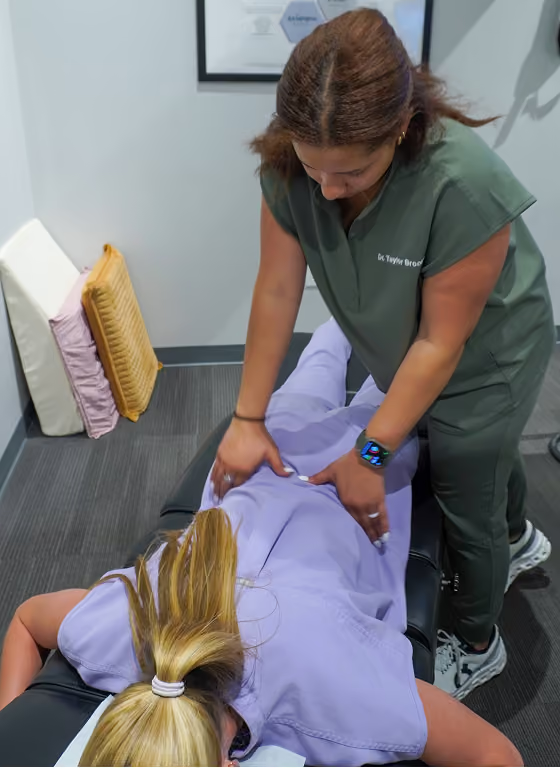
- Spinal decompression is one option within conservative treatment. It uses controlled forces applied to the spine with the goal of reducing pressure around irritated nerves. The proposed effects of decompression have been studied in relation to changes in disc pressure and spinal structures (Ramos & Martin, 1994).
- Non-drug treatments are recommended for chronic low back pain. The American College of Physicians recommends non-pharmacologic approaches, including spinal manipulation, as initial treatment options for chronic low back pain (Qaseem et al., 2017).
- Some symptoms require emergency medical attention. New bowel or bladder problems, numbness in the saddle area, or rapidly worsening weakness can indicate a serious neurological problem such as cauda equina syndrome. If these symptoms occur, seek emergency medical care immediately.
What Is Spinal Stenosis?
Spinal stenosis means there is less space around the spinal cord or the nerves that branch off from it. When that space becomes too narrow, it can put pressure on the nerves and lead to pain, numbness, tingling, heaviness, or weakness.
The narrowing can happen in different parts of the spine, and where it occurs affects the symptoms you feel.
Central Stenosis
Central stenosis affects the main spinal canal, the passageway that runs through the center of the spine. In the lower back, this area contains the cauda equina, a bundle of nerve roots.
This type of stenosis is commonly linked to neurogenic claudication, which causes pain, heaviness, cramping, or weakness in the legs when you stand or walk. Sitting down or leaning forward often brings relief.
Lateral Recess Stenosis
Lateral recess stenosis occurs in the small spaces where nerve roots begin to leave the main spinal canal. When one of these nerves becomes compressed, you may experience symptoms similar to sciatica, such as pain, numbness, or weakness that travels down one leg.
Foraminal Stenosis
Foraminal stenosis affects the openings on either side of the spine where individual nerve roots exit. Loss of disc height and enlargement of the facet joints can narrow these openings, particularly as degenerative changes develop in the spine.
When a nerve root is compressed, symptoms usually follow the area supplied by that nerve. You may notice pain, numbness, tingling, or weakness in a specific part of the arm or leg.
What Causes Spinal Stenosis?
Spinal stenosis usually develops from several structural changes rather than one single problem. The Framingham Study found that disc degeneration, enlargement of the facet joints, and thickening of the ligamentum flavum can each contribute to narrowing of the spinal canal (Kalichman et al., 2009).
As discs lose height over time, the spine can settle and place more stress on the facet joints. The joints may enlarge, while the ligaments around the spinal canal can also become thicker. These changes often develop gradually, which is why spinal stenosis is more common after age 50.
That doesn't mean younger adults can't develop stenosis. A disc herniation or bulge can narrow the foramen or lateral recess, while some people are born with a naturally narrower spinal canal. In these cases, even smaller changes can create enough pressure to cause symptoms.
How Spinal Stenosis Can Affect Everyday Life
The symptoms can become frustrating when everyday activities start requiring more planning. You might be able to walk only a few hundred yards before your legs become painful or heavy, then feel better after sitting down or leaning forward on a shopping cart.
For people in Bee Cave and the surrounding Hill Country communities, that can mean cutting a walk short, struggling to stand in line at a local shop, or finding a trip through H-E-B more difficult than it used to be. When your walking distance keeps getting shorter, it may be time to have the cause of those symptoms evaluated.
Signs, Symptoms & When to Pay Attention
Spinal stenosis can cause a pattern of symptoms that becomes easier to recognize once you know what to look for. For many people with lumbar stenosis, the biggest clue is what happens when they walk or stand for a while, and what happens when they sit or lean forward.
Hallmark Symptom (Neurogenic Claudication)
Neurogenic claudication is the most characteristic symptom of lumbar spinal stenosis. You may notice:
- Pain, heaviness, cramping, or weakness in one or both legs when walking or standing for a while
- Symptoms that get worse when standing upright, walking downhill, or extending your spine
- Relief when sitting, leaning forward, pushing a shopping cart, or cycling
- Flare-ups that can last for days or weeks before settling down
- A fairly predictable walking distance before your symptoms make you stop and rest
That last point can be especially telling. You might be able to walk a certain distance comfortably, then notice that your legs become heavy or painful and you need to sit down before you can continue.
This pattern can also help distinguish spinal stenosis from vascular claudication, which causes similar leg symptoms because of reduced blood flow. Vascular symptoms typically don't improve simply by changing your spinal position and leaning forward.
Other Common Symptoms
Spinal stenosis doesn't always cause the same symptoms in everyone. Depending on where the narrowing occurs, you may also experience:
- Low back pain, with or without leg symptoms
- Sciatica, including pain that travels from the lower back into the buttock, thigh, or leg
- Numbness or tingling in the legs or feet
- A feeling of heaviness or “dead legs” after walking
- Difficulty with balance, especially on uneven ground
- Pain that wakes you at night, which is less common but can occur with more severe nerve compression
Cervical Stenosis Symptoms
Stenosis in the neck can affect the arms, hands, and sometimes your ability to walk steadily. Symptoms may include:
- Neck pain, with or without arm symptoms
- Numbness, tingling, or weakness in the hands or arms
- Difficulty with fine motor tasks, such as buttoning a shirt, writing, or picking up small objects
- Changes in the way you walk, including a wider or less steady gait
- In more severe cases, balance problems or difficulty walking that affects both legs
How Is Spinal Stenosis Diagnosed?
Diagnosing lumbar spinal stenosis usually involves looking at your symptoms, a physical examination, and imaging when it is needed. The North American Spine Society guidelines recommend considering the full picture rather than relying on an MRI or other scan alone (Kreiner et al., 2013).
One of the most helpful clues is the “shopping cart sign.” If your leg pain, heaviness, or weakness gets better when you lean forward on a shopping cart, especially when you also have a limited walking distance, that pattern can point toward lumbar spinal stenosis.
Imaging isn't always needed before starting conservative care. If your symptoms fit the typical pattern and you don't have any red flags, a trial of conservative treatment may be appropriate before moving on to advanced imaging.
Red Flag Symptoms That Need Emergency Care
Some symptoms need immediate medical attention. Go to the emergency department if you develop:
- New bowel or bladder problems, such as being unable to urinate or losing control
- Numbness in the inner thighs, genital area, or around the anus, known as saddle anesthesia
- Rapidly worsening weakness in one or both legs
- Severe balance problems that make it unsafe to walk
- Fever along with severe back pain and neurological symptoms
These symptoms can indicate a more serious neurological problem that needs urgent evaluation.
When to Contact Our Office
Not every change requires an emergency visit, but new or worsening symptoms should still be evaluated. Contact the office within 24 to 48 hours if you notice:
- A sudden decrease in how far you can walk before symptoms begin
- New weakness in your foot or leg
- Numbness or tingling that is spreading or getting worse
- A new pattern of symptoms that feels different from your usual stenosis symptoms
EVIDENCE-BASED OUTCOMES
What the Research Says About Chiropractic Care
of patients in one study improved within 2 weeks
Pengel et al., 2003
average pain reduction on a 100-point scale in one review
Paige et al., 2017
Serious events were rare, estimated at about 1 in 1 to 2 million treatments
Haldeman et al., 1999
SPORT Trial
The SPORT trial, led by Weinstein et al. (2008), followed 654 patients with lumbar spinal stenosis, making it one of the largest studies of the condition. The results suggest that conservative care can lead to meaningful improvements in pain and function, and many patients were able to avoid surgery.
Surgery vs. Physical Therapy
What happens if you choose physical therapy instead of surgery? Delitto et al. (2015) compared surgical decompression with a structured physical therapy program and found no significant difference in physical function after two years. The findings support conservative care as a reasonable first-line option for many patients.
Maine Lumbar Spine Study
The Maine Lumbar Spine Study followed patients for four years. Atlas et al. (1996) found that 70% of patients who did not have surgery reported meaningful improvement, suggesting that non-surgical care can provide meaningful benefits over time.
Manual Therapy Evidence
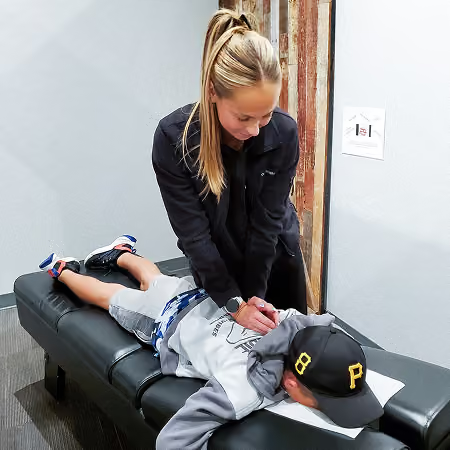
Manual therapy may also have a role in conservative treatment. Whitman et al. (2006) found a 62% success rate when manual therapy was combined with exercise, compared with exercise alone, in patients with lumbar spinal stenosis.
Evidence for Spinal Manipulation
Research also supports the use of spinal manipulation for chronic low back pain. Bronfort et al. (2004) reviewed multiple clinical trials and found moderate evidence for spinal manipulation, particularly when it is combined with strengthening and rehabilitation exercises.
Cochrane Review
A Cochrane review by Ammendolia et al. (2013) found supportive evidence for multimodal conservative treatment of lumbar spinal stenosis. The authors noted that the overall quality of the evidence was limited, so these findings should be viewed as supportive rather than definitive.
Our Approach at Elite Wellness Chiropractic
At Elite Wellness Chiropractic, Dr. Mikala Hiben, DC, takes a correction-first approach to spinal stenosis. Rather than focusing only on temporary symptom relief, care is designed to address the spinal and movement patterns contributing to your symptoms.
Comprehensive Evaluation
The $60 New Patient Experience starts with a detailed examination, digital X-rays, neurological testing, and a functional assessment. Dr. Hiben also reviews any existing MRI findings and uses the results to determine what may be contributing to your symptoms.
Your first visit is focused on the evaluation. At the second visit, Dr. Hiben reviews the findings with you, explains the recommended approach, and discusses your care plan before your first adjustment.
DOC Decompression Table
The DOC Decompression Table uses variable-force technology to apply controlled pressure to the spine. The goal is to reduce pressure around irritated nerves and support healthier movement in areas affected by spinal stenosis.
Personalized Treatment Plan
No two cases of spinal stenosis are exactly alike. Your treatment plan is based on your examination, imaging, symptoms, and the location and severity of the narrowing. Care may include targeted decompression, specific positioning, chiropractic adjustments, and rehabilitation exercises.
Precision Chiropractic Care
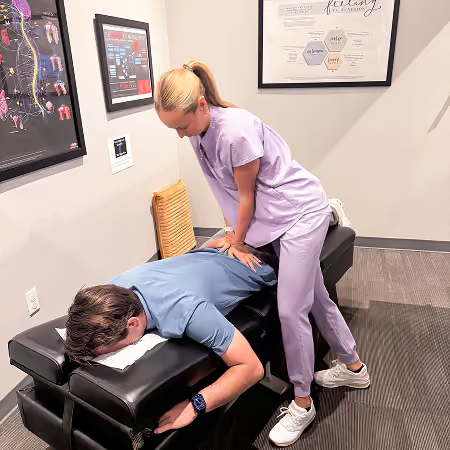
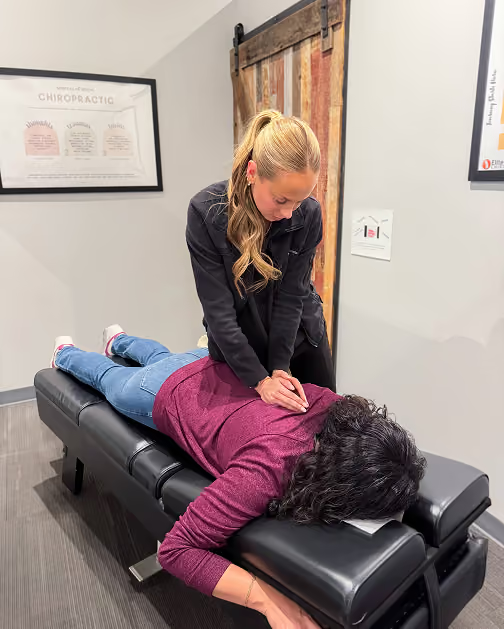
Chiropractic adjustments can help improve spinal mobility and reduce stiffness around restricted areas. For patients who prefer a lower-force approach, Activator Method adjustments are also available.
Rehabilitation & Strength Training
Exercise is an important part of maintaining progress. Your program may include mobility work, core strengthening, and postural exercises selected around your symptoms and current level of function.
Progress & Recovery Tracking
Your care doesn't stay the same from one visit to the next. Dr. Hiben reviews your symptoms, mobility, and functional changes throughout your care and adjusts the plan as your condition changes. This gives you a clearer picture of how you're progressing and whether your treatment needs to be modified.
Your Clear Path to Relief: Our 3-Step Process
STEP 01
Evaluation
Your first visit includes a comprehensive examination, digital X-rays, neurological testing, and a functional assessment. Dr. Hiben uses these findings, along with any existing imaging, to evaluate your spinal stenosis and what may be contributing to your symptoms.
STEP 02
Review & Care Plan
At your second visit, Dr. Hiben reviews your findings with you and explains the recommended approach. If you decide to move forward with care, your first adjustment is performed and your treatment plan is established around your specific needs.
STEP 03
Treatment & Progress
Your care may include DOC decompression, chiropractic adjustments, and rehabilitation exercises. Your progress is reviewed throughout care so the treatment plan can be adjusted based on changes in your symptoms, mobility, and function.
Your Recovery Timeline
Everyone responds to care differently, so there isn't one exact timeline for spinal stenosis treatment. Your visit frequency, treatment approach, and progression through exercises can change based on your symptoms and how you respond to care. This three-phase timeline gives you an idea of what care may look like.
Weeks 1 to 4
Early care focuses on evaluating your symptoms, addressing areas of restriction, and introducing treatments that may help improve comfort and movement. Depending on your individual plan, visits may include decompression sessions and spinal adjustments. Home exercises may also begin, with gentle mobility work and walking based on your current abilities.
Progress may include:
- Less leg heaviness or discomfort during everyday activities
- Gradually increasing your walking or standing tolerance
- Changes in how often you need to stop and rest during activities
Progress milestones
Week 2:
Mild improvement in walking tolerance and reduced leg heaviness
Week 4:
Measurable increase in the distance you can walk before symptoms develop, reduced reliance on the "shopping cart lean"
Weeks 5 to 8
As your care progresses, your treatment plan may change based on your response. Visit frequency may decrease, while rehabilitation exercises become more focused on core strength, mobility, and endurance.
Progress may include:
- Standing or walking for longer periods
- Finding everyday activities such as grocery shopping or walking the dog easier to manage
- Building strength and confidence with movement
Progress milestones
Week 5:
Sustained functional improvement with reduced daily symptom burden
Week 6:
Ability to stand and walk for longer periods, return to activities like grocery shopping or walking the dog without needing to stop frequently
Weeks 9 to 12
Later in the process, your progress is reassessed and your care plan is adjusted based on your symptoms, mobility, and functional goals. Exercises may become more self-directed as you build the skills to continue working on your mobility and strength between visits.
Progress may include:
- More consistent walking and standing tolerance
- Greater ability to manage everyday activities
- A clearer plan for continuing your exercises and care based on your progress
Progress milestones
Week 10:
Consistent improvement in walking endurance and standing toleranc
Week 12:
Stable functional capacity with a maintenance plan in place to preserve gains
Long-Term Maintenance
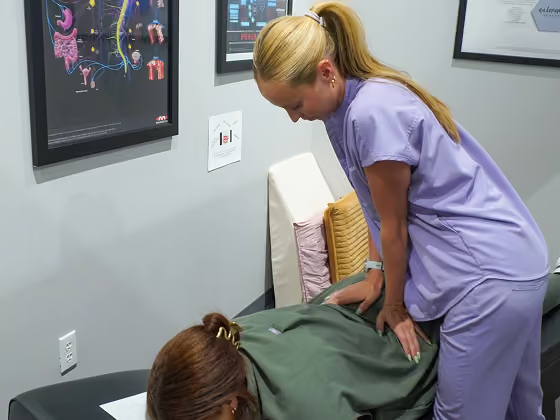
Spinal stenosis is a structural condition, so ongoing care may be helpful for some patients after the initial treatment phase. The goal is to support the progress you've made, maintain mobility, and manage symptoms as you return to your normal activities.
There isn't one maintenance schedule that works for everyone. Dr. Hiben reviews your symptoms, activity level, and progress to determine whether continued care makes sense for you and how often you may benefit from it.
When Chiropractic Care May Not Be the Right Fit
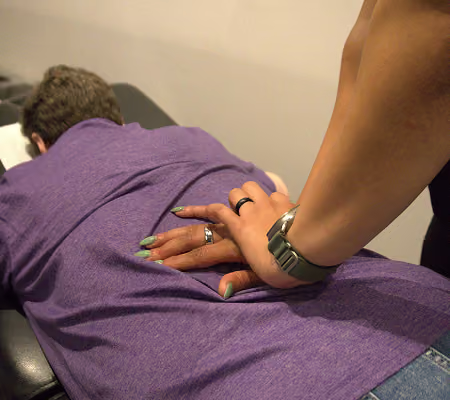
Not every case of spinal stenosis is appropriate for chiropractic care alone. Dr. Mikala Hiben screens for signs that may require additional evaluation or care from another healthcare provider before treatment begins.
If your symptoms suggest a condition outside the scope of chiropractic care, the next step may be referral or co-management with a primary care physician, pain management specialist, or spine surgeon.
Certain situations require extra caution or a different treatment approach, including:
- Progressive neurological symptoms: New or worsening muscle weakness, significant changes in sensation, or other neurological changes may require further medical evaluation.
- Spinal instability: If there is significant instability in the spine, treatment may need to be modified or another provider may need to be involved.
- Possible infection, cancer, or vascular problems: Symptoms suggesting one of these conditions should be evaluated medically before chiropractic treatment is considered.
- Previous spinal surgery: If you have had a spinal fusion, laminectomy, artificial disc replacement, or other spinal procedure, your history and any hardware need to be reviewed before treatment.
- Severe osteoporosis: Significant bone density loss may affect which manual techniques and decompression approaches are appropriate.
When another type of care is needed, Dr. Hiben can help determine the appropriate next step rather than proceeding with treatment that may not be right for your situation.
Relative Contraindications:
- Severe central stenosis with fixed neurological deficits: Patients with measurable, progressive muscle weakness or significant sensory loss that has not responded to an adequate trial of conservative care (typically 8 to 12 weeks) should be referred for surgical consultation.
- Prior spinal surgery with hardware: Fusion hardware, laminectomy sites, or artificial disc replacements at or near the stenotic level require case-by-case evaluation. Decompression may be modified or contraindicated depending on the type and location of hardware.
- Severe osteoporosis: Significant bone density loss may require modification of manual techniques and careful evaluation before decompression protocols are initiated.
Frequently Asked Questions About Spinal Stenosis Treatment
Spinal stenosis is a narrowing of the spaces around the spinal cord and nerve roots. When that space becomes too narrow, it can put pressure on the nerves and cause symptoms such as pain, numbness, tingling, weakness, or cramping.
Stenosis is common on imaging, especially as people get older, and not everyone with narrowing has symptoms. The Framingham Study found that some degree of stenosis was present in nearly half of the adults studied, including many people who had no related symptoms (Kalichman et al., 2009). It becomes a problem when the narrowing is affecting your nerves and making everyday activities more difficult.
For many people, yes. Conservative care can be a reasonable place to start, particularly when symptoms aren't progressing and there are no signs that require urgent medical attention.
Research has found meaningful improvement with non-surgical approaches. Delitto et al. (2015) found no significant difference in physical function after two years between patients who received surgery and those who participated in structured physical therapy. The SPORT trial also found that many patients receiving non-surgical care improved and were able to avoid surgery.
At Elite Wellness Chiropractic, conservative care may include spinal decompression, chiropractic adjustments, and targeted exercises based on your condition.
Spinal decompression is designed to apply controlled forces to the spine with the goal of reducing pressure around irritated nerves. Research has proposed that decompression can create changes in pressure within the disc and may help improve the space around affected structures (Ramos & Martin, 1994).
The potential benefit depends on what is causing the narrowing and how your spine responds to treatment. Decompression is therefore one part of a broader treatment plan rather than a solution that works the same way for every case.
Neurogenic claudication is one of the most common patterns associated with lumbar spinal stenosis. You may develop pain, heaviness, cramping, or weakness in your legs when you stand or walk for a while, then feel better when you sit or lean forward.
That change in symptoms with position is an important clue. It's why some people find themselves naturally leaning over a shopping cart or choosing cycling over walking because the forward-leaning position feels more comfortable.
Chiropractic care may be appropriate for some people with spinal stenosis, but the right approach depends on the individual. Dr. Hiben evaluates your symptoms and medical history before recommending treatment and can modify techniques based on your needs.
For patients who need a lower-force approach, Activator Method adjustments may be an option. If your symptoms suggest significant neurological compromise or cauda equina syndrome, medical evaluation and referral take priority over conservative chiropractic care.
There isn't one treatment timeline that applies to everyone with spinal stenosis. Your treatment frequency and length of care depend on your symptoms, examination findings, functional limitations, and how you respond as care progresses.
Some patients may notice changes in their symptoms or walking tolerance during the early stages of care, while others may need more time. Your progress is reassessed throughout treatment so the plan can be adjusted based on how you're doing.
Surgery may be considered when symptoms continue to significantly limit your daily life despite appropriate conservative care. It can also become more urgent when there is progressive neurological weakness or other serious neurological symptoms.
The decision shouldn't be based on an MRI alone. Your symptoms, physical function, neurological findings, and personal goals all matter. If you develop symptoms such as new bowel or bladder problems, saddle anesthesia, or rapidly worsening weakness, seek urgent medical evaluation rather than waiting for conservative treatment.
Still have questions?
What Our Patients Say About Spinal Stenosis Relief.
Sarah M.
Bee Cave, TX
"After 3 years of lower back pain, Dr.Booher found the problem in my first visit. Six weeks later I'm back to running and playing with my kids without pain."
James T.
Lakeway, TX
"I was skeptical of chiropractic care untilI saw my X-rays. Now I understand WHYI was hurting. Finally getting realanswers instead of just maskingsymptoms."
Michael R.
Westlake, TX
"Most chiropractors just adjusted meand sent me home. Dr. Booher gave mea whole corrective plan with exercises.Night and day difference in myrecovery."
Related Conditions We Also Treat
Ready to Get Answers About Your Spinal Stenosis?
If spinal stenosis is limiting how far you can walk, how long you can stand, or what you can do each day, a thorough evaluation can help determine what's contributing to your symptoms and what treatment options may be appropriate.
Schedule your $60 New Patient Experience with Dr. Mikala Hiben, DC, at Elite Wellness Chiropractic in Bee Cave, TX.
We serve patients throughout Bee Cave, Lakeway, West Lake Hills, Southwest Austin, and the surrounding Hill Country communities. Our approach may include DOC decompression, chiropractic adjustments, and rehabilitation based on your individual needs.
- Ammendolia, C., Stuber, K. J., Rok, E., Rampersaud, R., Kennedy, C. A., Pennick, V., Steenstra, I. A., de Bruin, L. K., & Furlan, A. D. (2013). Nonoperative treatment for lumbar spinal stenosis with neurogenic claudication. Cochrane Database of Systematic Reviews, (8), CD010712. DOI
- Atlas, S. J., Keller, R. B., Robson, D., Deyo, R. A., & Singer, D. E. (1996). Surgical and nonsurgical management of lumbar spinal stenosis: four-year outcomes from the Maine Lumbar Spine Study. Spine, 21(15), 1787-1795. DOI
- Bronfort, G., Haas, M., Evans, R. L., & Bouter, L. M. (2004). Efficacy of spinal manipulation and mobilization for low back pain and neck pain: a systematic review and best evidence synthesis. The Spine Journal, 4(3), 335-356. DOI
- Delitto, A., Piva, S. R., Moore, C. G., Fritz, J. M., Wisniewski, S. R., Josbeno, D. A., Frick, S., & Welch, W. C. (2015). Surgery versus nonsurgical treatment of lumbar spinal stenosis: a randomized trial. Annals of Internal Medicine, 162(7), 465-473. DOI
- Kalichman, L., Cole, R., Kim, D. H., Li, L., Suri, P., Guermazi, A., & Hunter, D. J. (2009). Spinal stenosis prevalence and association with symptoms: the Framingham Study. The Spine Journal, 9(7), 545-550. DOI
- Kreiner, D. S., Shaffer, W. O., Baisden, J. L., Gilbert, T. J., Summers, J. T., Toton, J. F., Hwang, S. W., Mendel, R. C., & Reitman, C. A. (2013). An evidence-based clinical guideline for the diagnosis and treatment of degenerative lumbar spinal stenosis (update). The Spine Journal, 13(7), 734-743. DOI
- Macario, A., & Pergolizzi, J. V. (2006). Systematic literature review of spinal decompression via motorized traction for chronic discogenic low back pain. Pain Practice, 6(3), 171-178. DOI
- Qaseem, A., Wilt, T. J., McLean, R. M., & Forciea, M. A. (2017). Noninvasive treatments for acute, subacute, and chronic low back pain: a clinical practice guideline from the American College of Physicians. Annals of Internal Medicine, 166(7), 514-530. DOI
- Ramos, G., & Martin, W. (1994). Effects of vertebral axial decompression on intradiscal pressure. Journal of Neurosurgery, 81(3), 350-353. DOI
- Weinstein, J. N., Tosteson, T. D., Lurie, J. D., Tosteson, A. N., Blood, E., Hanscom, B., Herkowitz, H., Cammisa, F., Albert, T., Boden, S. D., Hilibrand, A., Goldberg, H., Berven, S., & An, H. (2008). Surgical versus nonsurgical therapy for lumbar spinal stenosis. New England Journal of Medicine, 358(8), 794-810. DOI
- Whitman, J. M., Flynn, T. W., Childs, J. D., Wainner, R. S., Gill, H. E., Coughlin, B. F., Benzman, B., Marscher, C. D., Garber, M. B., & Fritz, J. M. (2006). A comparison between two physical therapy treatment programs for patients with lumbar spinal stenosis: a randomized clinical trial. Spine, 31(22), 2541-2549. DOI