Google Reviews
Disc Herniation & Bulge Care Without Surgery
Disc herniations and bulges can cause persistent back pain, leg pain, numbness, and other symptoms that interfere with everyday activities. Surgery isn't the only option in every case. At Elite Wellness Chiropractic in Bee Cave, Dr. Mikala Hiben, DC, uses a corrective approach that looks at the spinal alignment and movement problems contributing to your symptoms, with the goal of addressing the underlying issue rather than simply managing the pain.
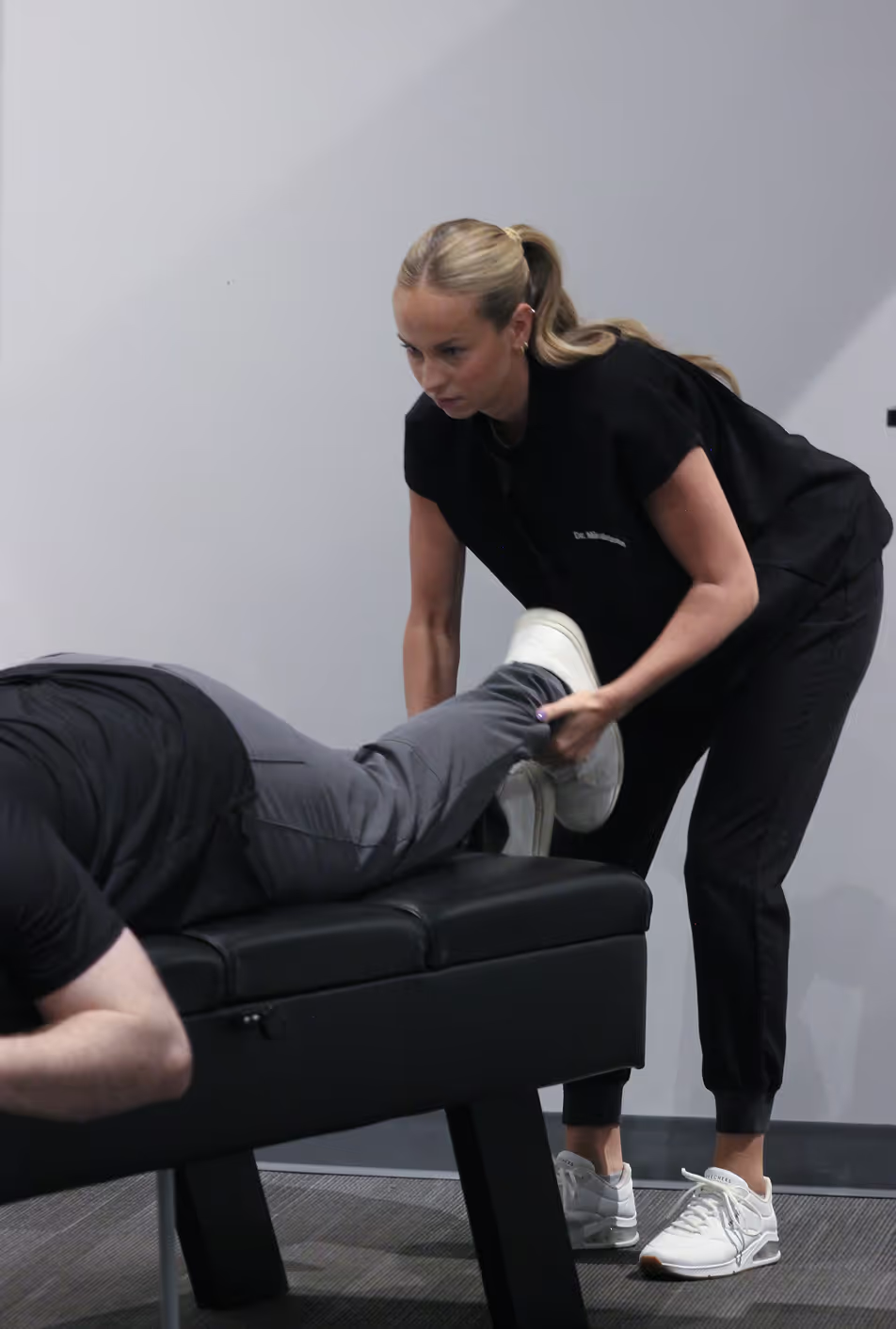
Key Takeaways: What You Need To Know About Disc Herniation Treatment
- Non-surgical care can be an option: In the McMorland et al. (2010) study, 60% of patients with herniated discs avoided surgery after spinal manipulation therapy, compared with 20% of those in the surgical consultation group.
- Don't ignore worsening symptoms: Radiating leg pain, numbness, or weakness that continues for more than two weeks deserves a closer look. Getting evaluated early can help determine whether conservative care is appropriate.
- Recovery can take time: Peul et al. (2007) found that 75% of patients with disc herniation had significant improvement within 12 weeks of conservative care.
- A combination of treatments may help: Research from Bronfort et al. (2004) found better disability outcomes when spinal adjustments were combined with targeted exercises.
- Safety depends on proper assessment: Chiropractic care needs to be matched to the patient's condition. EWC screens for warning signs and modifies care when necessary.
- Some symptoms require immediate medical attention: New bowel or bladder problems, numbness around the saddle area, or progressive weakness in both legs can indicate cauda equina syndrome. Seek emergency care immediately if these symptoms occur.
What Happens With Disc Herniations and Bulges?
Your spinal discs sit between each vertebra and act as shock absorbers. A disc bulge happens when the outer fibers weaken and push outward. A disc herniation occurs when the inner gel pushes through the outer layer.
Nerve Pressure and Inflammation Can Cause Pain
The pain from a disc herniation isn't always caused by direct pressure on a nerve. Kuslich et al. (1991) found that about 65% of sciatica symptoms were related to direct nerve compression, while inflammation around the nerve roots contributed to the remaining symptoms.
Inflammation Can Affect Nerve Function
Leaked disc material contains phospholipase A2, an inflammatory mediator. This can help explain why some people have severe pain even when the herniation is relatively small. Inflammation can also reduce local nerve conduction velocity.
The Spinal Mechanics
The way the spine moves and handles pressure can affect the area around a disc problem. At Elite Wellness Chiropractic, Dr. Mikala Hiben, DC, looks at these factors when assessing disc herniations and bulges.
Signs, Symptoms & When to Pay Attention
Lumbar Disc Symptoms
- Sharp or stabbing pain in the lower back
- Sciatica, with pain traveling into the buttock, calf, or foot
- Numbness or tingling in the legs or feet
Cervical Disc Symptoms
- Neck pain that travels into the arm
- Shoulder blade pain or muscle spasms
- Numbness or tingling in the hands
- Weakness in the grip
Clinical Assessment
- Positive straight leg raise test
- Specific myotomal and dermatomal mapping
- Up to 91% sensitivity for clinical detection when properly assessed
SEEK IMMEDIATE EMERGENCY CARE IF:
- You have bowel or bladder dysfunction, such as difficulty urinating or incontinence
- You experience saddle anesthesia, meaning numbness around the genital or anal region
- You develop progressive weakness in both legs
- You have severe pain with a fever
- Your pain follows significant trauma and you also have neurological symptoms
Contact Us Within 24 Hours If
- You develop new foot drop or severe muscle weakness
- Numbness or tingling is getting worse quickly
- Pain regularly wakes you from sleep
- Your symptoms have not improved after two weeks of conservative care
EVIDENCE-BASED OUTCOMES
What Research Says About Disc Herniation Care
Avoided surgery
(McMorland et al., 2010)
Significant improvement within 12 weeks
(Peul et al., 2007)
Better disability outcomes with combined care
(Bronfort et al., 2004)

Research on Avoiding Surgery
McMorland et al. (2010) found that 60% of patients in the spinal manipulation group avoided surgery, compared with 20% in the surgical consultation group.
What Systematic Reviews Have Found
A Cochrane review analyzed 26 randomized controlled trials involving 6,070 patients. The review found moderate evidence that spinal manipulation can improve pain and function in people with chronic low back pain, including those with disc conditions.
Surgery and Conservative Care
The SPORT trial followed 501 patients for four years. Patients who had surgery improved more quickly at first, but the groups had similar long-term outcomes.
Our 3-Step Approach to Disc Herniation Care
STEP 01
Detailed Assessment
A detailed exam and digital X-rays, if needed, help Dr. Hiben assess your spine and identify the structural factors related to your symptoms.
STEP 02
Personalized Care Plan
Based on your examination, Dr. Hiben develops a non-surgical care plan that may include specific adjustments, decompression, and targeted exercises.
STEP 03
Ongoing Care
Your progress is monitored throughout care, with adjustments to the plan based on how you respond. The goal is to improve your symptoms and support your long-term spinal health.
Expert Herniated Disc Treatment: Our Approach

Comprehensive Assessment
Detailed neurological and orthopedic testing including Lasegue's sign and precise dermatomal mapping to identify the exact level of disc involvement (85% diagnostic accuracy).
Precision Adjustments
Utilizing specific high-velocity, low-amplitude manual techniques or the gentler instrument-assisted Activator Method based on your acute pain levels and presentation.
Spinal Decompression
Integrating non-surgical decompression therapy, proven to reduce VAS pain scores and significantly improve Oswestry Disability Index scores by relieving direct pressure.
Rigorous Reassessment
Following evidence-based protocols, we reassess patients every 2 weeks during the initial phase. Failure to show improvement by 4 weeks warrants immediate treatment modification.
What to Expect During Treatment
Initial & Active Phases (Weeks 1-8)
- Weeks 1-2: Care begins with gentler techniques aimed at reducing acute symptoms and inflammation. Ice and heat recommendations may also be included.
- Weeks 3-8: As symptoms change, care may progress to specific adjustments and targeted exercises. Visits may be scheduled two to three times per week during this phase.
- Progress: Your response to care is monitored as you return to your usual activities.
Stabilization Phase (Weeks 9-12)
- Focus: Care shifts toward maintaining progress, improving posture, and addressing everyday factors that may place stress on the spine. Visits may decrease to once or twice per week.
- Home Care: Your plan may include exercises, pain tracking, and other recommendations to support your progress between visits.
- Progress: Your care plan is reviewed based on how your symptoms and function change over time.
CLINICAL HONESTY
When Chiropractic Care May Not Be the Right Fit
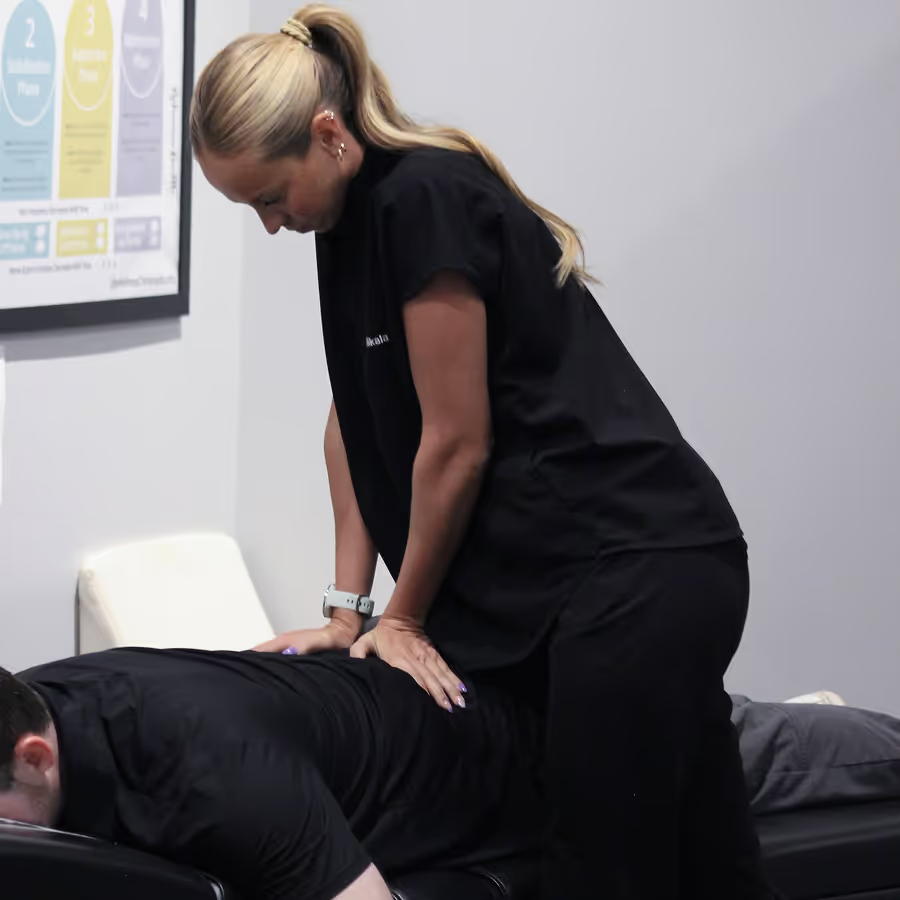
Some disc conditions require medical or surgical care rather than chiropractic treatment. Cauda equina syndrome, rapidly progressing neurological problems, severe central stenosis with myelopathy, and active malignancies are examples where chiropractic care may not be appropriate. These conditions should be screened for during the initial evaluation.
For acute disc sequestration, severe inflammatory conditions, or patients taking heavy anticoagulants, the approach may need to be modified. When conservative care isn't producing measurable improvement, Dr. Hiben may coordinate care with a pain management doctor, neurologist, or orthopedic surgeon.
Common Questions About Disc Herniations & Bulges
Disc-related pain can cause symptoms that are different from a typical muscle strain. A disc herniation may cause pain that travels into the leg, numbness along a specific nerve pathway, or pain that gets worse with sitting, bending forward, or coughing. Muscle strains usually cause more localized pain that may improve with movement.
Chiropractic care can be appropriate for some people with herniated discs when the condition is properly assessed first. Dr. Mikala Hiben, DC, screens for conditions that may require medical or surgical care and adjusts the treatment approach based on the patient's symptoms and presentation.
Recovery time varies depending on the person and the severity of the disc problem. Peul et al. (2007) found that 75% of patients had significant improvement within 12 weeks of conservative care, with much of the progress occurring during the first six weeks.
Chiropractic adjustments don't push a herniated disc back into place. They can be used to improve spinal movement and reduce pressure around the affected area while the body goes through its natural healing process.
During an acute phase, it's best to avoid prolonged sitting, heavy lifting with poor mechanics, repetitive bending and twisting, and high-impact activities. Forward-bending exercises such as toe touches can increase pressure on the disc. Gentle walking and exercises recommended by Dr. Hiben may be appropriate instead.
Surgery may be necessary for conditions such as cauda equina syndrome, progressive muscle weakness that doesn't respond to conservative care, or a large herniation causing severe neurological problems. The SPORT trial found that although surgery can provide faster improvement initially, surgical and non-surgical groups had similar long-term outcomes at four years.
X-rays can show spinal alignment but don't show the discs themselves. An MRI provides a more detailed view of the discs and may be recommended when symptoms or clinical findings indicate that further imaging is needed. Dr. Hiben uses the examination findings and your symptoms to help determine whether additional imaging is appropriate.
Still have questions?
What Our Patients Say About Disc Pain Relief
Sarah B.
Google Review
"...One of the best things at her office is the decompression table, which helps create more space when you have a compressed disc. ... I’m so grateful to get relief without having to have gone through some kind of surgery..."
Larry W.
Google Review
"...I came in with an old injury causing periodic sciatica pain. 3 weeks later, 90% reduction in these episodes!..."
Adan P.
Google Review
"...I started seeing Dr.Mikala at Elite Wellness just over a 2 years ago for some intense low back/sciatica pain and after x-rays and a full program to follow my pain is nearly gone..."
Related Conditions We Also Treat
Get a Clearer Picture of Your Disc Problem
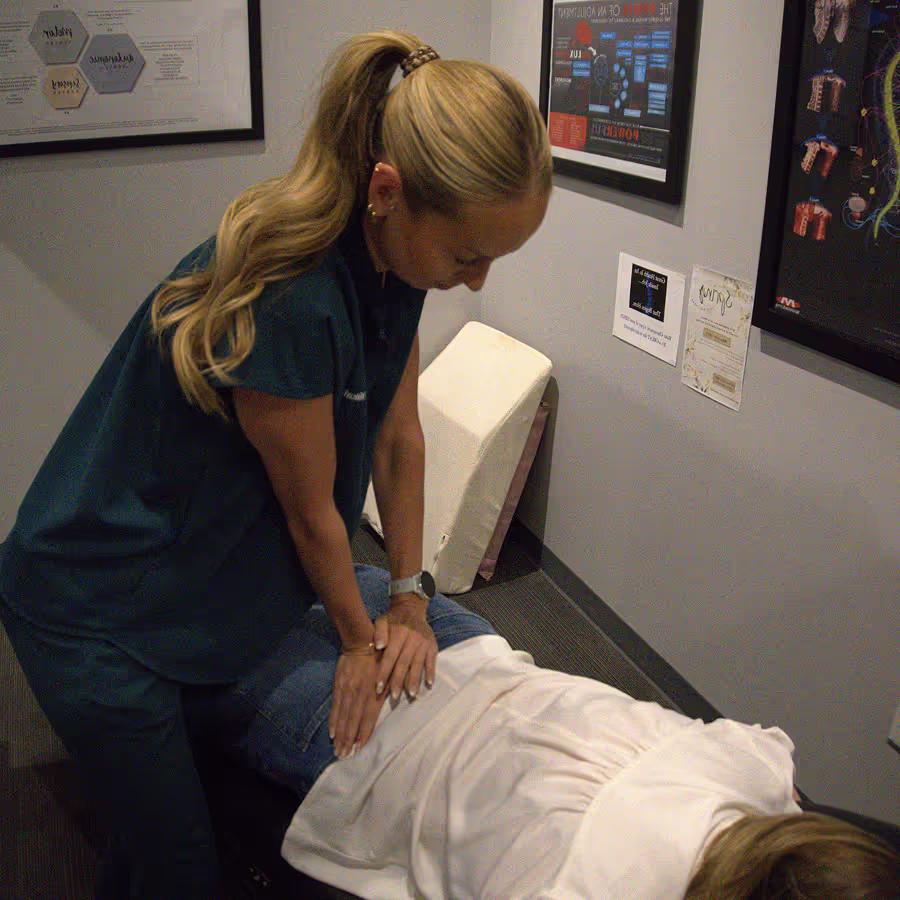
Disc herniations and bulges can cause pain, numbness, tingling, and weakness. A detailed evaluation can help determine what is contributing to your symptoms and whether corrective chiropractic care is appropriate.
Dr. Mikala Hiben, DC serves Bee Cave, Lakeway, West Lake Hills, Dripping Springs, and Southwest Austin.
Atlas, S. J., Keller, R. B., Wu, Y. A., Deyo, R. A., & Singer, D. E. (2005). Long-term outcomes of surgical and nonsurgical management of sciatica secondary to a lumbar disc herniation: 10 year results from the maine lumbar spine study. Spine, 30(8), 927-935.
Apfel, C. C., Cakmakkaya, O. S., Martin, W., Richmond, C., Macario, A., George, E., ... & Pergolizzi, J. V. (2010). Restoration of disk height through non-surgical spinal decompression is associated with decreased discogenic low back pain: a retrospective cohort study. BMC Musculoskeletal Disorders, 11, 155.
Ahn, U. M., Ahn, N. U., Buchowski, J. M., Garrett, E. S., Sieber, A. N., & Kostuik, J. P. (2000). Cauda equina syndrome secondary to lumbar disc herniation: a meta-analysis of surgical outcomes. Spine, 25(12), 1515-1522.
Bronfort, G., Haas, M., Evans, R. L., & Bouter, L. M. (2004). Efficacy of spinal manipulation and mobilization for low back pain and neck pain: a systematic review and best evidence synthesis. The Spine Journal, 4(3), 335-356.
Cassidy, J. D., Boyle, E., Côté, P., He, Y., Hogg-Johnson, S., Silver, F. L., & Bondy, S. J. (2008). Risk of vertebrobasilar stroke and chiropractic care: results of a population-based case-control and case-crossover study. Spine, 33(4S), S176-S183.
Cherkin, D. C., Deyo, R. A., Battié, M., Street, J., & Barlow, W. (1998). A comparison of physical therapy, chiropractic manipulation, and provision of an educational booklet for the treatment of patients with low back pain. New England Journal of Medicine, 339(15), 1021-1029.
Chou, R., Qaseem, A., Snow, V., Casey, D., Cross Jr, J. T., Shekelle, P., ... & Owens, D. K. (2007). Diagnosis and treatment of low back pain: a joint clinical practice guideline from the American College of Physicians and the American Pain Society. Annals of Internal Medicine, 147(7), 478-491.
Copay, A. G., Glassman, S. D., Subach, B. R., Berven, S., Schuler, T. C., & Carreon, L. Y. (2008). Minimum clinically important difference in lumbar spine surgery patients: a choice of methods using the Oswestry Disability Index, Medical Outcomes Study questionnaire Short Form 36, and pain scales. The Spine Journal, 8(6), 968-974.
Deville, W. L., van der Windt, D. A., Dzaferagic, A., Bezemer, P. D., & Bouter, L. M. (2000). The test of Lasègue: systematic review of the accuracy in diagnosing herniated discs. Spine, 25(9), 1140-1147.
Ernst, E. (2002). A systematic review of systematic reviews of spinal manipulation. Journal of the Royal Society of Medicine, 95(2), 55-62.
Fritz, J. M., Cleland, J. A., & Childs, J. D. (2007). Subgrouping patients with low back pain: evolution of a classification approach to physical therapy. Journal of Orthopaedic & Sports Physical Therapy, 37(6), 290-302.
Hestbaek, L., Leboeuf-Yde, C., & Manniche, C. (2003). Low back pain: what is the long-term course? A review of studies of general patient populations. European Spine Journal, 12(2), 149-165.
Hurwitz, E. L., Morgenstern, H., Harber, P., Kominski, G. F., Yu, F., & Adams, A. H. (2002). A randomized trial of chiropractic manipulation and mobilization for patients with neck pain: clinical outcomes from the UCLA neck-pain study. American Journal of Public Health, 92(10), 1634-1641.
Jarvik, J. G., & Deyo, R. A. (2002). Diagnostic evaluation of low back pain with emphasis on imaging. Annals of Internal Medicine, 137(7), 586-597.
Jordan, K., Dunn, K. M., Lewis, M., & Croft, P. (2006). A minimal clinically important difference was derived for the Roland-Morris Disability Questionnaire for low back pain. Journal of Clinical Epidemiology, 59(1), 45-52.
Kobayashi, S., Yoshizawa, H., & Nakai, S. (2005). Experimental study on the dynamics of lumbosacral nerve root circulation. Spine, 30(8), 919-923.
Kuslich, S. D., Ulstrom, C. L., & Michael, C. J. (1991). The tissue origin of low back pain and sciatica: a report of pain response to tissue stimulation during operations on the lumbar spine using local anesthesia. Orthopedic Clinics of North America, 22(2), 181-187.
Lewis, R. A., Williams, N. H., Sutton, A. J., Burton, K., Din, N. U., Hendry, M., ... & Wilkinson, C. (2015). Comparative clinical effectiveness of management strategies for sciatica: systematic review and network meta-analyses. The Spine Journal, 15(6), 1461-1477.
McCarron, R. F., Wimpee, M. W., Hudkins, P. G., & Laros, G. S. (1987). The inflammatory effect of nucleus pulposus. A possible element in the pathogenesis of low-back pain. Spine, 12(8), 760-764.
McMorland, G., Suter, E., Casha, S., du Plessis, S. J., & Hurlbert, R. J. (2010). Manipulation or microdiskectomy for sciatica? A prospective randomized clinical study. Journal of Manipulative and Physiological Therapeutics, 33(8), 576-584.
Olmarker, K., & Rydevik, B. (1991). Pathophysiology of sciatica. Orthopedic Clinics of North America, 22(2), 223-234.
Ostelo, R. W., Deyo, R. A., Stratford, P., Waddell, G., Croft, P., Von Korff, M., ... & de Vet, H. C. (2008). Interpreting change scores for pain and functional status in low back pain: towards international consensus regarding minimal important change. Spine, 33(1), 90-94.
Paige, N. M., Miake-Lye, I. M., Booth, M. S., Beroes, J. M., Mardian, A. S., Dougherty, P., ... & Shekelle, P. G. (2017). Association of spinal manipulative therapy with clinical benefit and harm for acute low back pain: systematic review and meta-analysis. JAMA, 317(14), 1451-1460.
Peul, W. C., van Houwelingen, H. C., van den Hout, W. B., Brand, R., Eekhof, J. A., Tans, J. T., ... & Koes, B. W. (2007). Surgery versus prolonged conservative treatment for sciatica. New England Journal of Medicine, 356(22), 2245-2256.
Rubinstein, S. M., Terwee, C. B., Assendelft, W. J., de Boer, M. R., & van Tulder, M. W. (2012). Spinal manipulative therapy for chronic low-back pain. Cochrane Database of Systematic Reviews, (9).
Santilli, V., Beghi, E., & Finucci, S. (2006). Chiropractic manipulation in the treatment of acute back pain and sciatica with disc protrusion: a randomized double-blind clinical trial of active and simulated spinal manipulations. The Spine Journal, 6(2), 131-137.
Thiel, H. W., Bolton, J. E., Docherty, S., & Portlock, J. C. (2007). Safety of chiropractic manipulation of the cervical spine: a prospective national survey. Spine, 32(21), 2375-2378.
Vroomen, P. C., de Krom, M. C., Wilmink, J. T., Kester, A. D., & Knottnerus, J. A. (2002). Diagnostic value of history and physical examination in patients suspected of lumbosacral nerve root compression. Journal of Neurology, Neurosurgery & Psychiatry, 72(5), 630-634.
Weber, H. (1983). Lumbar disc herniation: a controlled, prospective study with ten years of observation. Spine, 8(2), 131-140.
Weinstein, J. N., Tosteson, T. D., Lurie, J. D., Tosteson, A. N., Hanscom, B., Skinner, J. S., ... & Herkowitz, H. (2006). Surgical vs nonoperative treatment for lumbar disk herniation: the Spine Patient Outcomes Research Trial (SPORT): a randomized trial. JAMA, 296(20), 2441-2450.