Migraines
Migraine Triggers You Might Be Missing: The Role of Spinal Alignment
September 15, 2026

Most migraine advice focuses on the usual suspects: stress, poor sleep, dehydration, certain foods, and bright lights. But what if you're looking at the wrong end of the problem?
Research has found that people with migraines can also have differences in neck posture, movement, and muscle function. That doesn't mean your posture is automatically causing your migraines, but it is a piece of the puzzle worth paying attention to, especially if your headaches come with neck pain or stiffness.
This is something patients can easily miss. You might spend months trying to identify what you ate, how much you slept, or what stressful event set off your latest migraine without ever considering what your neck has been doing all day.
And if you spend hours at a desk, behind the wheel, or looking down at your phone, that connection becomes even more interesting.
Key Takeaways
- Your neck may be part of the headache pattern. If headaches regularly occur alongside neck stiffness, tenderness, or limited movement, the cervical spine may be contributing to your symptoms.
- Forward head posture can put extra strain on the neck. Spending hours at a desk, behind the wheel, or looking down at a phone can increase the workload on the muscles supporting your head.
- Not every headache linked to neck pain is a cervicogenic headache. Migraines are neurological, and they can also cause neck pain and stiffness, so symptoms need to be considered as a whole.
- Pay attention to how your headache behaves. Pain that begins around the base of the skull, stays mostly on one side, worsens with neck movement, or appears after holding the same position for a long time may point to neck involvement.
- Corrective care starts with finding the contributing factors. Rather than using the same approach for every headache, an examination can assess posture, spinal alignment, neck movement, and other physical findings before creating a care plan.
- Small changes can be part of a bigger care plan. Depending on the assessment, care may include cervical adjustments, posture changes, workstation modifications, and progress assessments.
Why Does Forward Head Posture Trigger Migraines?
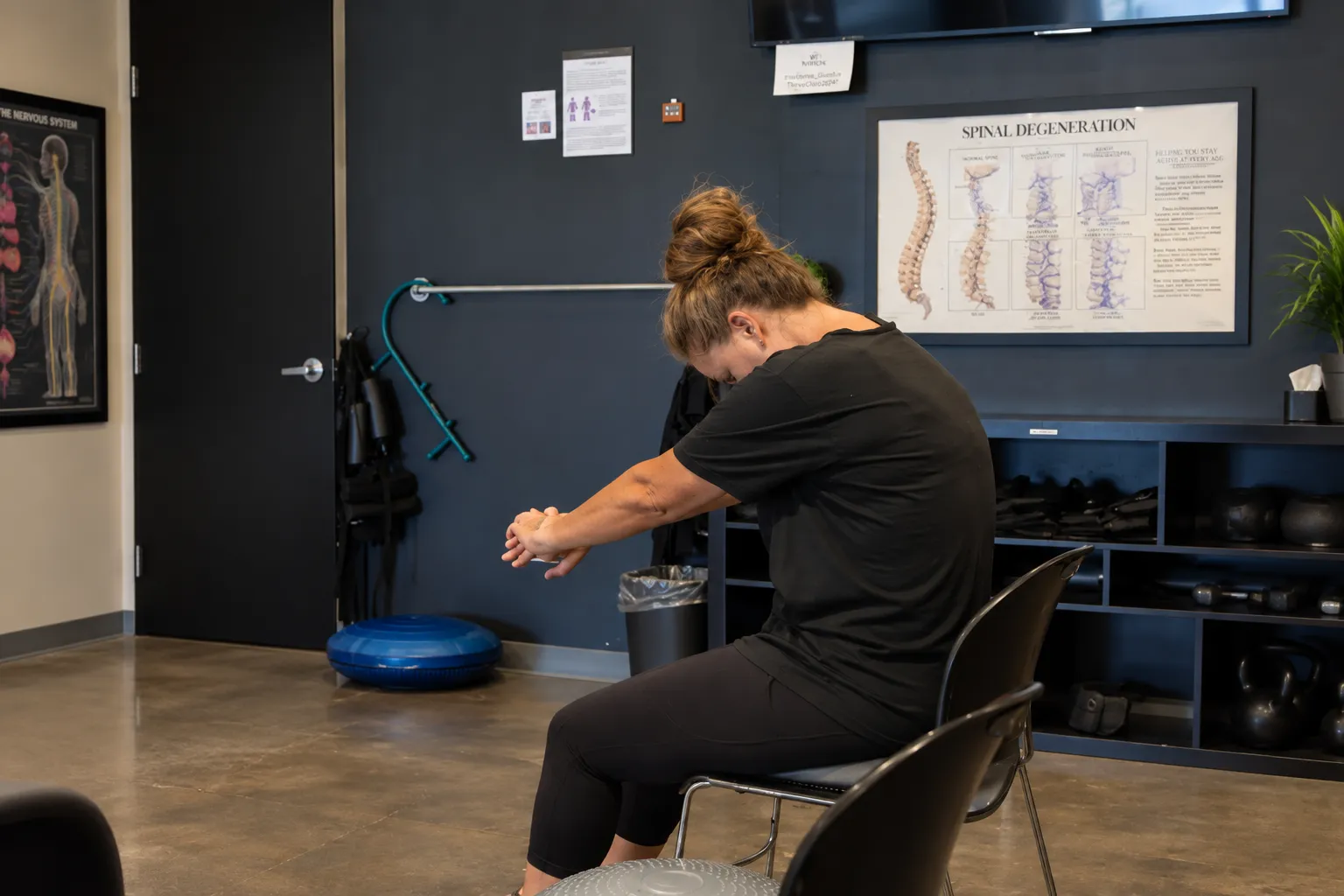
When the head sits in front of the shoulders, the muscles at the back of the neck have to work harder to keep it upright. If you spend hours in that position, the upper neck can become tight and the joints can lose some of their normal movement.
The upper cervical spine also contains muscles, joints, and nerves that are closely connected to how pain is felt in the head. Irritation in these structures can send pain upward from the neck into the back or side of the head.
This is one reason cervicogenic headaches can be difficult to distinguish from other types of head pain. The headache starts in the neck rather than inside the head itself and pain can begin near the base of the skull and spread upward (it may become worse when the neck is moved or held in one position).
Forward head posture can also change the way the neck muscles share the work of supporting the head. Some muscles may remain tense while others are not doing as much of the supporting work. This can contribute to stiffness, reduced neck movement, and pain around the upper neck and skull.
Can Neck Posture Really Cause a Migraine?
Neck posture can contribute to headache symptoms, but it does not mean that poor posture causes all your migraines.
Migraine is a neurological condition, and neck pain can occur as part of a migraine attack. At the same time, research has found changes in neck movement, muscle function, and posture among people with migraine, so the neck should not automatically be dismissed when headaches and neck symptoms occur together.
Pay attention to what happens before and during your headaches. If you regularly notice neck stiffness, pain at the base of your skull, limited neck movement, or headaches after spending a long time in one position, your neck may be contributing to your symptoms.
At Elite Wellness Chiropractic, the assessment looks beyond the location of the pain (most don’t - just get rid of the pain NOW). Corrective care considers posture, spinal alignment, and movement to determine whether these factors may be contributing to your symptoms.
For someone who has tried to manage recurring headaches without getting lasting answers, looking at the neck can add another layer to the assessment rather than simply treating the pain each time it appears.
How Can You Tell Your Neck Causes Headaches?
If your neck is contributing to your headaches, there are usually a few clues in the way the pain behaves. A cervicogenic headache starts in the neck and can travel upward into the head, often beginning around the base of the skull.
You may notice that the pain stays mostly on one side, moves from the back of your head toward the front, or becomes worse when you turn or move your neck. Holding your head in the same position for a long time can also make the pain more noticeable.
The neck itself may not feel particularly painful at first. You might instead notice stiffness when you look over your shoulder, tenderness where the neck meets the skull, or a reduced range of motion.
A cervicogenic headache can have several causes, for example, irritated joints in the upper cervical spine, neck muscle problems, arthritis, or changes in the way the neck moves. There is not always one obvious injury that started it all.
What are common signs a headache started in the neck?
Look for these patterns:
- Pain that starts around the base of the skull and travels upward or toward the front of the head
- Pain that stays mostly on one side
- Neck stiffness or reduced movement, particularly when turning your head
- Headaches that become worse after sitting or working at a screen
- Tenderness at the base of the skull or upper neck
- Head pain that changes when you move or hold your neck in certain positions
These symptoms can also occur with migraines, so they do not tell you on their own that a headache is coming from the neck. A migraine can also cause neck pain and stiffness, which is why looking at the full pattern is important.
At Elite Wellness Chiropractic in Bee Cave, the assessment can look at the relationship between your headache symptoms, posture, spinal alignment, and neck movement. That helps determine whether the neck appears to be contributing to the problem or whether something else may need to be considered.
What Corrective Care Options Ease Cervicogenic Migraines?
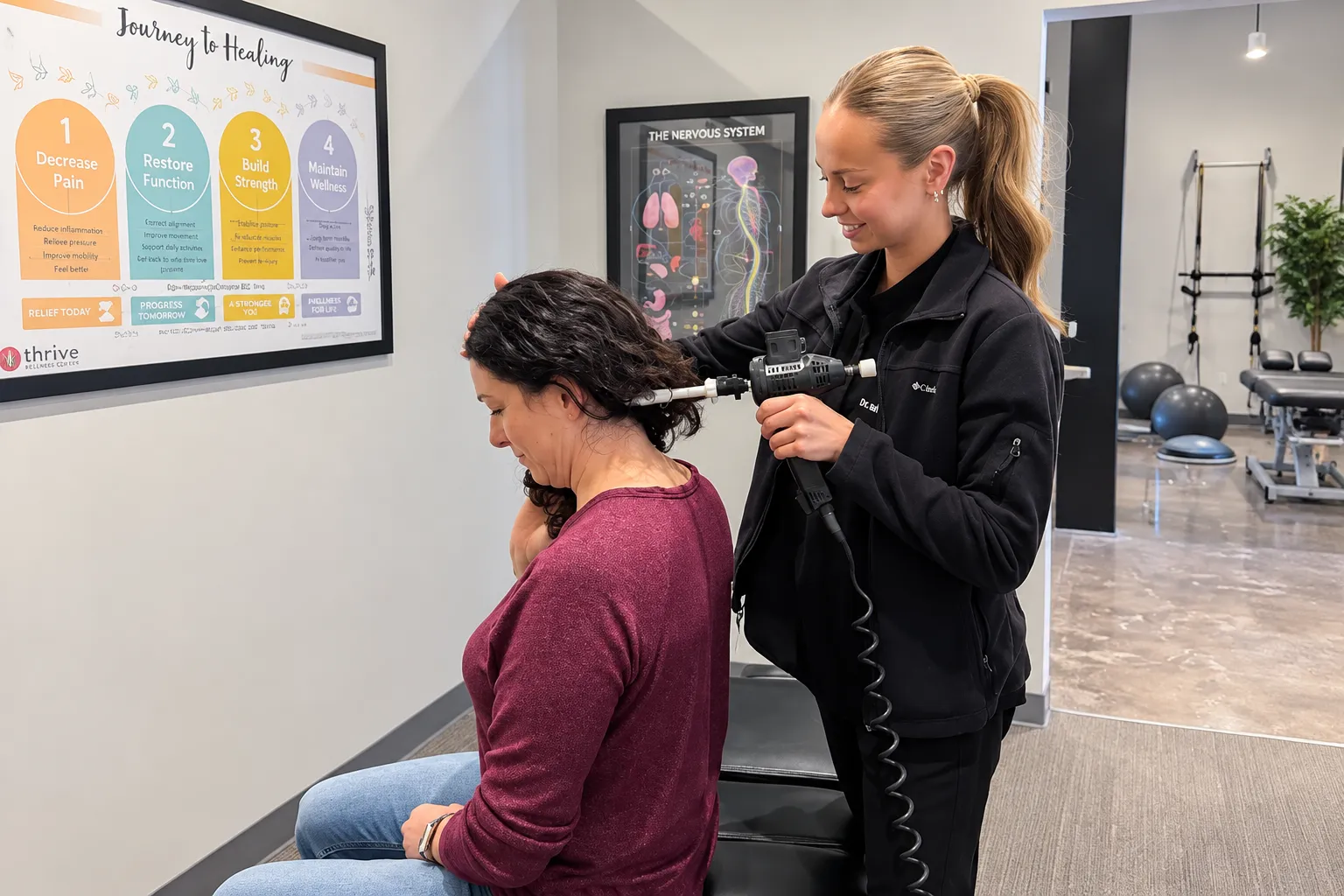
If you've dealt with recurring headaches, you may already know how frustrating it is to keep treating the same episode without understanding why it keeps coming back. You take something for the pain, try to rest, get through the day, and then find yourself doing the same thing again the next week.
Corrective care takes a different starting point. So rather than choosing an adjustment simply because someone has a headache, the doctor first looks at the person's spinal alignment, posture, and movement to see what could be contributing to their symptoms.
At Elite Wellness Chiropractic, the first visit is focused on examination and evaluation. This gives Dr. Mikala Hiber, DC, a chance to understand what is happening before deciding what type of care is appropriate - the way it’s supposed to be.
Does relief require accepting recurring head pain as normal?
No. If headaches are regularly making you cancel plans, struggle through work, wake up uncomfortable, or avoid activities you normally enjoy, you don't have to treat that pattern as something you simply have to live with.
The first question should be why the headaches keep happening and whether there is something contributing to them that hasn't been addressed.
For someone whose headaches occur alongside neck problems, that may mean looking more closely at the cervical spine rather than only managing the pain once an episode has started.
What does a corrective care plan typically include?
The answer depends on what the examination shows. There isn't a checklist that every patient receives simply because they have headaches.
A plan may include:
- Cervical spinal adjustments based on the findings from the examination
- Posture changes that address positions or habits placing unnecessary stress on the neck
- Workstation or daily-activity changes when these are relevant to the person's routine
- Progress assessments to see whether the patient's symptoms and physical findings are changing
FAQ
What causes cervicogenic headaches?
Cervicogenic headaches come from structures in the neck, particularly the upper cervical joints and surrounding muscles. The pain can begin around the base of the skull and travel into the head, sometimes making it feel similar to a migraine or another type of headache.
How does desk work contribute to migraines?
Sitting at a desk for long periods can leave the head positioned forward of the shoulders, increasing the demand on the muscles supporting the neck. If you already experience headaches and neck discomfort, spending hours in the same position may contribute to your symptoms.
How is a cervicogenic headache different from a regular migraine?
A cervicogenic headache starts from the neck, while a migraine is a neurological condition. Cervicogenic headaches are often affected by neck movement or prolonged positions, and they can cause pain that begins around the base of the skull and travels upward.
The two can also occur together, so symptoms alone cannot always tell you which type of headache you're experiencing.
What does a corrective care plan for migraines involve?
The plan depends on what is found during your examination. It may include cervical spinal adjustments, changes to posture and daily habits, and follow-up assessments to see how you are responding to care.
At Elite Wellness Chiropractic, the process begins with an examination so the recommended care is based on your specific findings rather than a standard headache protocol.
Where is Elite Wellness Chiropractic located?
Elite Wellness Chiropractic is located at 12101 Bee Cave Road, Suite 5B, Bee Cave, Texas 78738. The practice provides direct-pay corrective chiropractic care in Bee Cave.
Conclusion: Don't overlook your neck
If your migraines keep coming back and you also deal with neck stiffness, tenderness, or headaches that change with neck movement or position, your neck may be contributing to what you're experiencing.
That doesn't mean poor posture is the cause of every migraine. It means there may be another factor worth investigating, particularly when you've already tried the usual ways of managing your headaches without getting the answers you need.
At Elite Wellness Chiropractic, corrective care starts with an examination to understand how your posture, spinal alignment, and movement relate to your symptoms. From there, Dr. Mikala can determine whether corrective care is appropriate for your specific findings.
You don't have to guess whether your neck is part of the problem. Start by having it properly assessed.

Dr. Mikala Hiben
Chiropractor and Owner at Elite Wellness Chiropractic
Featured Articles

10 Posture Tips for Residents of Bee Cave, Texas
Improve your posture with these 10 practical tips from Elite Wellness Chiropractic in Bee Cave. Simple daily changes for better spinal alignment and less pain.
10 Posture Tips for Residents of Bee Cave, Texas

What to Expect at Your First Chiropractic Visit in Bee Cave
Wondering what happens at your first chiropractic appointment? Here's a clear walkthrough of the consultation, exam, X-rays, costs, and how to prepare for your visit at Elite Wellness Chiropractic in Bee Cave.
What to Expect at Your First Chiropractic Visit in Bee Cave

Unlock Lasting Relief for Tech Neck: Beyond Temporary Fixes
Struggling with tech neck? Learn how corrective chiropractic care at Elite Wellness in Bee Cave can relieve neck pain, improve posture, and restore lasting comfort.
Unlock Lasting Relief for Tech Neck: Beyond Temporary Fixes