Wellness Tips
How Chiropractic Adjustments Work (and Why We Take X-Rays First)
September 26, 2026
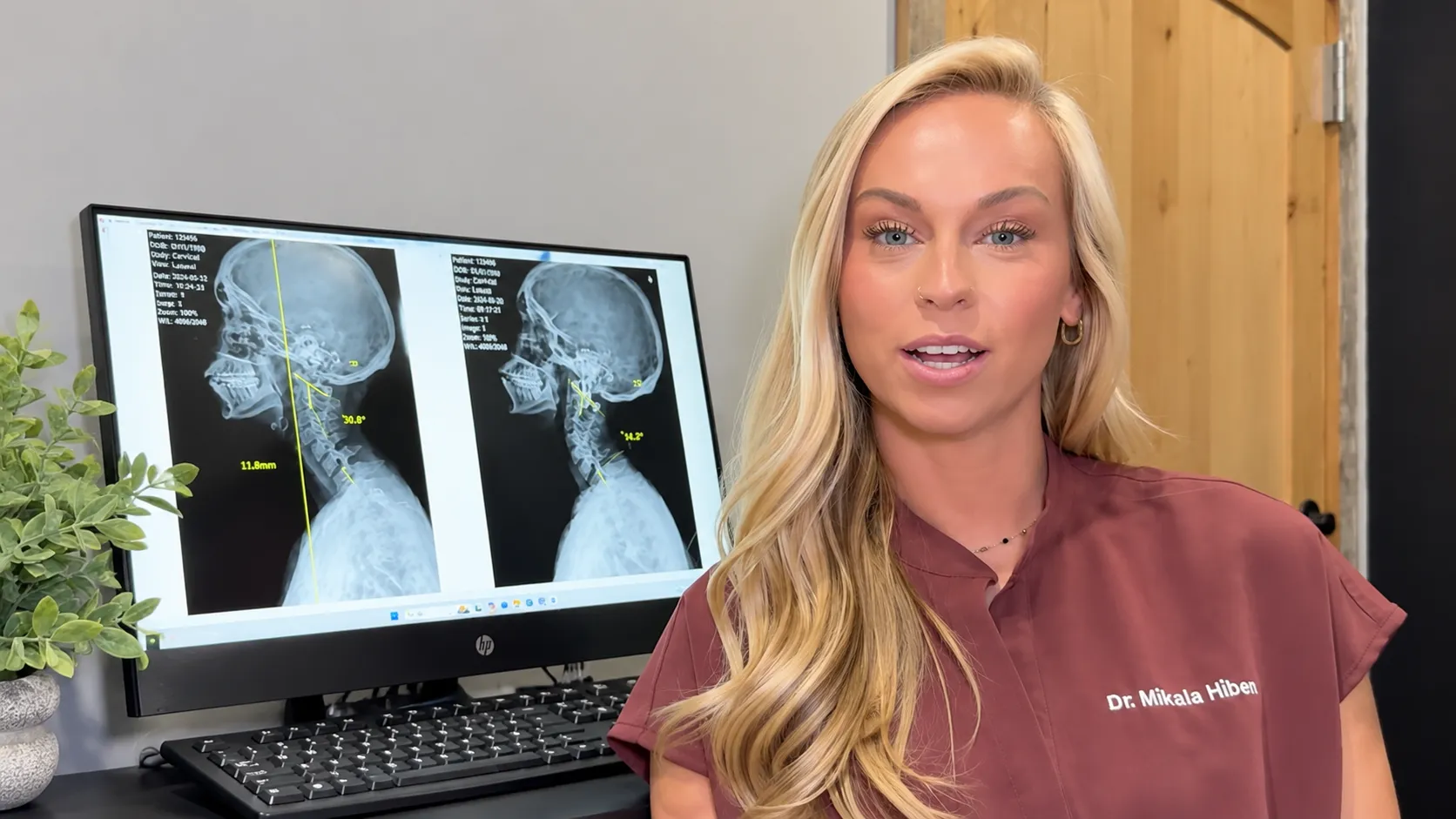
A lot of people picture a chiropractic adjustment as a quick crack or pop, and then you're supposed to feel better. Movies probably haven't helped with that image.
In reality, an adjustment is much more specific. The chiropractor applies a controlled force to a particular joint to restore movement, and where that force is applied matters. You aren't just moving things around and hoping for the best.
At Elite Wellness Chiropractic in Bee Cave, X-rays are part of the initial evaluation because they give Dr. Mikala Hiben, DC, a clearer look at the spine before adjustments begin. The images show how the vertebrae are positioned and can reveal alignment issues that aren't always obvious during a hands-on exam.
That information gives the chiropractor something concrete to work from. Instead of basing an adjustment only on where you feel pain, the treatment can take into account what's happening in the spine and how different areas may be compensating for one another.
Key Takeaways
- The first chiropractic visit at EWC is not an adjustment. You start with an exam and X-rays, then return for a Report of Findings and your first adjustment if you decide to move forward with a care plan.
- The part of your back that hurts isn't necessarily the only part being considered. EWC looks at your history, movement, posture, and spinal structure together rather than choosing an adjustment based only on where you feel pain.
- An adjustment doesn't need to produce a crack or pop. When you do hear one, it's caused by gas being released from the joint as pressure changes. The sound itself isn't what the chiropractor is trying to achieve.
- X-rays give you a baseline, not just a picture. They allow the chiropractor to see how the spine is positioned at the beginning of care and provide something to compare against later.
- Feeling better and showing structural change aren't necessarily the same thing. Pain can change from day to day, which is why EWC can use follow-up assessments and X-rays to look at progress from more than one angle.
- The bigger question isn't simply “Where does it hurt?” It's “What is happening in the spine that may be contributing to the problem?” That question is what drives the corrective approach discussed throughout the article.
Do You Need X-Rays Before Your First Adjustment?
Not every chiropractic visit starts with an X-ray. But at Elite Wellness Chiropractic, the first visit is different. X-rays are part of the initial evaluation for most patients because Dr. Mikala Hiben, DC, wants to see what's happening structurally before deciding how to approach care. Pregnant women and children under 5 are the exceptions.
So why does that matter?
A hands-on exam can tell a chiropractor a lot. It can show how you move, where movement is restricted, how your posture looks, and which areas may be compensating for another problem. But it can't show everything that's happening inside the spine.
That's where the X-ray adds another piece of information. It gives the chiropractor a view of spinal alignment and structure that you simply can't get by watching someone move or asking where it hurts.
What would make an X-ray useful?
Think about two people who both say their lower back hurts. They might describe the same general problem, but that doesn't mean the spine is dealing with the same thing.
One person may have alignment changes that affect how the spine is carrying load. Another may have a different structural pattern altogether. Their symptoms might sound similar, but the information from the evaluation can point the chiropractor in different directions.
That's why EWC doesn't base an adjustment simply on the spot that hurts.
The initial evaluation looks at several pieces together:
- Your history: What brought you in, how long you've had the problem, and what has happened before.
- Your movement and posture: What the chiropractor can see and assess during the hands-on exam.
- Your X-rays: What the spine's structure and alignment look like.
Put those pieces together, and the chiropractor has a much clearer starting point for deciding what needs attention.
Why isn't a hands-on exam enough?
Because the two exams tell you different things.
A hands-on assessment is about how the body is moving. An X-ray is about what the underlying structure looks like.
Neither replaces the other. The useful part is putting the information together.
That also explains why two people with similar back pain don't necessarily end up with the same treatment plan. Their symptoms may overlap, but their history, movement patterns, posture, and spinal structure can be different.
What Really Happens During a Spinal Adjustment?
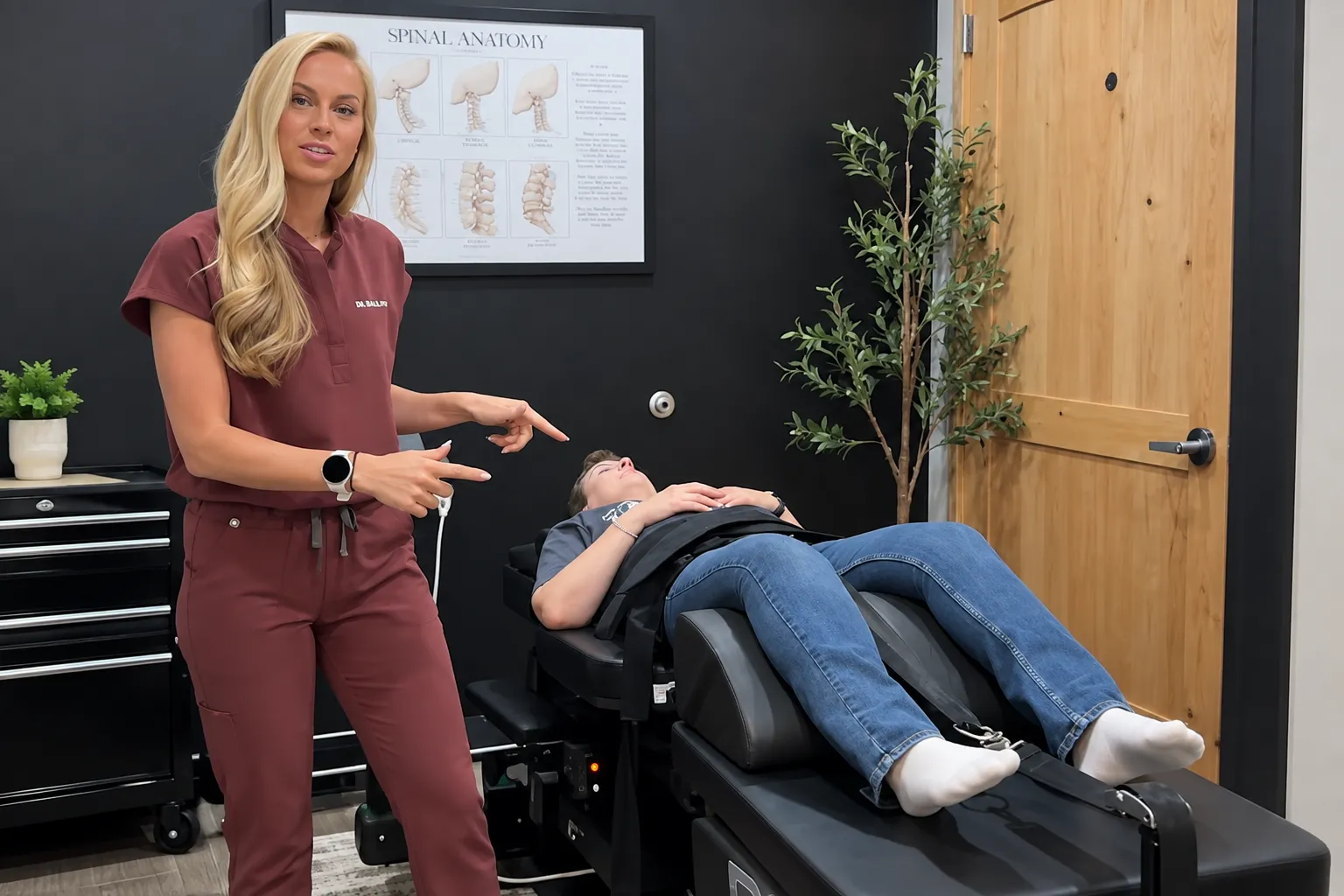
So, you've had your evaluation, the chiropractor has explained the findings, and now it's time for the actual adjustment. What should you expect?
The chiropractor positions you so they can work on the area being treated, then applies a controlled force to the specific joint. Depending on the technique, they may use their hands or a small handheld instrument.
And yes, you may hear a pop.
That sound is simply gas being released from the joint as the pressure inside it changes. It isn't the goal of the adjustment, and you don't need to hear a pop for the adjustment to be effective. Some adjustments are quiet.
Will a spinal adjustment hurt?
This is probably one of the first things people want to know before their first adjustment.
An adjustment involves pressure, but it shouldn't be about forcing a joint through pain. What you feel can depend on the area being treated and the technique being used.
Some people notice a quick pressure or movement and then it's over. Others may feel some soreness afterward, much like you can after using muscles in a way your body isn't used to. If something feels uncomfortable during the adjustment, tell the chiropractor. They can adjust the technique rather than simply pushing through it.
Why can an adjustment affect an area that isn't where you feel pain?
Because the painful spot isn't always the whole story.
When one part of the spine isn't moving well, other joints and muscles can start doing more work to make up for it. That compensation can create tension somewhere else, which is one reason someone might feel discomfort in the neck, shoulders, hips, or another area even when the original movement problem is somewhere different.
This is also why corrective care isn't simply about finding the sore spot and adjusting it. The goal is to understand what is contributing to the problem and address the areas involved.
What happens after the adjustment?
The adjustment isn't the end of the process. Your response to care matters too.
As treatment continues, the chiropractor can reassess your movement and alignment and determine whether the plan is moving in the right direction. That's particularly important when the goal is structural correction rather than simply getting through a painful day.
What about scoliosis?
Scoliosis is different from ordinary back pain because the spine has developed a curve that changes its overall structure. That makes it important to understand the shape and alignment of the spine rather than relying only on where someone feels discomfort.
X-rays can show the spinal curve and give the chiropractor something concrete to evaluate alongside the patient's posture and movement. Follow-up imaging can then provide a way to compare the spine over time.
What happens from there depends on the individual findings. The treatment plan should reflect the person's spinal structure, movement, symptoms, and goals rather than assuming that everyone with scoliosis needs the same approach.
How Can X-Rays Show Whether Your Spine Has Changed?
You don't want to spend months going through care only to hear that things are improving. You want to know what has actually changed.
That's one reason before-and-after X-rays can be useful. The first image gives the chiropractor a baseline, while a follow-up image provides something to compare it with. Instead of relying entirely on how you feel on a particular day, there is a way to look at measurable changes in the spine over time.
Why compare before-and-after X-rays instead of just checking in verbally?
Because how you feel can change from one day to the next.
A bad night's sleep, a stressful week, a long day at your desk, or an unusually active weekend can all affect how much pain or stiffness you notice. Telling your chiropractor that you feel better is still useful, but it can't show whether the position or curve of your spine has changed.
A before-and-after comparison gives you two images to look at side by side. The chiropractor can use them to see whether there have been measurable changes over time rather than relying on symptoms alone.
And there is something useful about being able to see that for yourself. You're not simply being told that your spine has changed. You can look at the images and understand what your chiropractor is referring to.
Can X-rays show improvement even when the pain has already gone away?
They can show changes that you wouldn't be able to judge from pain alone.
You might feel better before there is a measurable structural change, or your pain may improve while some alignment issues remain. That's why progress isn't based on a single question about how you feel that day.
Your symptoms, movement, and the changes visible on follow-up X-rays can all add to the picture of how you're progressing.
What Do X-Rays Actually Tell Your Chiropractor?
An X-ray isn't just a picture that gets added to your file. It gives the chiropractor information they can't get from watching you move or asking where you hurt.
For example, the images can show the shape and alignment of the spine, including the degree of a spinal curve. They can also help identify structural patterns that may be relevant to posture, movement, or back pain.
That information becomes useful when the chiropractor is deciding where to focus care. Rather than looking only at the area that feels uncomfortable, they can look at the spine as a whole and consider how its different parts are positioned in relation to one another.
Why does the chiropractor need to see the whole spine?
Because the area causing trouble isn't always the area getting your attention.
Your body doesn't work as a collection of separate joints. When one part isn't moving well, another area may have to pick up more of the work. Looking at the spine's structure alongside your movement and symptoms gives the chiropractor more context for understanding those relationships.
That doesn't mean an X-ray can explain every ache or pain on its own. It is one part of the evaluation, alongside your history and the hands-on assessment.
How does that information affect your care?
It gives the chiropractor something specific to work from.
At Elite Wellness Chiropractic, the goal is not to apply the same adjustment to everyone who walks through the door with back pain. The findings from the evaluation help Dr. Mikala Hiben, DC, determine which areas need attention and build a care plan around the individual patient.
That is also where EWC's correction-versus-compensation approach comes into the picture. Instead of repeatedly focusing on whatever hurts that day, the aim is to understand the alignment and movement issues contributing to the problem and address them as part of a broader corrective plan.
Do all patients need X-rays before their first chiropractic adjustment?
No. Pregnant women and children under 5 are the exceptions to EWC's X-ray requirement. For other patients, X-rays are part of the initial evaluation and are taken before the first adjustment. The first visit is focused on the exam and imaging, with the first adjustment taking place at the second visit after the findings have been reviewed.
Why does Elite Wellness Chiropractic use X-rays?
Because X-rays show parts of the spine that a hands-on exam can't. They give Dr. Mikala Hiben, DC, a clearer view of spinal structure and alignment and create a baseline that can be compared with follow-up images when structural changes need to be tracked.
What happens during a chiropractic adjustment?
A chiropractor applies a controlled force to the area being treated, using their hands or a small handheld instrument. You may hear a pop as gas is released from the joint when pressure changes, but the sound isn't the goal. The goal is to improve movement in the joint.
Conclusion: Want to Know What’s Causing Your Back Pain?
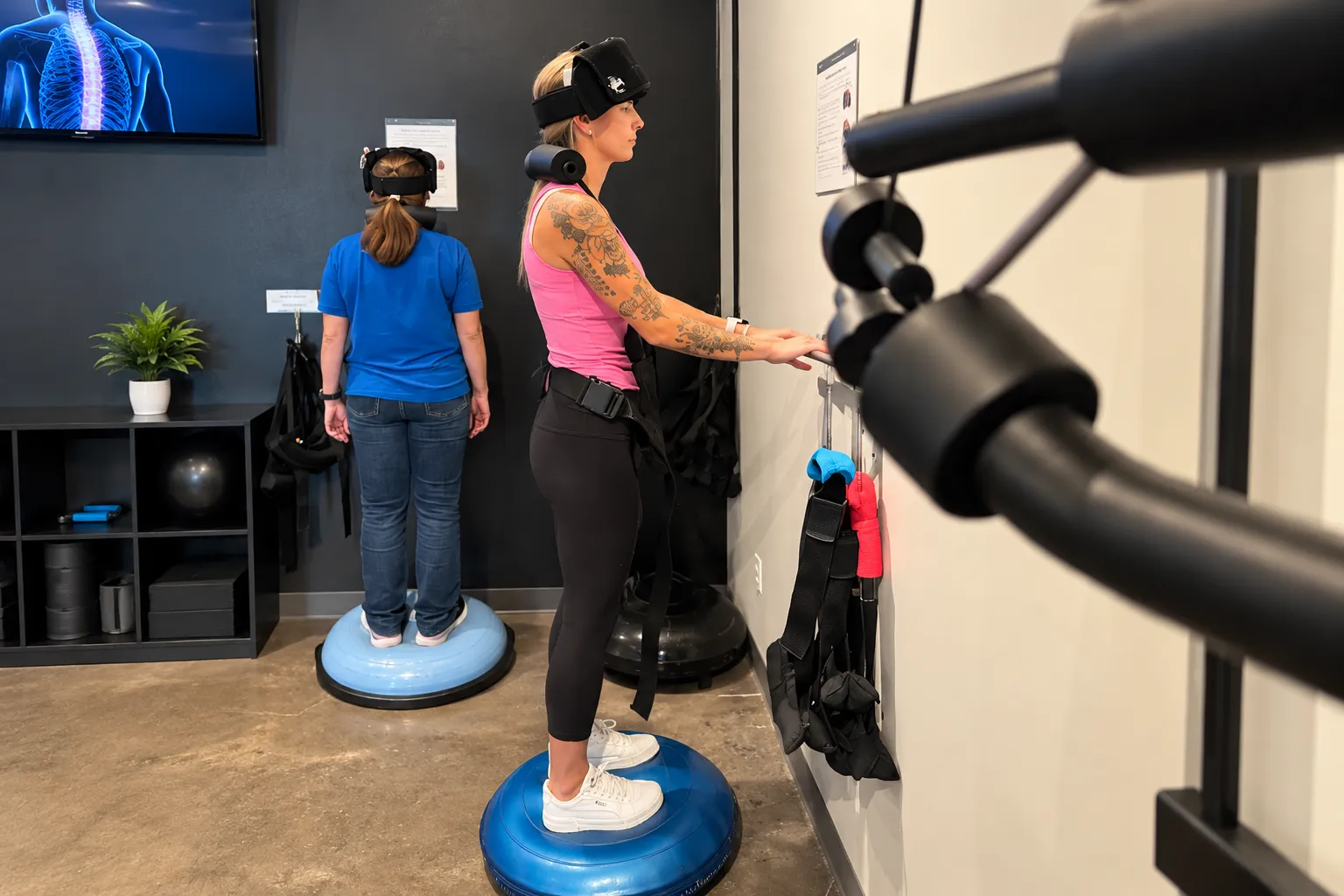
By now, you should have a better idea of why an adjustment is more than the pop you hear during treatment, and why X-rays can be useful before and during corrective care. The point is to understand what's happening in your spine, not simply chase the spot that hurts.
That's the approach at Elite Wellness Chiropractic. Your care starts with an evaluation of your spine, movement, and alignment so Dr. Mikala Hiben, DC, can explain what the findings mean and what your options are.
If you've been dealing with back pain that keeps coming back, schedule your $60 New Patient Experience at Elite Wellness Chiropractic in Bee Cave to start with a closer look at what's going on.

Dr. Mikala Hiben
Chiropractor and Owner at Elite Wellness Chiropractic
Featured Articles

10 Posture Tips for Residents of Bee Cave, Texas
Improve your posture with these 10 practical tips from Elite Wellness Chiropractic in Bee Cave. Simple daily changes for better spinal alignment and less pain.
10 Posture Tips for Residents of Bee Cave, Texas

What to Expect at Your First Chiropractic Visit in Bee Cave
Wondering what happens at your first chiropractic appointment? Here's a clear walkthrough of the consultation, exam, X-rays, costs, and how to prepare for your visit at Elite Wellness Chiropractic in Bee Cave.
What to Expect at Your First Chiropractic Visit in Bee Cave

Unlock Lasting Relief for Tech Neck: Beyond Temporary Fixes
Struggling with tech neck? Learn how corrective chiropractic care at Elite Wellness in Bee Cave can relieve neck pain, improve posture, and restore lasting comfort.
Unlock Lasting Relief for Tech Neck: Beyond Temporary Fixes